How Do I Set Up Online Banking in Costa Rica?
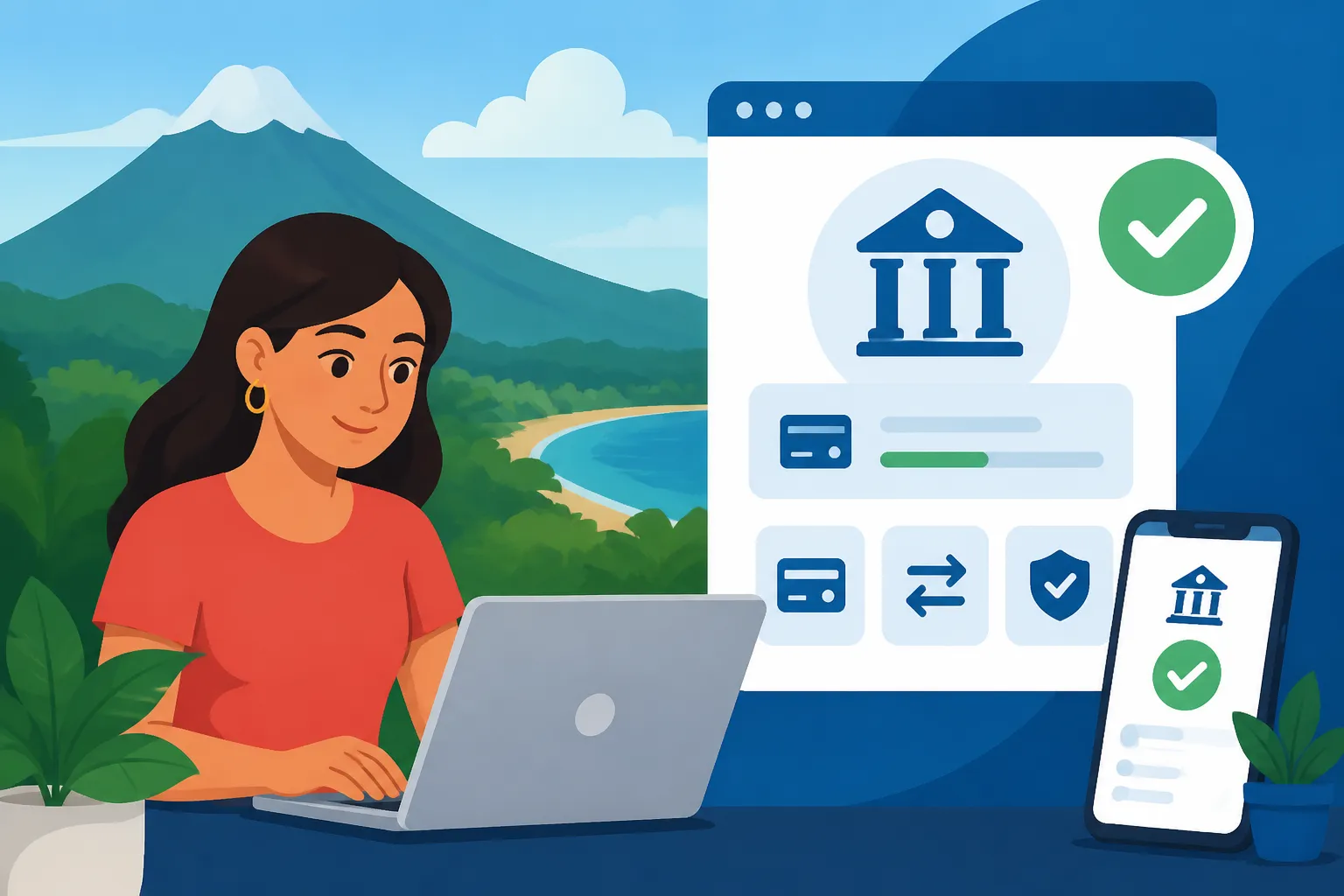
Getting your banking sorted in a new country is often one of the biggest headaches, and Costa Rica is no exception. Between the language barrier, the sometimes-cumbersome paperwork, and just understanding how things work, it can feel like you're constantly swimming upstream. But once you've successfully opened an account, setting up online banking here is your ticket to regaining some sanity and financial control. This guide will walk you through everything you need to know, from the initial setup to mastering your daily transactions online, making your life in paradise a whole lot easier.
The Lay of the Land: Understanding Costa Rican Online Banking
I've been here long enough to remember when online banking was clunky, unreliable, and sometimes, frankly, terrifying to use. But things have changed a lot. Costa Rican banks have made significant strides, especially in the last few years, to modernize their digital platforms. For us expats, this is nothing short of a godsend.
Why Online Banking is a Must-Have Here
Let's be real: daily life in Costa Rica involves a fair bit of bureaucracy and errands. If you're like me, you probably don't want to spend your precious time off standing in line at a bank branch, especially when the beach or the mountains are calling. Online banking, and specifically mobile banking, becomes your personal assistant for a multitude of tasks.
The sheer joy of paying a bill from your couch, transferring funds to your gardener, or checking your account balance before hitting the grocery store cannot be overstated. It saves you trips into town, helps you avoid cash-only situations, and, most importantly, bypasses potential language misunderstandings at the teller window. You’ll be able to quickly manage your funds, pay your utility bills like ICE (electricity and telecommunications) and AyA (water), and even make transfers to local businesses or individuals without skipping a beat. It genuinely transforms your financial routine from a chore into a seamless experience.
State Versus Private Banks and Their Online Offerings
Costa Rica's banking sector is a mix of state-owned and private institutions, and their online offerings vary. On the state side, you have the venerable Banco Nacional (BNCR) and Banco de Costa Rica (BCR). These are huge, robust institutions with branches everywhere, and they've significantly upgraded their online platforms and mobile apps in recent years. Many government-related payments are easily handled through these banks.
Then there are the private banks, with big players like BAC Credomatic, Davivienda, and Scotiabank. My experience, and that of many expats I know, is that private banks like BAC Credomatic tend to have a slight edge when it comes to user-friendliness and the overall polish of their online interfaces and mobile apps. They often offer a more intuitive experience, with features that feel more aligned with what you might be used to in North America or Europe. However, all major banks, both state and private, understand the necessity of robust online services, and you'll find comprehensive options regardless of which bank you choose to open your account with. For a deeper dive, you might find "Understanding the Difference Between State and Private Banks in Costa Rica" helpful.
Your Step-by-Step Guide to Getting Online
Alright, let's get down to brass tacks. Setting up online banking isn't just a flick of a switch; it requires a few steps, often starting right at the bank branch.
The Foundation: Opening Your Bank Account
This might sound obvious, but you absolutely cannot set up online banking until you have an actual bank account here. And let me tell you, opening a bank account as a foreigner can sometimes feel like trying to solve a Rubik's Cube blindfolded. You'll need your DIMEX (residency card), proof of address (like an ICE or AyA bill in your name), and a comprobante de ingresos (proof of income), which can be tricky depending on your income source. I highly recommend reading "How to Open a Bank Account at a Costa Rican Bank as a Foreigner" to prepare yourself.
Often, the bank official who helps you open your account will initiate the online banking setup right then and there. They'll typically provide you with a temporary username and password, along with instructions for your first login. Do not leave the bank without confirming these details and understanding how to activate your digital access. Ask if they have an English-speaking representative to walk you through it if your Spanish isn't quite up to par yet. Trust me, it’s worth the extra effort upfront to avoid frustration later.
Activating Your Online Account: The First Login
Once you have your account details, the first login is the critical step. You'll usually go to the bank's website or download their official mobile app. You'll input the temporary username and password you received. Here's where the Costa Rican banking system throws a little curveball that often trips up new expats: the security token.
Costa Rican banks are very serious about security, and almost all of them use a multi-factor authentication system involving a "token." This can be a small, physical device that generates a one-time password (OTP) every 30-60 seconds, or it can be a software token within the bank's mobile app itself. BAC Credomatic, for example, heavily relies on its mobile app for generating these codes. Banco Nacional and BCR often provide physical tokens, especially for initial setup, but they also have app-based options now.
When you first log in, you'll be prompted to enter a code from this token. After successful verification, you'll typically be asked to change your temporary password to something more secure and set up security questions. Make sure you understand how your specific bank's token system works. If you lose your physical token or it runs out of battery (a common issue!), you'll need to go back to the bank to get a replacement or link a new device, which can be a hassle. This is why many prefer the app-based token option.
Getting Familiar with Your Bank's Platform
Each bank's online platform has its own quirks and navigation. However, the core functionalities are generally the same. You'll find sections for:
- Consulting Balances and Movements: This is where you check your account balance and review your transaction history. It's usually straightforward.
- Transfers: This section allows you to move money between your own accounts, to other accounts within the same bank, or to accounts in other Costa Rican banks via the SINPE system (more on that in a bit!).
- Payment of Services: This is your one-stop-shop for paying almost any bill imaginable – utilities, phone, internet, school fees, credit cards, taxes, and more.
- Credit Cards and Loans: If you have these with the same bank, you can manage them here.
Take some time to click around and get acquainted with the layout. Some platforms, like BAC Credomatic's, offer a partial English interface, which can be a huge relief. Others might be primarily in Spanish, but with practice, you'll recognize the key terms: saldo (balance), movimientos (transactions), transferencias (transfers), pago de servicios (bill payment), and estado de cuenta (account statement). Don't be afraid to use an online translator if you get stuck.
Mastering Your Digital Finances: Key Features for Expats
Once you've navigated the initial setup, your online banking portal becomes an incredibly powerful tool. Let's explore some of the features that will make your expat life much, much smoother.
Paying Bills and Services
This is, arguably, the most used feature for many expats. Gone are the days of trekking to multiple locations to pay your monthly bills. Through your online banking platform, you can pay for:
- Electricity: Your ICE or CNFL bill.
- Water: Your AyA bill.
- Telecommunications: Landline, cell phone (Kolbi, Claro, Movistar), internet.
- Cable TV.
- Property Taxes: Yes, you can even pay your municipal property taxes through some banks.
- Private School or College Fees.
- Credit Card Payments: If you have a local credit card.
To pay a bill, you'll typically need the número de cliente (client number) or número de servicio (service number) for that specific utility or service. Once you enter it, the system will usually pull up your outstanding balance. You can often register these services as "favorites" or set up recurring payments, saving you the hassle each month. This convenience alone is a game-changer. For more details on paying utilities, check out "How Do I Pay My ICE and AyA Bills Through My Bank in Costa Rica?".
Transferring Funds: Local and International
Moving money, whether it's across town or across an ocean, is a core banking function.
Local Transfers via SINPE
The SINPE (Sistema Nacional de Pagos Electrónicos) system is Costa Rica's interbank electronic funds transfer network, and it's fantastic. It allows for near-instant transfers between accounts at different Costa Rican banks, often at no cost for standard transfers. This means if you bank with Banco Nacional and need to send money to a friend who banks with BAC Credomatic, it happens almost immediately. You'll need the recipient's full name, their identification number (DIMEX, Cédula, or Passport number), and their 17-digit bank account number (Número de Cuenta Cliente). This system makes daily financial interactions incredibly efficient.
International Transfers
When it comes to sending money outside Costa Rica, traditional bank wire transfers are available, but they can be slower, often taking several business days, and typically come with higher fees. For us expats, managing funds between our home country and Costa Rica is a regular necessity. This is where services like Wise really shine. Wise (formerly TransferWise) offers competitive exchange rates and significantly lower fees compared to traditional banks for international money transfers, making it a favorite among the expat community for moving funds into or out of Costa Rica. Whether you're topping up your Costa Rican account from abroad or sending money back home, it's an efficient and cost-effective option. You can learn more about this in "How to Transfer Money Into and Out of Costa Rica as an Expat".
Managing Your Accounts and Records
Your online banking portal isn't just for moving money; it's also your primary hub for financial record-keeping.
- Account Statements: You can easily view and download your monthly account statements (estados de cuenta). These are crucial for many aspects of expat life, from renewing your residency (as proof of funds) to filing taxes. Remember, organizations like Taxes for Expats will require comprehensive financial documentation, so having easy access to your statements online simplifies their process immensely. Keeping accurate records helps when filing your annual income tax return. You can also find out "How Do I Pay My Income Tax Online in Costa Rica?" once your accounts are set up.
- Transaction History: A detailed history of all ins and outs. Always good to review this regularly to catch any discrepancies or unauthorized transactions.
- Alerts and Notifications: Many banks allow you to set up email or SMS alerts for various activities, such as large withdrawals, deposits, or when your balance falls below a certain threshold. This is a great way to stay on top of your finances and enhance security.
- Managing Multiple Currencies: If you're like many expats, you might have both Colones and USD accounts. Your online banking platform will allow you to view and manage both. You might even want to know "Can I Hold a US Dollar Account in Costa Rica?" for more on this.
Security, Troubleshooting, and Pro Tips
Even with the best online systems, issues can arise, and security is paramount. Let's discuss how to keep your digital finances safe and tackle common challenges.
Keeping Your Online Banking Secure
Fraud and scams are a reality everywhere, and Costa Rica is no exception. Banks here issue frequent warnings, and it's vital to be vigilant.
- Never Share Your Credentials: Your bank will never ask for your full password, PIN, or security token code via email, text message, or an unsolicited phone call. Be extremely suspicious of any communication that does.
- Strong Passwords: Use unique, complex passwords for your online banking. Don't reuse passwords from other sites.
- Phishing Awareness: Be wary of emails or texts with suspicious links. Always type your bank's URL directly into your browser or use their official app.
- Secure Connection: Only access your online banking via secure, private Wi-Fi networks. Avoid using public, unsecured Wi-Fi for sensitive transactions.
- Regularly Review Transactions: Make it a habit to check your transaction history frequently for any unfamiliar activity.
- Protect Your Token: Whether physical or app-based, treat your security token like gold. Don't leave physical tokens unattended, and ensure your phone is locked with a strong passcode if using a mobile app token.
Common Challenges and How to Overcome Them
Despite improvements, you might encounter a few bumps in the road.
- Token Troubles: A lost physical token, or one with a dead battery, is a headache. You’ll have to visit the bank to get a replacement or link a new device. If your app-based token isn't working, try reinstalling the app or contacting the bank's technical support. Always ensure your phone's time and date are set to automatic, as token generation relies on precise timing.
- Website/App Glitches: Sometimes, especially during peak banking hours or after system updates, the website or app might be slow, or a feature might temporarily not work. Patience is key. Try clearing your browser's cache, using a different browser, or trying again after an hour or two.
- Language Barrier: While some platforms offer partial English, many features or error messages might still be in Spanish. Keep a translation app handy or ask a trusted Tico friend for help. Don't guess when it comes to financial transactions.
- Blocked Accounts: If you enter your password or token code incorrectly too many times, your account might be temporarily blocked as a security measure. The only solution is to call your bank's customer service number immediately to get it unblocked. Have your DIMEX or other identification ready.
Maximizing Your Online Banking Experience
You’ve come this far, so let's make sure you're getting the most out of your digital banking.
- SINPE Móvil: This is a fantastic system where you can link your bank account to your phone number. It allows for quick, small-value transfers using just a phone number, much like Zelle in the US. Many small businesses, vendors, and even individuals use it. Setting this up with your bank is highly recommended and incredibly convenient for daily transactions.
- Scheduled Payments: Take advantage of the ability to schedule recurring bill payments and transfers. This ensures you never miss a payment and frees up mental space. It's particularly useful for rent, utility bills, or regular transfers to family members.
- Mobile Apps are Your Friend: While desktop online banking is robust, the mobile apps offered by banks like BAC Credomatic, Banco Nacional, and BCR are often more convenient for quick checks and transactions. They usually have fingerprint or facial recognition login, making access swift and secure.
- Financial Planning: Use the online tools to track your spending and understand where your money is going. This is vital for managing your budget in Costa Rica. If you're a self-employed expat, understanding your income and expenses is crucial for "How to Register as Self-Employed with the Caja and Hacienda in Costa Rica".
Setting up online banking in Costa Rica might seem daunting at first, but with a bit of patience and this guide, you'll be navigating your finances like a seasoned local in no time. The convenience it offers truly makes expat life here a lot more manageable and enjoyable.
Disclaimer
The information provided in this guide is for general informational purposes only and does not constitute financial, legal, or professional advice. Banking procedures, fees, and requirements in Costa Rica can change frequently. Always consult directly with your chosen bank or a qualified financial advisor for the most current and personalized information.