How Do I Enroll My Child in School in Costa Rica?
Okay, so you’ve made the leap, you’re in Costa Rica, and now the monumental task of getting your kids settled into school looms large. Believe me, I’ve been there. The thought of navigating a new education system in a foreign country can feel utterly overwhelming, especially when you're still figuring out where to buy decent tortillas. But take a deep breath; enrolling your child in school here is absolutely doable, and this guide is going to walk you through everything you need to know, from deciphering the system to tackling the paperwork.
Understanding Costa Rica's School System: A Lay of the Land
Before you even start thinking about specific schools, it's crucial to understand the different educational avenues available in Costa Rica. It’s not a one-size-fits-all situation, and what works for one expat family might be entirely different for another. You’ve got options, and each comes with its own set of pros and cons, often reflecting the unique blend of "Pura Vida" life and academic rigor. If you want a broader overview, check out our comprehensive guide on Schools and Education in Costa Rica: A Complete Guide for Expat Families.
Public Schools: The Local Experience
When you hear "public school" in Costa Rica, or escuela pública, you're looking at a truly immersive experience. These schools are run by the Ministry of Public Education (MEP) and offer free education from preescolar (kindergarten) through secundaria (high school). The curriculum is fully in Spanish, naturally, and follows the national standards. For many expat families, especially those looking to fully integrate and ensure their children become fluent in Spanish, this is the obvious choice.
However, it's not without its challenges. The class sizes can be larger than what many are used to, and the teaching methodologies might differ significantly from your home country. Resources, like technology or specialized programs, can be more limited compared to private or international schools. Plus, if your child arrives with little to no Spanish, the initial transition can be tough – emotionally for them, and frustrating for you as you try to support them through homework you barely understand yourself. Patience, a good tutor, and a lot of encouragement are key here. I've seen kids sink or swim, and often it comes down to how well supported they are in those first few months.
Private Schools: Blending Worlds
Private schools in Costa Rica are a diverse bunch, ranging from smaller, locally-focused institutions to larger, more established schools with a strong bilingual emphasis. These schools typically follow a national curriculum but often augment it with international programs or additional language instruction. They’re a popular choice for expats who want a balance: a good quality education, often with smaller class sizes and better facilities, without going full international.
The cost, of course, is the primary factor here. Private school fees can vary widely, from a few hundred dollars a month to over a thousand, plus enrollment fees, uniforms, books, and various extracurricular charges. It’s a significant investment, so you’ll want to do your homework. These schools often have a mix of Costa Rican and foreign students, providing a vibrant cultural exchange. Some examples include schools like Blue Valley School or Country Day School, which are well-regarded for their bilingual programs and often attract expat families. When you're planning your budget, remember to factor in these costs; it's a huge part of your overall The Complete Guide to Cost of Living in Costa Rica for Expats (2026).
International Schools: A Slice of Home
International schools are generally the go-to for expat families who prioritize continuity in curriculum (e.g., American, British, or International Baccalaureate) and a predominantly English-speaking environment. Institutions like Lincoln School, Marian Baker School, or the American International School of Costa Rica (formerly Costa Rica Academy) cater specifically to the international community. They often boast excellent facilities, a wide range of extracurricular activities, and teachers who are experienced with diverse student populations.
The downside? The price tag. These are the most expensive options, with tuition fees often comparable to private schools in developed countries. We're talking several thousand dollars a year, sometimes much more, and that's before factoring in registration, technology fees, transport, and all the incidentals. However, for many, the investment is worth it for the familiar curriculum, the ease of transition for their children, and the strong community networks these schools foster. If you're looking into specific fee structures, you might find our article on How Much Are Private School Fees in San Jose? helpful, as it often touches upon international school costs too.
Navigating the Enrollment Process: Step-by-Step for Expats
Once you've zeroed in on the type of school that aligns best with your family's needs, it's time to dive into the nitty-gritty of enrollment. This part can feel like a bureaucratic maze, especially if your Spanish isn't fluent, but with a bit of preparation and patience, you'll get there. It’s important to understand that while there are general guidelines, each school will have its own specific requirements and timelines. Our cluster guide, How to Enroll Your Child in a Costa Rican School, gives an even more detailed breakdown.
Required Documents and Translations
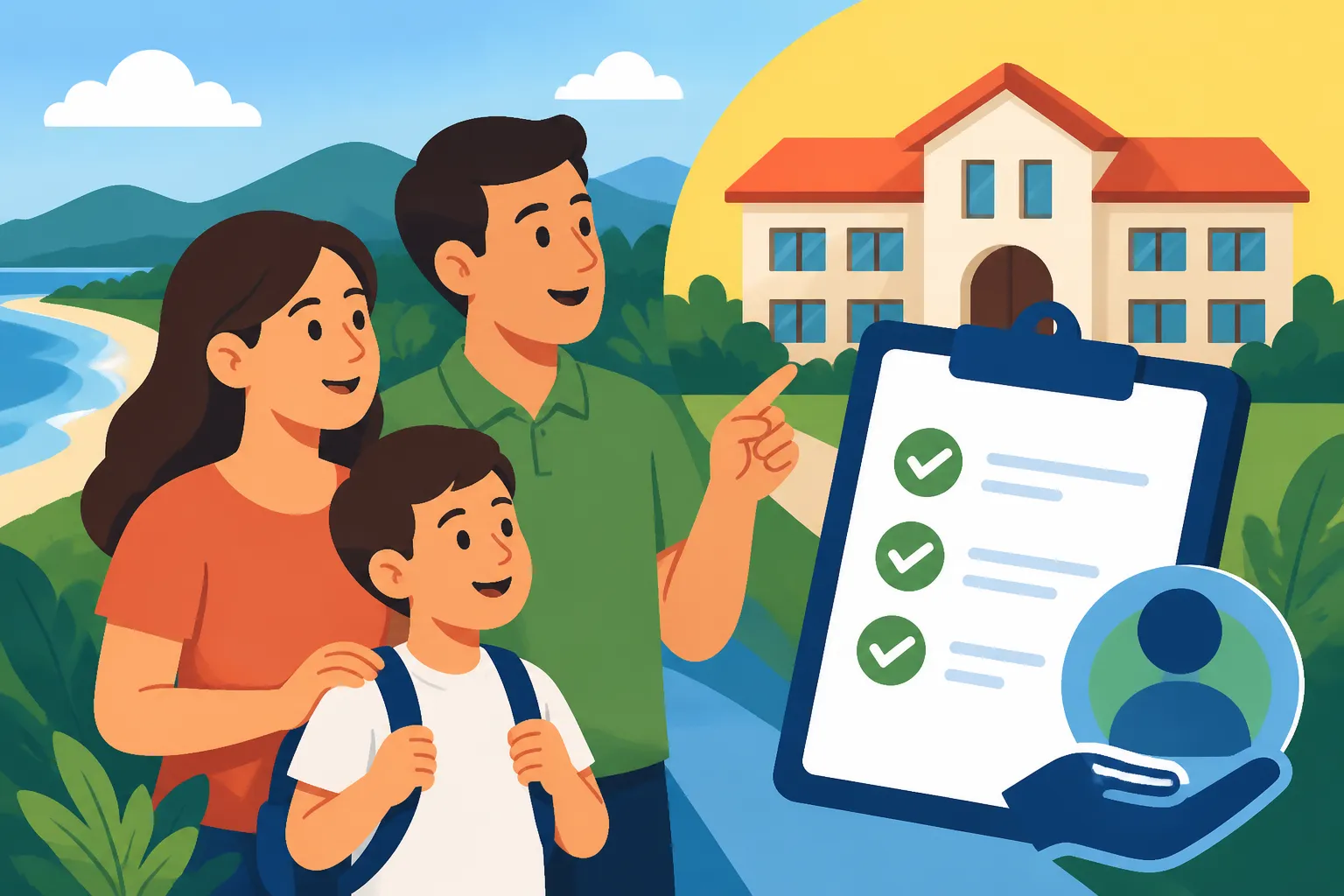
This is where the real fun begins! Regardless of whether you choose public, private, or international, you’ll need a stack of documents. The absolute essentials usually include:
- Birth Certificate: An original, apostilled copy from your home country.
- Passport: Both parents’ and the child’s passports, with copies.
- Residency Documentation (DIMEX): If you already have residency, you’ll need your DIMEX card. If you're still in the process of getting settled in your The Complete Guide to Moving to Costa Rica: Your First 90 Days (2027), some schools might accept proof of application, but confirmed residency is usually preferred.
- Previous School Records: Transcripts, report cards, and a letter of good standing from their last school. Again, these often need to be apostilled.
- Vaccination Records: Your child’s international vaccination certificate (yellow card or equivalent), translated into Spanish by a certified translator. Costa Rica has a robust public health system and takes vaccinations seriously.
- Proof of Address: A utility bill (ICE, AyA) in your name.
Here's the kicker: all foreign documents must be officially translated into Spanish by a certified public translator in Costa Rica, and often, they must be apostilled in your home country first. This step alone can take weeks, so don't leave it to the last minute! I made that mistake once, thinking a quick online translation would suffice for a preliminary application. Nope. Had to scramble.
Application Timelines and Assessments
For private and international schools, application windows usually open several months before the start of the academic year (which typically begins in February, following the Southern Hemisphere calendar, though some international schools follow a Northern Hemisphere calendar, starting in August/September). Public schools tend to have enrollment periods closer to the start of the academic year.
Many private and international schools will also require an entrance exam or assessment, especially for older children. This is usually to gauge their academic level, English or Spanish proficiency, and readiness for the school's curriculum. Don't stress too much about these; they're more for placement than for exclusion, but they do indicate whether the school environment will be a good fit. Some schools may also require an interview with both the child and the parents. It's your chance to ask all your questions and get a feel for the school's culture.
Practical Tips for a Smooth Transition
- Start Early: I cannot emphasize this enough. The document gathering, apostille process, translations – it all takes time. If you can, start months before your planned move.
- Visit Schools: If possible, visit potential schools in person. Get a feel for the environment, talk to administrators and teachers, and observe the students. What looks good on a website might not feel right in person.
- Network with Other Expats: This is invaluable. Join local expat Facebook groups or communities. Ask for recommendations, insights into specific schools, and tips for navigating the bureaucracy. Other parents have been exactly where you are and often have fantastic advice.
- Consider a 'Trial Run': For younger children or those with no Spanish, a short immersion program or private tutoring before school starts can make a world of difference.
- Stay Flexible: Things in Costa Rica sometimes operate on a different timeline, and unforeseen delays can pop up. Embrace Pura Vida even in the paperwork process. Having a reliable communication method, like an Airalo eSIM, can be incredibly helpful for staying in touch with schools or legal services during these periods, especially if you're still in flux with local phone numbers.
- Moving Logistics: If you’re shipping household goods, including school supplies or specific educational materials, consider services like Sirelo for comparing international moving companies. A smooth move makes for a smoother school start.
Costs, Curriculum, and Culture: What to Expect
Beyond the initial enrollment hurdles, understanding the ongoing costs, the curriculum style, and the cultural nuances within the Costa Rican school system is vital for your child’s long-term success and happiness.
Breaking Down the Costs
We've touched on this, but let's get a bit more specific. While public schools are technically free, you'll still have expenses for uniforms (yes, even public schools usually require them), school supplies, textbooks (though often fewer than private schools), and sometimes small fees for activities.
For private and international schools, the costs can truly add up. Here's a quick breakdown:
| Cost Category | Public Schools (Estimated Annually) | Private Schools (Estimated Annually) | International Schools (Estimated Annually) |
|---|---|---|---|
| Tuition | $0 | $3,000 – $12,000 | $8,000 – $25,000+ |
| Enrollment/Reg. | $0 (Minor fees possible) | $500 – $2,000 (One-time or annual) | $1,000 – $5,000 (One-time or annual) |
| Uniforms | $100 – $200 | $200 – $500 | $200 – $600 |
| Books/Supplies | $100 – $300 | $300 – $1,000 | $500 – $1,500 |
| Transportation | Varies (Public bus, walking) | $500 – $1,500 (School bus optional) | $800 – $2,500 (School bus common) |
| Extracurriculars | $0 – $100 | $200 – $800 | $300 – $1,000+ |
| Technology Fees | $0 | $100 – $500 | $200 – $800 |
These are rough estimates and can vary wildly based on the specific school, grade level, and your location in Costa Rica (e.g., San José area versus a rural beach town).
It's a good idea to factor these into your overall financial planning. Don't forget, these costs don't include things like school trips, sports equipment, or individual tutoring if needed. Many schools require payment in USD, but it’s always good to confirm.
Curriculum and Teaching Styles
Costa Rican public and private schools following the MEP curriculum place a strong emphasis on core subjects like Spanish, mathematics, social studies (with a focus on Costa Rican history and civics), and sciences. English is taught as a second language, but the level of instruction can vary greatly between schools. There's often a greater emphasis on rote learning and memorization than what some Western education systems employ, especially in earlier grades.
International schools, on the other hand, typically adhere to a curriculum from their home country (e.g., US Common Core, British National Curriculum) or an international one like the IB program. This means the teaching styles, assessment methods, and overall academic approach will likely feel more familiar to expat parents. They often integrate more project-based learning, critical thinking, and student-centered approaches.
Cultural Integration and Social Life
This is arguably the most important aspect for your child. In public schools, your child will be immersed in Costa Rican culture and quickly pick up Spanish slang and customs. This is fantastic for integration but can be isolating if they struggle with the language initially. Parents will also find themselves engaging more with the local community, which is a beautiful way to connect.
Private and international schools offer a more diverse social environment. Your child will likely make friends with kids from all over the world, as well as local Costa Rican children. This exposure can broaden their horizons immensely. However, it's still crucial to encourage engagement with the broader Costa Rican culture outside of school. Many expat kids can get stuck in an "expat bubble" if not prompted to explore their surroundings. Encourage them to join local sports teams, volunteer, or participate in community events. It will not only help their Spanish but also give them a deeper appreciation for their new home.
Making the Right Choice for Your Family
Choosing a school is a deeply personal decision, and there's no single "best" option for everyone. What’s paramount is finding an environment where your child can thrive academically, socially, and emotionally.
Factors to Consider When Choosing
- Language Proficiency: How strong is your child's Spanish? Are you committed to them becoming fluent? If they’re older and have no Spanish, an international or highly bilingual private school might offer a softer landing.
- Curriculum Alignment: Do you want a curriculum that aligns with your home country for potential future transitions, or are you open to a different educational approach?
- Budget: Be realistic about what you can afford. The costs for private and international schools are significant and ongoing.
- Location: Where will you be living? Consider the commute time and whether the school is in a How to Find Family-Friendly Neighborhoods in San Jose or another region that fits your lifestyle. Being close to school can make a big difference in daily life.
- School Culture and Values: Does the school’s philosophy resonate with your family’s values? Do they emphasize academics, arts, sports, or a balance of everything?
- Long-Term Goals: Do you plan to stay in Costa Rica permanently, or is this a temporary move? This can influence whether you prioritize integration into the local system or continuity with an international one.
- Child's Personality: Is your child adaptable and outgoing, or do they prefer familiarity and a slower transition? Some kids jump right into new situations, while others need more support.
Settling In and Supporting Your Child
The first few weeks and months will be a period of adjustment for everyone. Your child might experience a "honeymoon phase" followed by culture shock or homesickness. This is normal.
- Listen Actively: Pay attention to what your child is saying (and not saying) about school.
- Be Patient: Learning a new language and adapting to a new social dynamic takes time.
- Encourage Friendships: Help them arrange playdates, invite classmates over, or join after-school activities.
- Support Language Learning: If they’re in a Spanish-speaking environment, continue to encourage their Spanish outside of school. Even small things like watching cartoons in Spanish or reading simple books can help. If you're a beginner yourself, consider looking into Learning Spanish in Costa Rica: A Complete Guide for Expats.
- Communicate with the School: Establish open lines of communication with teachers and administrators. Most schools, even public ones, are keen to support expat families.
- Prioritize Downtime: School can be exhausting in a new culture and language. Make sure your child has plenty of time to relax and recharge.
Enrolling your child in school in Costa Rica is a significant step in your expat journey. While it comes with its unique set of challenges, it's also an incredible opportunity for your children to gain a global perspective, become bilingual, and truly experience Pura Vida. Take it one step at a time, gather your documents, ask for help, and trust that you'll find the right fit for your family.
Disclaimer
The information provided in this guide is for general informational purposes only and does not constitute legal, financial, or educational advice. While we strive to keep the information up-to-date and accurate, regulations and school policies in Costa Rica can change. We recommend consulting with local education authorities, specific schools, and legal professionals for advice tailored to your individual circumstances.