Understanding the Difference Between State and Private Banks in Costa Rica
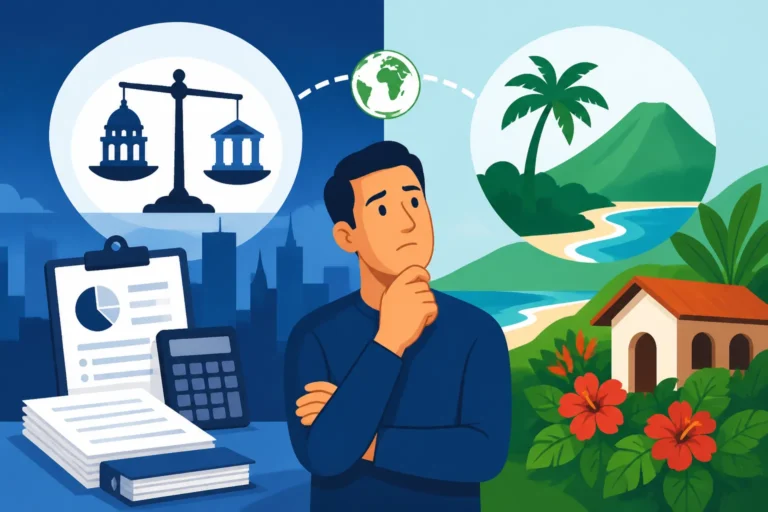
Navigating the financial landscape in a new country can feel like trying to solve a Rubik's Cube blindfolded, and in Costa Rica, understanding the banking system is often one of the first and biggest headaches for expats. You’ll quickly discover that not all banks are created equal, and the distinction between a state bank and a private bank here isn’t just a minor detail – it profoundly impacts your daily life, your finances, and even your sanity. This guide is here to shed light on those differences, validate your frustrations, and help you choose the best path for your Pura Vida financial journey.
The Core Difference: State-Owned Versus Private Institutions
When you first start looking at banks in Costa Rica, you'll hear names like Banco Nacional, Banco de Costa Rica (BCR), and Banco Popular mentioned alongside others like BAC Credomatic, Davivienda, or Scotiabank. These aren't just different names; they represent fundamentally different types of institutions, each with its own quirks, benefits, and challenges, especially for us foreigners. It’s crucial to grasp this distinction from the get-go.
Understanding the Role and Mandate of State Banks
Costa Rica's state-owned banks, primarily Banco Nacional and Banco de Costa Rica (BCR), are behemoths in the local financial world. They're not just commercial entities; they operate with a social mandate. This means they often have a broader reach, extending into more rural areas where private banks might not see enough profit to justify a presence. Think of them as the backbone of the national economy, involved in everything from large infrastructure projects to offering housing loans to local families. They are perceived as incredibly stable, backed by the government itself, which can be a huge comfort for many expats looking for security.
However, this public mandate also comes with a heavy dose of bureaucracy. Decisions often take longer, processes can be more rigid, and there's less flexibility for individual cases. For an expat trying to set up their life, this can translate into frustrating delays and an endless parade of paperwork. Their systems, while functional, might not always be at the cutting edge of digital innovation, and customer service can sometimes feel like you're just a number in a very long queue. Still, for basic services and widespread ATM access, they are undeniably convenient.
The Business Model and Focus of Private Banks
On the flip side, private banks in Costa Rica, such as BAC Credomatic, Scotiabank, Davivienda, or Promerica, operate with a purely commercial objective: profit. This focus generally translates into a more streamlined, customer-centric approach, especially for clients they deem profitable. They're often quicker to adopt new technologies, offer more personalized services, and compete fiercely for market share, which can sometimes lead to more attractive rates or specialized products. Many private banks here are also branches of international banks, bringing a certain level of global familiarity and service standards that might appeal to expats.
The main challenge with private banks for some expats can be their stricter requirements or higher fees, particularly for smaller accounts or individuals who don't fit a standard profile. Their branch networks might be concentrated in urban or expat-dense areas, making them less accessible in remote locations. While they often boast better English-speaking staff and more efficient processes, it’s not a given, and their commercial drive means they can be less understanding if you don't tick all their boxes. For those needing efficient international transfers or more sophisticated investment products, they often offer a smoother experience, but it comes at a price.
Advantages and Disadvantages for Expats
Deciding between a state and a private bank isn't just a matter of preference; it's about aligning their strengths and weaknesses with your specific needs and tolerance for bureaucracy. As an expat, you're not just looking for a place to put your money; you're looking for a financial partner that understands your unique situation.
The Perks of State Banks: Stability and Reach
The biggest draw for state banks like Banco Nacional or BCR is their undeniable stability. They are considered "too big to fail" because of government backing, which offers a profound sense of security. This is particularly comforting in a foreign country where you might already feel a bit out of your depth with local financial systems. Furthermore, their extensive network of branches and ATMs, stretching from the bustling streets of San José to the most tranquil corners of the Osa Peninsula, is unmatched. You'll find a Banco Nacional ATM almost everywhere, which is incredibly handy when you're traveling around the country and need cash.
Another silent advantage is their broad acceptance for various governmental transactions. Whether you're paying utility bills (ICE or AyA), property taxes, or dealing with immigration fees, state banks are typically the default, most straightforward option. This integration with the national infrastructure simplifies many administrative tasks that can otherwise become complex. For example, when it comes to things like paying your How Do I Pay My Caja Bill Each Month in Costa Rica? or other state-related services, these institutions are almost always the path of least resistance.
The Drawbacks of State Banks: Bureaucracy and Innovation Lag
Ah, the paciencia you'll need when dealing with state banks. Their comprehensive internal regulations, designed for broad public oversight, can often feel like an insurmountable wall for individuals. Opening an account can be a lengthy, document-intensive process, even for residents, requiring multiple visits and a profound well of patience. Expats frequently report feeling like they're jumping through hoops that constantly change.
When it comes to technology, while they've made strides, state banks can sometimes lag behind their private counterparts. Their mobile apps and online banking platforms might not offer the same slick user experience or advanced features you're accustomed to from banks back home. International transfers, while possible, can sometimes be slower and involve more steps. This can be particularly frustrating if you're managing money across borders frequently. If you're used to instant transfers and seamless digital interactions, the state bank experience might feel a bit like stepping back in time.
The Allure of Private Banks: Service and Efficiency
Private banks in Costa Rica are often praised for their more agile, customer-focused approach. Many expats find their processes to be quicker, their staff more attentive, and their problem-solving skills a bit more proactive. If you value efficiency and personalized service, especially if you have complex financial needs or are used to a high standard of banking, private institutions often come out ahead. They also tend to have more English-speaking staff, particularly in branches located in expat-heavy areas like Escazú, Santa Ana, or even Liberia, which can significantly ease communication burdens.
Their commitment to technological innovation is another major draw. Private banks often invest heavily in user-friendly mobile apps, online platforms, and digital security features, aiming to provide a seamless banking experience. Features like instant notifications, robust budgeting tools, and easier international money transfers are common. For instance, Wise (formerly TransferWise) integrates very well with many private bank accounts, offering a much smoother experience for sending and receiving funds from abroad compared to some of the more traditional state bank processes. This can be a huge time-saver and stress-reducer for anyone managing their finances internationally.
The Caveats of Private Banks: Fees and Accessibility
However, this enhanced service and efficiency often come at a cost. Private banks can have higher account maintenance fees, transaction charges, or minimum balance requirements, which can add up, especially if you're on a tighter budget. You'll definitely want to ask about these upfront. Furthermore, while their urban presence is strong, their footprint in rural areas is significantly smaller. If you live in a less populated region, finding a branch or even an ATM for your private bank might require a substantial drive, which defeats some of the convenience factor.
Another point of consideration is that while they are generally well-regulated, they don't have the explicit government guarantee that state banks do. While the Costa Rican financial system is stable, for some, that direct government backing of state banks offers an extra layer of peace of mind. For those focused on more complex The Complete Guide to Taxes in Costa Rica for Expats (2027) or investment strategies, private banks might be better equipped with specialists, but always weigh the fees and accessibility against your specific needs.
Navigating Services and Features Relevant to Foreigners
For expats, the kind of services a bank offers and how accessible they are makes all the difference. You're not just looking for a place to deposit your paycheck; you need a bank that can handle international transactions, provide convenient digital access, and ideally, not make you feel like you're trying to decode ancient hieroglyphs every time you need assistance.
Account Types and Requirements
Both state and private banks offer various account types, but the ease of opening them and the specific requirements can differ significantly. Generally, you’ll find checking (cuenta corriente) and savings (cuenta de ahorros) accounts. For many expats, the primary goal is often to open a dollar account. While both types of banks offer them, the process to How to Open a US Dollar Account in Costa Rica can be surprisingly involved.
State banks, while known for their bureaucracy, often have more standardized processes for new residents, even if they are slow. They might be more accustomed to dealing with the influx of Pensionados or Rentistas needing to demonstrate foreign income. Private banks, on the other hand, might offer more diverse products like investment accounts or specialized credit lines but could have stricter requirements regarding minimum deposits or a more stringent review of your financial history. They are often less tolerant of minor discrepancies in documentation. It's not uncommon for expats to report that a private bank requested more proof of income or a longer banking history than a state bank. This is where understanding your What Documents Do I Need to Open a Bank Account in Costa Rica? thoroughly is paramount.
Online Banking and Digital Tools
This is often where the biggest practical difference lies for day-to-day use. Private banks typically excel in online banking and mobile app functionality. They generally offer more intuitive interfaces, robust security features, and a wider range of transactions you can perform from your phone or computer. You'll likely find it easier to How to Set Up Online Banking with a Costa Rican Bank and manage bills, transfers, and even apply for certain services digitally. Many private banks offer personalized alerts and budgeting tools, which can be incredibly helpful for managing your finances in a new currency.
State banks have certainly improved their digital offerings over the years, but their platforms can sometimes feel a bit clunkier or less comprehensive. You might find certain transactions still require a trip to a physical branch, or the user experience isn't as seamless. For example, while paying utilities online is standard across the board, complex international transfers might still involve more steps or longer processing times through a state bank's online portal. If you're someone who relies heavily on digital banking, this could be a significant factor in your choice.
International Transfers and Currency Exchange
Managing money across borders is a common necessity for many expats. Both types of banks facilitate international wire transfers (SWIFT/IBAN), but the fees, exchange rates, and processing times can vary. Private banks often have more competitive exchange rates or a simpler process for sending and receiving funds globally. Their integration with international payment systems can sometimes make them a more efficient choice for frequent cross-border transactions. This is also where services like Wise really shine, often providing better rates and lower fees for international transfers than traditional banks, which many private banks are more accustomed to integrating with for receiving funds.
State banks can also handle international transfers, but the process might involve more paperwork, potentially higher fees, and possibly longer delays. For incoming funds, you might find more questions asked about the origin of the money. If you're receiving a pension or income from abroad regularly, comparing these aspects carefully is crucial. Don't forget to consider Understanding How to Transfer Money Into and Out of Costa Rica as an Expat as this can involve quite a bit of research on fees, exchange rates, and processing times from both ends.
The Ever-Important Customer Service and Language Barrier
Let's be real: customer service can make or break your banking experience in any country, but especially when you're dealing with a language barrier and an unfamiliar system. This is an area where expats often feel the starkest difference between state and private banks in Costa Rica.
Experience at State Bank Branches
Walking into a state bank like Banco Nacional or BCR, especially in a busy urban branch, can sometimes feel like entering a government agency. The waiting lines can be long, even with the ticket system (you know the one, 'saque su ficha aquí'), and the atmosphere is generally more formal and less personalized. While you'll find plenty of staff, finding someone who speaks fluent English can be hit or miss, and even if they do, their ability to deviate from a script or rigid protocol might be limited. This isn't a reflection of their willingness to help, but rather the structured nature of their operations.
For complex issues, you might find yourself explaining the same problem to multiple people, sometimes in broken Spanish, which can be incredibly draining. The "eso no se puede" (that can't be done) response is a common frustration, even when you know there should be a solution. However, for routine transactions like depositing cash or paying a bill, they are usually efficient enough once you get to the window. It's when you hit a snag that the bureaucracy truly reveals itself.
Expecting More from Private Bank Interactions
Private banks often pride themselves on offering a more personalized and efficient customer experience. You'll typically find shorter wait times, more modern and comfortable branch environments, and a higher likelihood of encountering English-speaking staff, especially in their main branches or in areas with a significant expat population. They are generally more willing to go the extra mile to assist you, particularly if you're a high-value customer. The staff might be more empowered to make decisions or offer alternative solutions, rather than being strictly bound by rigid procedures.
However, even with private banks, individual experiences can vary wildly based on the specific branch, the time of day, and even the staff member you interact with. It's not a guarantee of perfection, but the likelihood of a smoother, more communicative experience is generally higher. If you prioritize ease of communication and a more customer-centric approach, private banks often edge out state banks, particularly for expats who aren't yet fully fluent in Spanish. Building a relationship with a specific account manager at a private bank can also be a significant advantage, often leading to better service and quicker resolution of issues.
The Account Opening Odyssey: What Expats Can Expect
Ah, opening a bank account in Costa Rica. This rite of passage is often cited as one of the most challenging administrative tasks for new arrivals. It’s a journey that demands patience, meticulous documentation, and a good sense of humor. Regardless of whether you choose a state or private bank, you will face hurdles, but understanding what to expect can soften the blow. This is probably one of the biggest reasons why people look for advice on The Expat Guide to Opening a Bank Account in Costa Rica.
The Bureaucratic Gauntlet for Both Bank Types
Let's be clear: neither state nor private banks in Costa Rica are known for a lightning-fast account opening process for foreigners. The primary reason is stringent anti-money laundering (AML) and know-your-customer (KYC) regulations, often referred to as “Conozca a su Cliente”. These rules require banks to meticulously verify the identity and source of funds for every applicant, especially non-nationals. This means you'll need to provide an array of documents, often including certified translations and apostilles, which can feel incredibly invasive and redundant if you've already done it for your residency application.
Expect to provide your passport, residency card (DIMEX), proof of address (a utility bill in your name is gold), and, most critically, proof of income or source of funds. This last one is often the biggest sticking point. Banks want to see where your money comes from—whether it's a pension, salary, investments, or business profits. They'll ask for bank statements from your home country, tax returns, and even letters from employers or pension administrators. And yes, they often want these documents to be recent. This is why services like Taxes for Expats are so vital, as clear, verifiable tax documentation can significantly smooth this process. Without proper documentation of your income, you could find yourself stuck in a loop of requests and delays.
Specific Documentation and Proving Income
Beyond the basic ID and address, both bank types will delve deep into your financial background. For state banks, while sometimes more accustomed to the general expat applicant, their processes for verifying international income can be slow due to internal procedures. They might be less flexible in accepting alternative forms of proof. For example, a simple letter from your accountant or a standard investment statement might not cut it. They might require multiple layers of verification.
Private banks, while potentially faster in theory, can sometimes have even stricter initial screening criteria because they are often trying to attract higher-value clients. They might demand higher minimum deposits or a more consistent income history. For instance, if you're a freelancer or have multiple income streams, demonstrating a clear, consistent source of funds might be more challenging with a private bank, as they prefer straightforward pay stubs or pension statements. This is why having your financial house in order, including clear records from services like Taxes for Expats that demonstrate legitimate income, is so critical before you even walk through the bank's doors.
It's wise to call ahead, or even visit the bank, with a list of questions to confirm their specific requirements for foreigners. These requirements can, and often do, change, so what your friend did last year might not apply today. Bring more documents than you think you’ll need, and make sure everything is translated and certified as required. It's a test of endurance, but once you're in, the hardest part is usually over.
Practical Considerations and Recommendations for Your Banking Strategy
So, you’ve heard the rundown. Now, how do you actually put this information into action? For most expats, a single banking solution might not be the most practical or efficient approach. Often, a hybrid strategy, leveraging the strengths of both state and private banks, along with international tools, proves to be the most effective way to manage your money in Costa Rica. This kind of flexibility is key to What Is the Best Multi-Currency Strategy for Living in Costa Rica?.
Deciding Which Bank Type Suits Your Needs
Think about your primary banking needs. If you prioritize maximum security, widespread physical access (especially if you live outside a major urban center), and handling government-related transactions with ease, a state bank like Banco Nacional or BCR might be a good foundational choice. They are reliable for basic savings, local bill payments, and holding colones. They are also usually the first choice for receiving your pension if you’re a Pensionado.
However, if you value efficiency, modern digital tools, better English-speaking customer service, and smoother international transactions, then a private bank like BAC Credomatic often makes more sense for your primary operational account. They are excellent for managing everyday spending, online purchases, and quicker international money transfers. Many expats choose to open accounts with both types of banks to get the best of both worlds. For instance, you might use a state bank for core savings and certain bill payments, and a private bank for day-to-day transactions and anything involving foreign currency.
Here's a quick comparison to help you visualize:
| Feature/Aspect | State Banks (e.g., Banco Nacional, BCR) | Private Banks (e.g., BAC Credomatic, Scotiabank) |
|---|---|---|
| Stability | Very High (government-backed) | High (private sector, often international affiliations) |
| Reach/ATMs | Extensive, even in rural areas | Concentrated in urban/expat areas |
| Bureaucracy | High (slow, rigid processes) | Moderate to Low (more streamlined, but still robust KYC for foreigners) |
| Digital Services | Improving, but can be less intuitive/comprehensive | Generally advanced, user-friendly apps, robust online platforms |
| Customer Service | Formal, often long waits, English support less common | More personalized, often quicker, higher likelihood of English support |
| Account Opening | Meticulous, can be slow, high documentation | Meticulous, potentially quicker, high documentation; may have higher minimums |
| International Xfers | Possible, but can be slower, higher fees, more paperwork | Generally quicker, more competitive rates, smoother integration (e.g., with Wise) |
| Fees | Generally lower account maintenance fees | Potentially higher account maintenance and transaction fees |
| Acceptance | Universal for government services, utilities | Widely accepted, but less integral for direct government payments |
Balancing Local and International Banking Needs
Don't forget your international banking strategy. While having local accounts is essential, don't close off your foreign accounts completely, especially if you have significant income or assets abroad. Services like Wise are indispensable for bridging the gap, allowing you to easily transfer money between your foreign and Costa Rican accounts at better rates than traditional bank wires. This can be critical for managing your Understanding Foreign Exchange and the Colon vs Dollar in Costa Rica.
Consider keeping a portion of your funds in a high-yield savings account or investments in your home country, and only transferring what you need to Costa Rica as necessary. This helps you manage exchange rate fluctuations and keeps a portion of your wealth liquid and easily accessible in a familiar system. When it comes to managing your overall financial picture as an expat, particularly with regards to taxes, leveraging resources like Taxes for Expats can help ensure compliance both at home and in Costa Rica, providing peace of mind as you integrate your local and international finances. It's about creating a robust financial ecosystem that serves your specific lifestyle here in paradise.
Disclaimer
The information provided in this guide is for general informational purposes only and does not constitute financial, legal, or tax advice. While we strive to keep the information up-to-date and accurate, laws, regulations, and bank policies in Costa Rica can change frequently. Expats should always consult with qualified local financial advisors, legal professionals, or tax specialists for advice tailored to their individual circumstances. We are not responsible for any actions taken based on the information presented herein.