Understanding the Costa Rican Pharmacy (Farmacia) System
One of the most disorienting experiences for a new arrival in Costa Rica is standing in a local pharmacy, trying to explain a specific ailment while realizing that the rules of engagement here are entirely different from back home. Whether you are dealing with a sudden tropical bug or managing a chronic condition, this guide demystifies the Costa Rican pharmacy system so you can access the medicine you need without the stress.
Navigating the Cultural Nuances of the Costa Rican Farmacia
When you walk into a farmacia in Costa Rica, you aren't just entering a retail store; you are entering a cornerstone of the local healthcare community. For many locals, the pharmacy is the first line of defense against illness, often bypassing a traditional doctor’s visit for minor to moderate concerns. This cultural shift can be surprising for expats used to strict gatekeeping between pharmacists and physicians.
The Pharmacist as a Primary Care Consultant
In Costa Rica, the "Regente" or head pharmacist is a highly respected professional who has the legal authority to provide medical advice and even recommend treatments for a wide variety of ailments. Unlike in many Western countries where a pharmacist’s role is strictly to dispense what a doctor has ordered, a Tico pharmacist can often diagnose common issues like ear infections, skin rashes, or digestive upsets right at the counter.
This is incredibly helpful when you are still trying to figure out How to Find an English-Speaking Doctor in Costa Rica. You can walk into a private pharmacy, explain your symptoms, and the pharmacist may suggest a specific medication. However, it is vital to remember that while they are experts in pharmacology, they aren't a replacement for a full diagnostic workup if you have a serious or persistent condition. Empathizing with the local system means understanding that this "over-the-counter" consultation is a standard part of life here, intended to reduce the burden on the larger medical system.
Identifying Local Pharmacies and Chain Stores
You will find a wide variety of pharmacies ranging from small, independent "mom and pop" shops to massive national chains. The most common chains you will encounter are Farmacias Fischel, Farmacia La Bomba, and Farmacia Sucre. Each has a slightly different personality. Fischel is often seen as the more premium option, frequently located in upscale neighborhoods or near private hospitals, whereas La Bomba is famous for its aggressive pricing and "deep discount" model.
If you are living in a more rural area, the local independent pharmacy might be your only option. These smaller shops are excellent for building a personal relationship with the Regente. When you become a "regular," they often go out of their way to order specific medications for you or call you when a shipment arrives. For those living in the Central Valley, knowing How to Find a Trusted Pharmacy Near Me in San Jose? can save you a significant amount of time and money, as the density of options allows for price shopping between the big chains and the smaller independents.
The Physical Layout and Service Experience
Most Costa Rican pharmacies are not "self-service" in the way a Walgreens or CVS might be. While there are aisles for shampoo, sunblock, and snacks, the actual medicine—even common over-the-counter items like high-dose ibuprofen or cold medicine—is usually kept behind a high counter. You must wait in line to speak with a technician or the Regente to request what you need.
This can be a bit intimidating if your Spanish is still a work in progress. It is common for the technician to ask several follow-up questions about who the medicine is for, their age, and any other symptoms. This isn't them being nosy; it’s part of their mandate to ensure safe usage. For digital nomads or travelers using SafetyWing to cover their health needs while in the country, keeping the receipts from these interactions is crucial for potential reimbursement, even if the medication was suggested by the pharmacist rather than a doctor.
Prescription vs Over the Counter Realities in Costa Rica
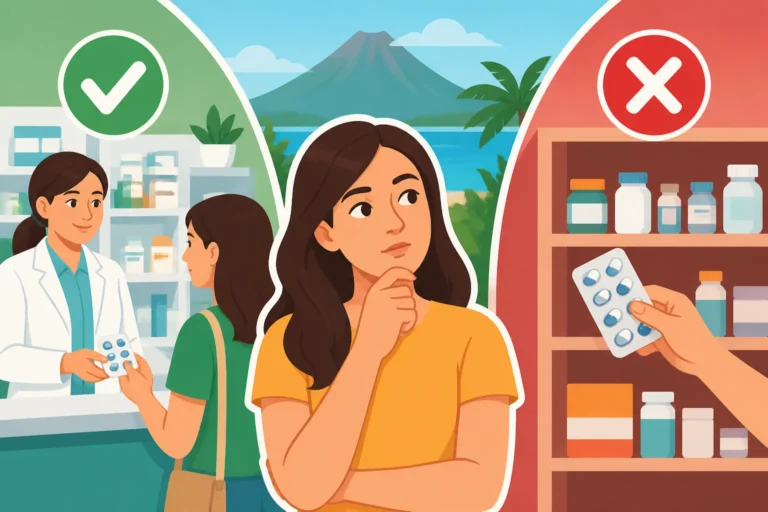
One of the most frequent questions expats ask is: "Do I really need a prescription for this?" The answer is a bit more flexible than in the United States or Canada, but it is becoming stricter as Costa Rica aligns more closely with international health standards. Understanding these boundaries is essential for managing your expectations at the counter.
Medications That Require a Physician Prescription
Generally speaking, any medication that falls under the category of psychotropics, strong narcotics, or certain specialized hormonal treatments requires a physical or digital prescription (receta) from a doctor registered with the Costa Rican College of Physicians and Surgeons. This includes drugs like Xanax, Ritalin, or heavy-duty painkillers. You cannot simply bring a prescription from your home country and expect it to be filled; it must be "transcribed" or re-issued by a local doctor.
If you are moving here with a chronic condition, it is highly recommended to read Prescription Medications and Pharmacies in Costa Rica: The Complete Guide to understand the specific legalities of importing your initial supply. For these controlled substances, the pharmacist will take your prescription and often keep it, as they are required to log these sales in a government-monitored system. If you are a resident, your DIMEX card will be required for these transactions to verify your identity.
Common Meds Available Without a Script
The list of what you can buy without a prescription in Costa Rica is surprisingly broad. This often includes antibiotics, birth control pills, blood pressure medication, and cholesterol-lowering drugs. While the Ministry of Health has periodically attempted to restrict antibiotic sales to prescription-only to combat resistance, in practice, many pharmacies still dispense them after a consultation with the Regente.
However, just because you can buy it doesn't always mean you should without professional guidance. Many expats find it useful to consult with a professional to understand Can I Buy Antibiotics Over the Counter in Costa Rica? and the risks involved in self-medicating. For minor issues, the convenience is unmatched. If you have a stomach bug, you can grab a pack of "Enterogermina" or a basic antibiotic without having to spend half a day in a waiting room.
The Role of Generic Medications
When you ask for a medication, the pharmacist will almost always ask if you want the "original" (brand name) or the "genérico." Costa Rica has a robust market for generic drugs, many of which are manufactured within Latin America. These are significantly cheaper—sometimes by as much as 70%—than the brand-name versions imported from the US or Europe.
For those concerned about quality, the question of Are Generic Medicines Available in Costa Rican Pharmacies? usually comes down to the specific manufacturer. Most major chains only carry generics that have been vetted by the Ministry of Health. If you have a specific allergy to fillers or binders, however, you might want to stick with the brand name you know. Always check the active ingredient (principio activo) on the box to ensure it matches what you were taking back home.
The Financial Side of Costa Rican Pharmacies
The cost of medication can be a major shock to the system, depending on where you are coming from. While some things are much cheaper, others—especially imported brand-name drugs—can be surprisingly expensive. Navigating these costs requires a bit of strategy and an understanding of the dual-tiered healthcare system.
Comparing Prices Between Public and Private Sectors
If you are a resident and paying into the national healthcare system, you are likely already familiar with The Expat Guide to Joining the Caja (CCSS) in Costa Rica (2027). One of the primary benefits of the Caja is that once you are in the system, your medications are "free" (covered by your monthly contribution). However, there is a catch: you can only get the medications that the Caja has on its official list (the Lista Oficial de Medicamentos).
If the Caja doesn't carry the specific brand or type of medication you need, you will have to go to a private pharmacy and pay out of pocket. This is where The Cost of Healthcare in Costa Rica: A Complete Breakdown for Foreigners (2026) becomes a vital resource for budgeting. Private pharmacy prices are regulated to some extent, but there is still a wide variance between stores.
| Feature | Public Pharmacy (Caja) | Private Pharmacy (Fischel/La Bomba) |
|---|---|---|
| Cost | Included in monthly CCSS fee | Out-of-pocket (varies by brand) |
| Wait Time | Can be several hours | Usually 5–15 minutes |
| Selection | Limited to basic/essential list | Wide variety of international brands |
| Prescription | Required from a Caja doctor | Many items available OTC |
| Convenience | Located in EBAIS/Hospitals | Found in malls and neighborhoods |
How Insurance and SafetyWing Work for Meds
For many expats and long-term travelers, private insurance is the preferred way to handle medical needs. If you are using a plan like SafetyWing, your pharmacy coverage usually applies to medications prescribed for an acute illness or injury covered by the policy. It is important to realize that private pharmacies in Costa Rica do not "bill" international insurance directly for prescriptions at the point of sale.
Instead, you will pay for the medication upfront, collect a "factura electrónica" (electronic invoice), and then submit that to your insurance provider for reimbursement. For this reason, always ask the pharmacist for a "factura electrónica" rather than just a simple "tiquete de caja" (cash register receipt). The electronic version is the only one the tax authority and insurance companies will accept as valid proof of purchase. Using SafetyWing provides peace of mind for those unexpected infections or accidents where a trip to the pharmacy follows an emergency room visit.
Understanding Pharmacy Discount Programs
One of the best-kept secrets for saving money in the private sector is the "programas de pacientes" (patient programs) run by major pharmaceutical companies like Pfizer, GSK, or AstraZeneca. If you are on a long-term medication for something like asthma or high blood pressure, you can often register for a discount card at the pharmacy.
These programs frequently offer deals like "buy two boxes, get one free" or a flat 20% discount. To sign up, you usually just need to provide your name, a phone number, and sometimes the name of your prescribing doctor. When combined with the lower prices at high-volume stores like La Bomba, these discounts can make The Complete Guide to Healthcare in Costa Rica for Expats (2027) much more affordable than it first appears on paper.
Managing Long-Term Healthcare and Refills
Staying on top of your medication schedule in a foreign country requires a proactive approach. In Costa Rica, the "refill" system is not automated. You won't get a text message saying your prescription is ready; you have to manage the timeline yourself.
Refilling Prescriptions and Dealing with Shortages
In the private sector, refilling a prescription is as simple as walking in with your old box or the prescription paper. If it’s a non-controlled substance, they will usually just give you another month’s supply. However, supply chain issues can occasionally hit Costa Rica, leading to temporary shortages of specific brands.
If your medication is out of stock, the pharmacist can usually look up which other branch in their chain has it. They might even offer to have it delivered to your home. Knowing How to Get Medication Delivered to My Home in Costa Rica is a lifesaver when you are too sick to leave the house. Most major pharmacies use WhatsApp or their own apps to coordinate deliveries, often within an hour or two for a small fee.
Language Barriers and Essential Spanish Phrases
While many pharmacists in expat-heavy areas like Escazú, Nosara, or Jacó speak some English, it is not guaranteed. Having a few key phrases ready will make your life much easier. Instead of asking for "cold medicine," ask for "algo para la gripe." Instead of "heartburn," ask for "acidez."
If you have a complex medical history, it might be worth having a translated summary of your conditions. This is particularly helpful when navigating Understanding Private Hospital Networks and Direct Billing in Costa Rica, as the pharmacy attached to a private hospital will be your primary source for post-surgery or specialized care medications. Don't be afraid to use Google Translate to show the pharmacist the specific chemical name of the drug you need.
Emergency Access and After-Hours Pharmacies
Accidents don't always happen during business hours. While most pharmacies close by 8:00 PM or 9:00 PM, there is always a "Farmacia de Turno" (on-call pharmacy) required by law in every region, though finding out which one it is can be tricky. In larger cities, many Fischel locations or pharmacies attached to private hospitals like CIMA or Clínica Bíblica are open 24/7.
If you find yourself in a rural area at 2:00 AM, your best bet is usually the pharmacy located within or adjacent to the nearest "Urgencias" (Urgent Care) or hospital. For travelers, having SafetyWing ensures that if a late-night pharmacy run is part of a larger medical emergency, the associated costs are documented and potentially covered. It’s a good idea to pin the nearest 24-hour pharmacy on your Google Maps as soon as you move into a new neighborhood.
Comparing the Public and Private Pharmacy Experience
The choice between using the public Caja pharmacy and a private one usually comes down to a balance of time vs. money. Most expats end up using a hybrid approach: they use the Caja for their expensive, chronic medications and private pharmacies for everything else.
The Caja (CCSS) Pharmacy Experience
Getting your meds through the Caja is an exercise in patience. After seeing your doctor at the EBAIS, your prescription is sent electronically to the pharmacy window. You then have to wait in a separate line to "activate" the prescription and another line to pick it up. In busy clinics, this can take several hours.
Furthermore, the Caja uses a strict formulary. If your body responds best to a specific brand-name thyroid medication, but the Caja only stocks a specific generic, you are stuck with the generic. This is why many residents choose to pay for a private consultation to get a prescription they can take to a private store. Understanding the trade-offs is a major part of Navigating the Costa Rican Healthcare System: An Expat's Roadmap (2027).
Convenience Features of Private Pharmacies
Private pharmacies prioritize customer service. Many have loyalty programs where you earn points for every colón spent, which can be redeemed for future discounts. They also offer a much wider range of "wellness" products, from high-end European sunscreens to organic supplements and vitamins that you won't find in the public system.
Another huge advantage is the ability to communicate via WhatsApp. You can send a photo of your prescription to the pharmacy’s WhatsApp number, ask for the price, and confirm they have it in stock before you ever leave your house. This level of modern convenience is a sharp contrast to the bureaucratic hurdles of the public system and is a big reason why the private sector remains so popular despite the out-of-pocket costs.
Safety and Standards in the Pharmacy System
You might worry about the authenticity of medications in a developing country, but Costa Rica has very high standards for its pharmaceutical industry. The Ministry of Health (Ministerio de Salud) is rigorous about licensing and inspecting pharmacies.
Regulation and Expiration Dates
Every medication sold in a licensed Costa Rican pharmacy must have a "Registro Sanitario" (Sanitary Registry) number on the box. This ensures the drug has been tested and approved for sale in the country. It is highly uncommon to find counterfeit medications in legitimate pharmacies here.
Always check the expiration date, which is usually listed as "Vence" or "Exp." Because of the high humidity in many parts of Costa Rica, medications can degrade faster if not stored properly. If you live in a coastal area, keep your meds in a cool, dry place—ideally in a sealed container or a room with air conditioning—to ensure they remain effective until their expiration date.
Disposal of Unused Medications
Costa Rica is an environmentally conscious country, and you shouldn't just throw old medications in the trash, where they can leach into the groundwater. Many larger pharmacies, especially in the Central Valley, have "Puntos Azules" (Blue Points) where you can safely drop off expired or unused medications for proper incineration.
This commitment to safety and environmental health is reflective of the overall quality of care you can expect. While the system has its quirks—like the lack of child-proof caps on many bottles (always ask for them if you need them!)—it is a sophisticated and reliable network. By understanding these nuances, you can move through your life in Costa Rica with the confidence that your health needs are well-supported.
Disclaimer
The information provided in this guide is for educational and informational purposes only and does not constitute medical or legal advice. While we strive to keep this information up to date, the Costa Rican healthcare laws and pharmacy regulations can change frequently. Always consult with a licensed medical professional or a qualified pharmacist (Regente) in Costa Rica before starting or changing any medication regimen. The author and publisher are not responsible for any adverse effects or consequences resulting from the use of any suggestions or procedures described in this article.