What Documents Do I Need for Costa Rican Residency?
Oh, the infamous Costa Rican residency paperwork! If you're feeling a bit overwhelmed by the thought of gathering everything you need to become a resident here in La Pura Vida, believe me, you are not alone. It's a rite of passage for every expat, a true test of patience and organizational skills. This guide is going to walk you through the nitty-gritty of exactly what documents you'll need, helping you avoid some of the common pitfalls and prepare for a smoother journey towards making Costa Rica your legal home.
The Universal Document Checklist for All Residency Applications
Let's start with the non-negotiables, the foundational documents that almost every single residency applicant, regardless of their specific category, will need to provide. Think of these as your basic entry tickets to the bureaucratic tango. Skimp on these, and you'll be sent home faster than you can say "¡Pura Vida!"
Personal Identification and Status Documents
First and foremost, you need to prove who you are and where you've been. This section is all about your personal identity and background.
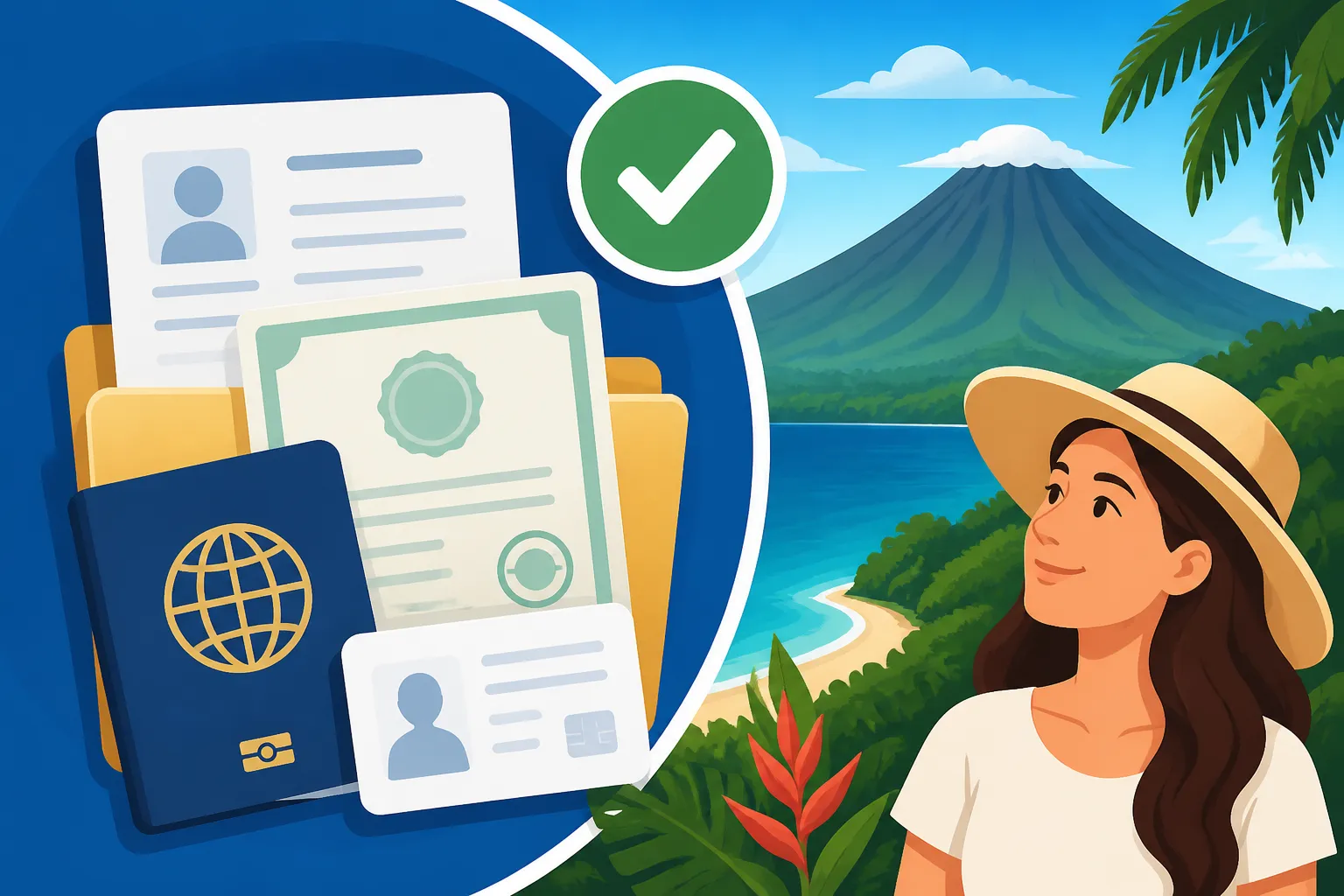
Your passport is your primary identification, and it needs to be valid for at least six months, if not longer, beyond your intended application date. You'll need multiple photocopies of every single page of your passport, not just the photo page. And I mean every page – blank ones too! These copies often need to be authenticated by an attorney or even by the migration office itself. Believe me, they check. One critical detail here is that any stamps from prior visits to Costa Rica, especially if you’ve overstayed or had issues, will be scrutinized. Ensure your passport is in pristine condition; a worn-out or damaged passport can cause delays.
Next up, your birth certificate. This document proves your legal existence and parentage. It must be an original, certified copy, not just a photocopy. For anyone applying from outside Costa Rica, this document, along with many others, needs to be either apostilled or legalized. We'll dive into what that means in a bit, but for now, just know that it needs that special seal of authenticity. If your birth certificate isn't in Spanish, it will absolutely need an official translation by a Traductor Oficial here in Costa Rica. Don't try to get a friend to translate it; Migration won't accept it.
If you’re applying with a spouse or partner, your marriage certificate is equally vital. Just like the birth certificate, it needs to be an original, apostilled or legalized copy, and officially translated into Spanish if necessary. This is crucial for family applications, as it establishes the legal bond. For those sponsoring family members, correctly formatted certificates are non-negotiable. You can read more about how to bring your family by checking out the guide on Family Residency in Costa Rica: How to Bring Your Spouse and Children.
Ah, the dreaded criminal record check! This is often one of the trickiest documents because of its strict validity period. You'll need a criminal record check (sometimes called a police certificate or certificate of good conduct) from your country of origin and from any country you have lived in for the past six months or more. These also need to be apostilled or legalized and officially translated. The kicker? These documents usually have a validity period, often just three months from the date of issue. So, you need to time getting these just right in your overall document collection process. Don't get them too early, or they'll expire before you can submit them, sending you back to square one – a frustration many expats have faced! For a deeper dive into this, see Understanding Background Checks and Criminal Record Requirements for Residency.
Photographs and Biometrics
Beyond the reams of paper, you'll also need to present yourself, literally.
Passport-style photos might seem simple, but Costa Rica has very specific requirements. We're talking white background, full face, no glasses, specific size (usually 2×2 inches or 4×5 cm). And you'll need several of them. Often, when you get your fingerprints taken, they'll also take your photo on the spot, but it’s always wise to have a few spares just in case.
Speaking of fingerprints, this is a step you’ll complete here in Costa Rica. Once your application is formally submitted, you’ll receive instructions from the Dirección General de Migración y Extranjería (DGME) to go to a specific office, usually in San José, for your toma de huellas. They’ll take your fingerprints and verify your identity there. It’s usually a pretty straightforward process, but it’s another appointment you’ll need to make and attend in person.
Specific Document Requirements by Residency Category
Now, this is where things get really specific. Costa Rica offers different residency categories, each tailored to different circumstances, and each comes with its own unique set of financial or investment-related documentation. Choosing the right one is your first big decision.
Pensionado (Retiree) Residency
The Pensionado category is a popular choice for retirees, and it requires proving a stable, lifelong pension income.
The absolute cornerstone document for Pensionado residency is proof of your pension. This needs to be an official letter or certificate from the government entity (like Social Security in the US or a state pension system) or a private institution (like a corporate pension fund) that provides your monthly pension. This document must clearly state that you receive at least $1,000 USD per month for life. It also needs to be notarized, apostilled or legalized, and officially translated into Spanish. This isn’t just a simple bank statement showing deposits; it needs to be an official, declarative letter. Many foreign government agencies are familiar with producing these types of letters for international residency applications.
While the $1,000/month is the minimum, it’s also prudent to demonstrate overall financial stability beyond just that pension. Though not strictly required by law for the application itself, having additional savings or assets can smooth the process and offer peace of mind. To understand the full scope of this, you might want to read How to Get the Pensionado (Retiree) Residency in Costa Rica (2027).
Rentista (Independent Means) Residency
If you don't have a lifelong pension but have consistent income from investments or other sources, Rentista residency might be your path. This category has a slightly higher income threshold and a unique financial requirement.
For Rentista, you need to demonstrate proof of stable income of at least $2,500 USD per month. The catch? This income usually needs to come from a guaranteed, consistent source, often from a bank deposit or investment, and be committed for at least two years. The most common way to satisfy this is by depositing $60,000 USD into a Costa Rican bank account, which then pays out $2,500 per month to you for two years. This is sometimes called a fianza deposit. You’ll need official bank statements and a sworn declaration from the bank confirming this arrangement. This is a significant financial commitment, so understanding its implications is key.
The documents typically include official letters from financial institutions, detailed bank statements showing the origin and consistency of funds, and possibly sworn affidavits from your bank or financial advisor, all, of course, apostilled/legalized and translated. This is a common path for those without a traditional pension but with substantial savings or investment portfolios. A good follow-up read for this would be The Expat Guide to the Rentista Residency in Costa Rica (2027).
Inversionista (Investor) Residency
For those looking to make a substantial investment in Costa Rica, the Inversionista category offers a path to residency.
The core document here is proof of your investment. You need to demonstrate an investment of at least $150,000 USD in a business, real estate, or other government-approved areas. This isn’t just about having the money; it’s about proving the investment has been made and is legitimate. For property, you'll need the property title deeds (escritura) and an appraisal report (avalúo) from a registered Costa Rican appraiser. For a business, you'll need business registration documents, investment plans, financial statements, and perhaps even proof of job creation. Every detail of the investment needs to be meticulously documented, showing it’s a real, active contribution to the Costa Rican economy.
This path often involves working closely with a local attorney and possibly an accountant to ensure all legal and financial aspects of the investment are correctly documented and compliant with Costa Rican law. You can delve deeper into this category by exploring The Inversionista (Investor) Residency in Costa Rica: A Complete Guide (2027).
Digital Nomad Visa (Not Residency, but a Common Query)
It's worth noting here that many people confuse the Digital Nomad Visa with traditional residency. While it allows for an extended stay, it's a specific visa, not a permanent residency category. However, the documentation for income is similar to Rentista.
For the Digital Nomad Visa, you’ll need proof of income of at least $3,000 USD per month for an individual, or $4,000 USD per month for a family. This typically comes in the form of bank statements, tax returns, or employment letters showing consistent foreign-sourced income from remote work. Unlike Pensionado or Rentista, it doesn’t require a lifelong commitment or a large deposit; it’s focused on proving your ability to support yourself remotely. Crucially, you’ll also need proof of health insurance that covers you for the duration of your stay in Costa Rica. Companies like Cigna Global offer excellent international health insurance plans that are well-suited for digital nomads and expats, often providing comprehensive coverage that meets these requirements. To get all the details on this increasingly popular option, check out The Complete Guide to the Costa Rica Digital Nomad Visa (2027).
The Not-So-Obvious Paperwork and Procedural Nuances
Beyond the big-ticket items, there are several procedural steps and less obvious documents that can trip up even the most organized applicant. These details are where patience truly becomes a virtue.
Translations, Apostilles, and Legalization
This is perhaps the most confusing part for many foreigners. It’s not enough to just have your documents; they need to be in the correct format for Costa Rican authorities.
An apostille is a certification under the Hague Apostille Convention that authenticates the origin of a public document (e.g., a birth certificate, marriage certificate, criminal record check). If your home country is part of the Hague Convention (like the US, Canada, UK, most of Europe), you’ll get an apostille from a designated authority in that country (often the Secretary of State or Foreign Affairs). This single stamp or certificate makes your document valid in Costa Rica.
If your country is not part of the Hague Convention, your documents will need to be legalized. This is a more complex multi-step process that usually involves notarization in your home country, then certification by the Ministry of Foreign Affairs in your home country, and finally, authentication by the Costa Rican consulate in your home country. It’s a bit of a bureaucratic marathon!
Once apostilled or legalized, if your document isn't in Spanish, it needs an official translation by a Traductor Oficial (Official Translator) here in Costa Rica. Do NOT use just any translator. Migration has a list of approved translators, and only their translations will be accepted. The cost for these can add up, so factor that into your budget.
Remember that validity of documents is critical. Criminal record checks are notorious for expiring quickly, often within 3 months. Make sure you get these at the right time in your application process, ideally once you have most of your other documents ready to go. The process for gathering and preparing these documents can be quite involved, which is why a detailed resource like Understanding the Documents and Apostille Needed for Residency in Costa Rica is so helpful.
Caja (Social Security) Affiliation
One unique aspect of Costa Rican residency is the mandatory affiliation with the Caja Costarricense de Seguro Social (CCSS), the public healthcare system, once your residency is granted. You don’t need to be enrolled in the Caja to apply for residency, but you do need to be prepared to join it after your residency is approved and you receive your DIMEX card.
The migration office will confirm your future Caja affiliation during the final stages of your application. Your monthly Caja contributions will be based on your declared income. This is a really important step because it ensures you contribute to and benefit from Costa Rica's public healthcare system. This linkage is so fundamental that you might want to bookmark How the Caja Requirement Connects to Your Residency in Costa Rica for later.
The Application Process and Timelines
The actual filing of your documents happens at the DGME, the immigration office. This can be a daunting experience, often involving long waits and multiple visits, particularly if you’re trying to do it without legal assistance. Once submitted, your application enters a queue. You’ll eventually receive an appointment for your toma de huellas (fingerprinting) if you haven't done it already.
Patience and persistence are your best friends here. The process is famously slow, and follow-ups are often necessary. What might seem like a simple question to you could take weeks to get an answer to. It’s not uncommon for applications to take anywhere from 6 months to over a year, and sometimes even longer. This is simply the reality of bureaucracy in Costa Rica. Don't be surprised by it, just prepare for it. To manage expectations, a read of How Long Does Costa Rican Residency Take to Process? is highly recommended.
Tips for Success and Avoiding Common Pitfalls
Navigating the Costa Rican residency process can feel like a full-time job. But with a strategic approach, you can significantly reduce stress and improve your chances of a smooth application.
Organization and Professional Help
My number one piece of advice: keep copies of everything. Seriously, every single document, every receipt, every email, every stamp. Create a physical binder and a digital folder. Label them meticulously. You will be asked for copies, and then sometimes for copies of those copies. Having everything at your fingertips will save you endless headaches.
Considering an immigration lawyer is a personal choice, but for many, it’s a lifesaver. While it is technically possible to apply for residency yourself, a good local immigration lawyer specializing in expat residency will know the ins and outs, the current requirements, the unspoken rules, and how to properly present your documents to avoid common rejections. They can also represent you, saving you countless trips to the DGME. Yes, it’s an added cost, but for many, the peace of mind and time saved are well worth it. They can also help you understand and obtain those critical apostilles and translations.
When it comes to the logistics of moving, platforms like Sirelo can be incredibly helpful. While they don't handle residency applications directly, organizing your move and getting your belongings to Costa Rica efficiently can indirectly support a smoother overall transition, freeing up mental space to deal with the immigration process. Their resources can help you with customs and shipping, ensuring you don't face unexpected delays there.
Understanding Validity Periods and Updates
As mentioned, some documents have short shelf lives. Your criminal record check is the prime example. Make sure you understand these expiry dates and time your requests accordingly. If a document expires during the processing of your application, Migration will ask you for an updated one, which means more delays. Proactively tracking your application status (if possible, often through your lawyer) and being ready to provide updated documents is crucial. The DGME will rarely notify you that a document is about to expire; it’s your responsibility to ensure everything remains valid.
Financial Preparedness Beyond Income Proof
Beyond proving your required income for your chosen residency category, it’s important to be financially prepared for the costs associated with the application itself. There are application fees, fees for your DIMEX card, costs for official translations, apostilles, courier services, and if you hire one, legal fees. These can add up quickly.
Furthermore, remember that you’ll be living in Costa Rica while your application is processed. This means covering your The Complete Guide to Cost of Living in Costa Rica for Expats during potentially a long waiting period. Having a solid financial buffer beyond your minimum income requirement is a wise move, as unexpected costs or delays can arise. Think about daily expenses, rent (which you might pay to set up utilities like How to Set Up Electricity (ICE/CNFL) in Your Costa Rican Home), and local transport. It all adds up.
Costa Rican residency is a journey, not a sprint. Preparing your documents thoroughly, understanding the nuances, and embracing the Tico pace will make the experience much less stressful.
Key Documents for Costa Rican Residency at a Glance
Here's a quick summary of the core documents, but remember, details vary by category and circumstance!
| Document Type | General Requirement | Preparation Notes |
|---|---|---|
| Passport | Valid, with multiple photocopies of all pages (stamped and blank). | Ensure at least 6-12 months validity. Copies may need to be certified by a lawyer or DGME. |
| Birth Certificate | Original, apostilled/legalized, officially translated into Spanish. | Obtain a recent, certified copy. Begin apostille/legalization process early. Only use a Traductor Oficial in Costa Rica. |
| Marriage Certificate | Original, apostilled/legalized, officially translated into Spanish (if applicable). | Same requirements as birth certificate. Crucial for family applications. |
| Criminal Record Check | Original from home country (and any country lived in for 6+ months), apostilled/legalized, officially translated. | Critical: Usually valid for only 3 months from issue date. Time this carefully! Check requirements for your specific country(ies) – e.g., FBI check for US citizens. |
| Passport-Style Photos | Several recent photos, white background, specific size (check current DGME requirements). | Have professional photos taken to avoid rejection. |
| Pension Proof (Pensionado) | Official letter from pension provider stating $1,000+ USD/month for life, notarized, apostilled/legalized, translated. | The letter must explicitly state "for life" and the monthly amount. Contact your pension provider well in advance. |
| Income Proof (Rentista) | Bank statements/certificate proving $2,500+ USD/month income for 2+ years, or a $60,000 fixed deposit in a CR bank, plus official bank letter, all translated. | Typically involves a Costa Rican bank; discuss options with a local financial institution. |
| Investment Proof (Inversionista) | Official documents (property titles, business registration, appraisals, financial statements) showing $150,000+ USD investment, translated. | Work with a Costa Rican lawyer and accountant to properly structure and document the investment. |
| Digital Nomad Income/Insurance | Bank statements/employment proof of $3,000 ($4,000 for family) USD/month foreign income. Proof of valid international health insurance. | Ensure health insurance covers your entire stay. Companies like Cigna Global are often compliant. |
| DGME Application Forms | Completed and signed official application forms. | Often available online or through your lawyer. Ensure all sections are filled accurately. |
| Consular Registration | Proof of registration with your country's embassy or consulate in Costa Rica (sometimes requested). | While not always strictly a required document for the application, it's good practice for expats. |
Disclaimer
The information provided in this guide is intended for general informational purposes only and does not constitute legal, financial, or immigration advice. While every effort has been made to ensure accuracy, laws and procedures can change rapidly in Costa Rica. It is highly recommended that you consult with a qualified Costa Rican immigration attorney or legal professional for advice tailored to your specific situation before making any decisions related to residency or immigration.