How to Sponsor Your Parents for Residency in Costa Rica
Oh, the sheer joy, and sometimes sheer headache, of trying to bring your beloved family closer when you've made a life for yourself here in Costa Rica! Many of us expats find ourselves longing for our parents, especially as they get older, wishing they could experience the pura vida alongside us. But let's be honest, navigating the immigration system to sponsor them can feel like hacking through dense jungle with a dull machete. This guide is going to meticulously break down exactly how to sponsor your parents for residency in Costa Rica, cutting through the confusion and giving you a realistic roadmap.
The Deep-Seated Desire to Bring Family Closer
When you move abroad, there’s an unspoken tug-of-war in your heart. You’ve built a wonderful life, found your rhythm, maybe even your own little slice of paradise here in Costa Rica. But there's always that part of you that aches for the familiar comfort of family, especially your parents. As they age, the distance can feel less like an adventure and more like a heavy burden. You start envisioning them enjoying the vibrant nature, the warmer climate, the slower pace of life, and most importantly, being closer to you. It’s a very natural, human impulse, and one that many expats grapple with daily.
The Emotional Pull of Proximity
For many of us, the decision to move to Costa Rica was a bold one, often involving leaving behind loved ones. While video calls and occasional visits help, they don't replace the comfort of knowing your parents are just a short drive away, or even across town. The thought of them being alone, dealing with home maintenance, or navigating a complex healthcare system in your home country can be a constant worry. Bringing them to Costa Rica isn't just about fulfilling a bureaucratic requirement; it's about reuniting, creating new memories, and offering them a quality of life that might be different, but potentially more fulfilling and supported in their later years. You want to be there for them, and you want them to be part of your daily life here.
Think about those moments: a spontaneous family dinner, a trip to the local feria together, or simply sharing a quiet cafecito on the porch as the toucans fly by. These are the small, profound moments that make life rich, and they're often what we miss most when our parents are living thousands of miles away. The peace of mind that comes from knowing you can quickly be by their side if they need you is immeasurable. This emotional drive is powerful and often the true catalyst behind embarking on this complex sponsorship journey.
Initial Hurdles and Common Misconceptions
Now, let's get real. While the emotional pull is strong, the path to bringing your parents here isn't always straightforward. Many expats initially assume that if they have residency, sponsoring parents will be a simple "family reunification" checkbox. Unfortunately, Costa Rican immigration law, while generally family-friendly, has specific rules, especially when it comes to adult children sponsoring elderly parents.
One major misconception is that any form of residency automatically allows for parental sponsorship. While some residency categories like pensionado or rentista allow for spouses and dependent children, sponsoring parents usually falls under a different category known as vínculo, which means "link" or "tie." This category is specifically designed for close family members and requires demonstrating not just a familial relationship, but often an economic dependency. Another common hurdle is the belief that simply showing your parents are elderly and need care is enough. While compassion is certainly a factor, the legal framework demands verifiable financial proof and a clear commitment from the sponsoring child. Don't be discouraged, but be prepared for a journey that requires patience, meticulous documentation, and a deep understanding of the requirements. It’s not just about wanting them here; it’s about proving to Migración that you can, and will, support them properly.
Understanding the "Vínculo" Residency for Parents
The primary pathway for sponsoring your parents for residency in Costa Rica falls under the "Vínculo" category. This term literally means "link" or "tie," and it’s designed for close family members of Costa Rican citizens or permanent residents. While it's sometimes used for temporary residents, the general consensus and more straightforward path involves the sponsoring child already holding permanent residency or citizenship. This is where a lot of expats get confused, so let's clarify.
Who Qualifies as a Parent for Vínculo Residency
For your parents to qualify for vínculo residency, there must be a direct, legally recognized familial relationship. This usually means biological parents or legally adopted parents. Step-parents can be a bit trickier, requiring additional documentation to prove an ongoing and substantial relationship, often paired with the biological parent also being part of the residency application or deceased. The most critical aspect is that you, the sponsoring child, must already hold a stable residency status in Costa Rica. This means you should ideally be a permanent resident (e.g., after three years as a temporary resident like a pensionado, rentista, or inversionista), or even better, a Costa Rican citizen.
The logic here from Migración (Dirección General de Migración y Extranjería) is that the sponsor must demonstrate a long-term commitment and stability in Costa Rica to take on the responsibility of their parents. If you're still on a temporary residency status, it’s highly advisable to consult with an immigration lawyer who specializes in these cases. They can advise on the feasibility and the best strategy, as applying for vínculo with you as a temporary resident can introduce additional complexities and scrutiny. Essentially, Migración wants to ensure that the "link" is robust and that the commitment to support your parents is unwavering and backed by a solid personal residency status. Understanding the specific nuances of your own residency status is the first crucial step in determining your eligibility to sponsor your parents. You can get more details on general requirements by looking into The Complete Guide to Costa Rica Residency for Expats (2027).
Proving Economic Dependency
This is often the trickiest part of the vínculo application for parents, and frankly, it's where many applications hit a snag. Migración requires concrete evidence that your parents are, indeed, economically dependent on you. This isn't just a casual claim; it needs to be backed by a paper trail that demonstrates you regularly provide financial support for their basic needs. They want to see that your parents need your support, and that you can provide it consistently.
What exactly constitutes "economic dependency"? It means showing that your parents do not have sufficient income or assets to support themselves adequately, and that you are their primary financial provider. This isn't just about sending them a gift here and there; it's about proving sustained financial contributions for things like housing, food, utilities, and potentially medical expenses.
Here's where a helpful table comes in, outlining the types of evidence Migración typically looks for:
Type of Evidence Description & Examples to prove this. This means they are not financially independent.
The Sponsor's Responsibilities
If you decide to sponsor your parents, you’re not just submitting paperwork; you’re taking on a substantial and legally binding responsibility. This is why Migración scrutinizes the economic dependency aspect so closely. As the sponsor, you are committing to provide for your parents’ needs while they are in Costa Rica, and this commitment carries legal weight.
First and foremost, you'll be responsible for their enrollment in the national healthcare system, the Caja Costarricense de Seguro Social (CCSS), once their residency is approved. This is non-negotiable for most residents. The monthly contributions will be calculated based on their declared income (or lack thereof, since they are dependent on you) and your own income, and these payments are your responsibility to ensure they are made on time. Understanding how Caja contributions are calculated is essential, and you can learn more about this by reading Understanding How Caja Contributions Are Calculated in Costa Rica. Before their Caja enrollment kicks in, or if you prefer additional options, having private international health insurance like Cigna Global can be a real lifesaver, covering them for emergencies or private consultations, especially during the processing waiting period.
Beyond healthcare, you are responsible for their general welfare. This includes ensuring they have adequate housing, food, and daily necessities. The immigration authorities want to be assured that your parents will not become a burden on the state. This means demonstrating you have sufficient income and resources to comfortably support not just yourself, but also your parents. This isn't just a financial burden, but a logistical and emotional one, too. You need to be prepared to handle their administrative needs, medical appointments, and help them integrate into their new environment. Think of it as an ongoing commitment, not a one-time application. Services like Sirelo, a moving and relocation service, could be helpful if you need assistance with the physical move and settling them into their new home once everything is approved.
The Application Process: A Step-by-Step Walkthrough
The residency application process in Costa Rica, especially for vínculo, is notoriously demanding. It requires precision, patience, and often, a good legal team. Every document needs to be exactly right, apostilled or legalized, and translated. Missing even one tiny detail can send your application back to the drawing board, causing frustrating and lengthy delays.
Gathering Required Documents for Parents and Sponsor
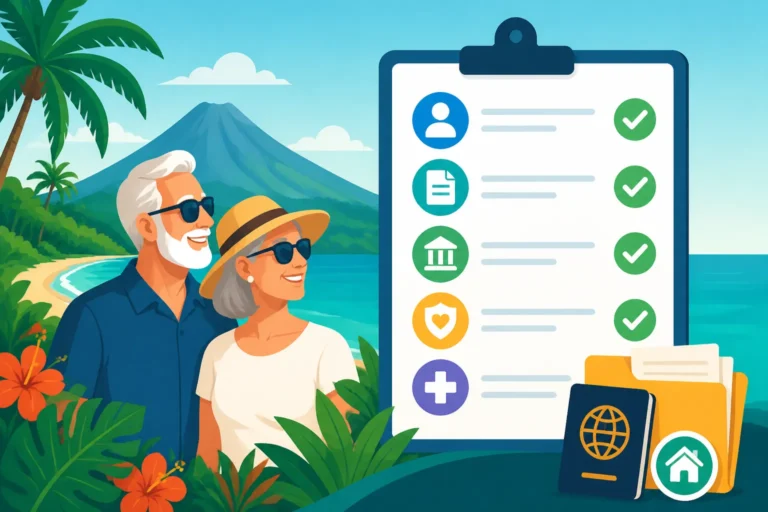
This is the phase where you’ll feel like a professional document hunter. Both the sponsoring child and the parents will need to compile a comprehensive set of documents. Remember, everything needs to be current, apostilled (if from a country signatory to the Hague Apostille Convention), or legalized (if not), and translated into Spanish by an official Costa Rican translator. Do not skimp on this part; Migración is incredibly strict.
For the Sponsoring Child (You):
- Certified Copy of Your Residency Card (DIMEX): This proves your legal status in Costa Rica. Ensure it's valid and up-to-date.
- Proof of Income/Financial Solvency: Bank statements, income tax declarations from Hacienda (the Costa Rican tax authority – you can learn more about how they work in How the Costa Rican Tax Authority (Hacienda) Works (2027)), proof of pension, or other verifiable income sources in Costa Rica that clearly show you can support yourself and your parents.
- Certified Copy of Your Birth Certificate: To prove your relationship to your parents.
- Proof of Address in Costa Rica: A utility bill (ICE or AyA, see The Expat Guide to Setting Up Utilities (ICE/AyA) in Costa Rica) in your name or a declaración jurada (sworn statement) from your landlord.
- Criminal Record Check: From your country of origin and any country you've lived in for the past three years.
For the Parents (Applicants):
- Certified Copy of Birth Certificate: To prove their relationship to you and their identity.
- Original Criminal Record Check: From their country of origin and any country they've lived in for the past three years. This needs to be recent (usually within three to six months of application).
- Certified Copy of Passport: All pages, especially the biometric page and any entry stamps.
- Proof of Economic Dependency: As discussed earlier, this is paramount. Provide bank statements, tax records, declarations of minimal or no income, and clear evidence of your financial transfers to them over a sustained period (e.g., the last 12-24 months). This must show a pattern of consistent support from you.
- Marriage Certificate (if applicable): If both parents are applying together and are married.
- Two Passport-Sized Photos: Meeting Migración’s specific requirements (white background, frontal view, etc.).
- Proof of Fingerprinting: Once in Costa Rica, they will need to get their fingerprints taken at the Ministry of Public Security.
- Consular Registration: A certificate from their home country's consulate in Costa Rica.
It's a long list, and it requires meticulous attention to detail. Every single document must be in perfect order. This is where an experienced immigration lawyer truly earns their keep. They know the subtle nuances and what Migración scrutinizes most. For a more general overview of document requirements, you might find Understanding the Documents and Apostille Needed for Residency in Costa Rica helpful.
Submitting the Application and Follow-Up
Once you have your mountainous stack of perfectly prepared, apostilled, and translated documents, the next step is submission. This typically involves making an appointment (a cita) at Migración in La Uruca, San José. Be prepared for potentially long waits and a very formal, bureaucratic process.
At the appointment, a Migración officer will review every single document. They are looking for discrepancies, missing information, or outdated papers. If everything looks good (a huge sigh of relief!), they will accept the application and provide you with a comprobante or receipt. This receipt is incredibly important, as it serves as proof that the application is in process. During this initial phase, your parents may also need to undergo the fingerprinting process at the Ministry of Public Security, and potentially register with their country's embassy or consulate in Costa Rica.
After submission, the waiting game truly begins. Migración is known for its lengthy processing times. It's not uncommon for these applications to take anywhere from a year to three years, or even longer, especially if there are requests for additional information (prevenciones). You can follow up on the status of the application online through Migración’s website or by visiting their offices. However, direct communication is often challenging, and updates can be infrequent. This is another area where an immigration lawyer can be invaluable, as they often have established lines of communication and understand how to properly respond to prevenciones to avoid further delays. They know the rhythm of Understanding the Role of Migracion (DGME) in Costa Rica.
Navigating Common Pitfalls and Delays
If you think getting all the documents was the hard part, wait until you experience the prevenciones. These are requests from Migración for additional information or clarification on existing documents. They are incredibly common and can feel like a frustrating loop. The key is to respond promptly and accurately to every single request. Don’t ignore them, and don’t assume they'll just go away. A single missed prevención deadline can lead to your application being archived or even denied.
Common pitfalls include:
- Outdated Documents: Even if a document was valid when you first submitted it, if Migración requests an update months later and it's expired, you need a new one.
- Insufficient Proof of Dependency: This is a recurring issue. Migración needs to be absolutely convinced. If their initial submission of bank transfers isn’t enough, be prepared to show more, or clearer, evidence.
- Translation Errors: Use only official translators approved by the Ministry of Foreign Affairs of Costa Rica. Any slight mistranslation can cause a prevención.
- Lack of Follow-Up: It's your responsibility, or your lawyer's, to actively monitor the application status and respond to any requests. Don’t just submit and forget.
- Changes in Circumstances: If your own residency status changes, or your income, it could affect the application, so keep Migración informed.
The most important advice here is: be patient, be persistent, and be prepared for a marathon, not a sprint. This process tests your resolve, but with meticulous preparation and a proactive approach, you can successfully navigate it.
Financial and Healthcare Considerations for Elderly Parents
Beyond the stacks of paperwork and the bureaucratic maze, there are very real, very significant financial and practical considerations that you, as the sponsoring child, must deeply understand. Bringing your parents to Costa Rica isn't just about getting their DIMEX card; it's about ensuring their long-term well-being in a new country.
Healthcare Options and Requirements
Once your parents' vínculo residency is approved, enrolling them in the Caja Costarricense de Seguro Social (CCSS), Costa Rica's public healthcare system, becomes mandatory. This is a fundamental requirement for almost all residents, including those under vínculo. The Caja provides comprehensive medical care, from basic consultations at an EBAIS clinic to specialist referrals, surgeries, and hospital stays. However, the system can have its quirks, including wait times for specialist appointments and certain procedures. You can delve into the specifics of The Expat Guide to Joining the Caja (CCSS) in Costa Rica (2027) to understand this critical step.
During the lengthy residency processing period, your parents will not be covered by the Caja. This is a critical gap you need to plan for. As tourists, they can access emergency care, but it will be paid out-of-pocket, and for anything non-emergent, they will likely need private care. This is where robust international private health insurance, like Cigna Global, becomes not just an option, but a necessity. Such a policy can cover them for medical emergencies, doctor visits, and even planned treatments while their residency is pending, offering immense peace of mind. Without it, even a simple accident or illness could lead to substantial medical bills. Many expats choose to supplement their Caja coverage with private insurance even after getting residency, appreciating the faster access to specialists and private hospital facilities such as Clínica Bíblica or Hospital CIMA. To get a comprehensive view of options, read Public vs Private Healthcare in Costa Rica: Which Should Expats Choose?.
Cost of Living and Financial Support
Sponsoring your parents means you are taking on the financial responsibility for their daily lives. While Costa Rica can be more affordable than some Western countries, it’s certainly not "cheap" for everything, and expenses can add up quickly, especially for elderly individuals with specific needs. You need to factor in:
- Housing: Will they live with you, or do they need their own space? Even a small apartment rental can add significantly to your monthly budget. Think about accessibility, proximity to services, and community.
- Groceries and Daily Essentials: Food costs vary, but quality fresh produce is generally reasonable. However, imported specialty items or certain dietary needs can increase costs.
- Transportation: Will they drive? Will you drive them? Public transport is available, but navigating it can be challenging for elderly individuals. Rideshare apps like Uber are an option but add up.
- Utilities and Internet: Even if they live with you, their presence will likely increase these bills.
- Medical Co-pays and Medications: While the Caja covers much, there can be co-pays for certain services or out-of-pocket costs for specific medications if they are not on the Caja's formulary, or if you opt for private pharmacy purchases. Understanding Prescription Medications and Pharmacies in Costa Rica: The Complete Guide is key.
- Personal Care: Depending on their needs, this could include home care, assistance with daily tasks, or other support services.
It's wise to create a detailed budget, factoring in all potential expenses. Remember, the economic dependency you proved for their residency application is an ongoing reality. You need to maintain the financial capacity to support them comfortably without it becoming a strain on your own finances. A good starting point for budgeting is to review The Complete Guide to Cost of Living in Costa Rica for Expats (2026).
Post-Approval Life and Integration
The moment that approval letter arrives, and you finally have that DIMEX card in hand for your parents, it's an incredible feeling. But the journey doesn't end there. Integrating into a new culture, especially later in life, comes with its own set of unique challenges and triumphs.
Securing the DIMEX and Initial Steps
Once Migración officially approves their residency, your parents will need to obtain their physical residency card, known as the DIMEX (Documento de Identificación Migratoria para Extranjeros). This is their official identification in Costa Rica and is crucial for everything from opening a bank account to accessing services. The process involves scheduling an appointment, usually at a Banco de Costa Rica (BCR) branch, presenting their passport and the approval resolution, and having their photo and fingerprints taken.
With the DIMEX in hand, they can then proceed with other essential integration steps:
- Bank Account: Opening a local bank account is vital for managing finances, receiving funds, and paying bills. Banks like Banco Nacional or BAC Credomatic are popular options, and having a DIMEX makes this process much smoother. For guidance, refer to The Expat Guide to Opening a Bank Account in Costa Rica.
- Caja Enrollment: As mentioned, this is mandatory. You’ll need to take their DIMEX and other documents to the nearest EBAIS clinic to begin the enrollment process.
- Phone and Internet: Setting them up with local phone numbers and ensuring they have reliable internet access for staying in touch with family and accessing information is also a priority.
- Driver's License (if applicable): If they plan to drive, they will need to convert their foreign license to a Costa Rican one once they have their DIMEX.
These initial steps, while seemingly mundane, are essential for establishing their independent footing and ensuring they have access to necessary services.
Cultural Adjustment and Support Networks
Moving to a new country is a huge undertaking at any age, but for older adults, the cultural adjustment can be particularly challenging. Costa Rica, for all its beauty, has its own unique way of life, its own customs, and of course, a different language.
- Language Barrier: Unless your parents are fluent in Spanish, this will be the biggest hurdle. Simple tasks like going to the grocery store, making appointments, or interacting with neighbors can become frustrating. Encourage them to take Spanish classes, even basic ones, to help them feel more empowered and connected.
- Social Isolation: It's easy for older expats to feel isolated if they don't find a community. Help them connect with other expats in their age group, join local clubs or activities, or simply find regular social outlets. Many expat communities in areas like Escazú, Atenas, or coastal towns have vibrant senior groups.
- Pace of Life: The "Pura Vida" pace, while charming, can sometimes be frustrating. Things move slower, bureaucracy can be maddening, and punctuality might not always be strictly adhered to. Help them cultivate patience and a flexible mindset.
- Healthcare System Navigation: Even with the Caja, navigating the system, understanding referrals, and communicating symptoms can be daunting. Your role as a strong advocate and interpreter will be critical.
To help them integrate, consider reaching out to expat groups in your area before they arrive. Introduce them to friends, show them around, and help them establish routines that give them a sense of purpose and belonging. Reputable international moving companies, like Sirelo, also often offer cultural assimilation resources that can be beneficial in these early stages.
Maintaining Residency Status
Obtaining residency is a huge milestone, but it's not a "set it and forget it" situation. Your parents’ vínculo residency will need to be renewed periodically, typically every year or two initially, then possibly for longer terms. The exact renewal period can vary.
The key to maintaining their residency status involves a few critical points:
- Caja Payments: Ensuring their monthly Caja payments are consistently made is paramount. Any lapse in payments can jeopardize their residency status, as health coverage is a non-negotiable requirement.
- Physical Presence: They must maintain a certain level of physical presence in Costa Rica. While short trips abroad are generally fine, prolonged absences could raise questions from Migración during renewal. They don't want residents who only use Costa Rica as a place to hold a legal document but don't actually live here.
- Up-to-Date Documents: When it comes time to renew their DIMEX, you'll need to submit updated documents, similar to the initial application, though usually less extensive. This often includes updated criminal record checks from their home country and a letter reaffirming your continued financial support.
Staying on top of these requirements is essential. Missing a renewal deadline or failing to meet ongoing obligations can lead to fines, complications, or even the loss of their residency status. It's a continuous commitment, and it's best to mark renewal dates well in advance. For more details on this, you can look at How to Renew Your Temporary Residency (DIMEX) in Costa Rica.
Disclaimer
Please remember that I am an expat blogger, not an immigration lawyer or financial advisor. The information provided in this guide is based on my personal experience, research, and general understanding of Costa Rican immigration laws. Immigration regulations, financial requirements, and healthcare policies are subject to change by the Costa Rican government. It is absolutely crucial to consult with a qualified Costa Rican immigration attorney and, if necessary, a financial planner, for personalized advice regarding your specific situation before making any decisions or taking action. This content is for informational purposes only and does not constitute legal or financial advice.