Can I Get Fiber Internet Anywhere in Costa Rica?
Ah, the internet. In our interconnected world, it's not just a luxury; for many of us expats, it's the lifeline to family, work, and frankly, sanity. Moving to a beautiful, green paradise like Costa Rica, you'll quickly realize that while the nature is breathtaking, the internet infrastructure can sometimes feel like it's stuck in a time warp. If you're wondering if you can get reliable, lightning-fast fiber internet anywhere you choose to hang your hat in this country, you're about to dive into a journey that's as winding as some of Costa Rica's back roads. This guide will walk you through the realistic expectations, the common hurdles, and the surprising successes of finding fiber optic internet across this gorgeous nation.
The Ever-Evolving Landscape of Fiber Optic Internet in Costa Rica
When I first moved here, high-speed internet felt like a mythical creature outside of San José. Dial-up, then sluggish DSL, then cable that dropped more often than the afternoon rain – it was a daily test of patience, especially for those of us trying to work remotely or keep up with streaming habits from back home. Thankfully, things have come a long way, but the rollout of fiber optic internet, while expanding rapidly, isn't uniform. It's a patchwork quilt, with some areas gleaming with the latest tech and others still patiently waiting.
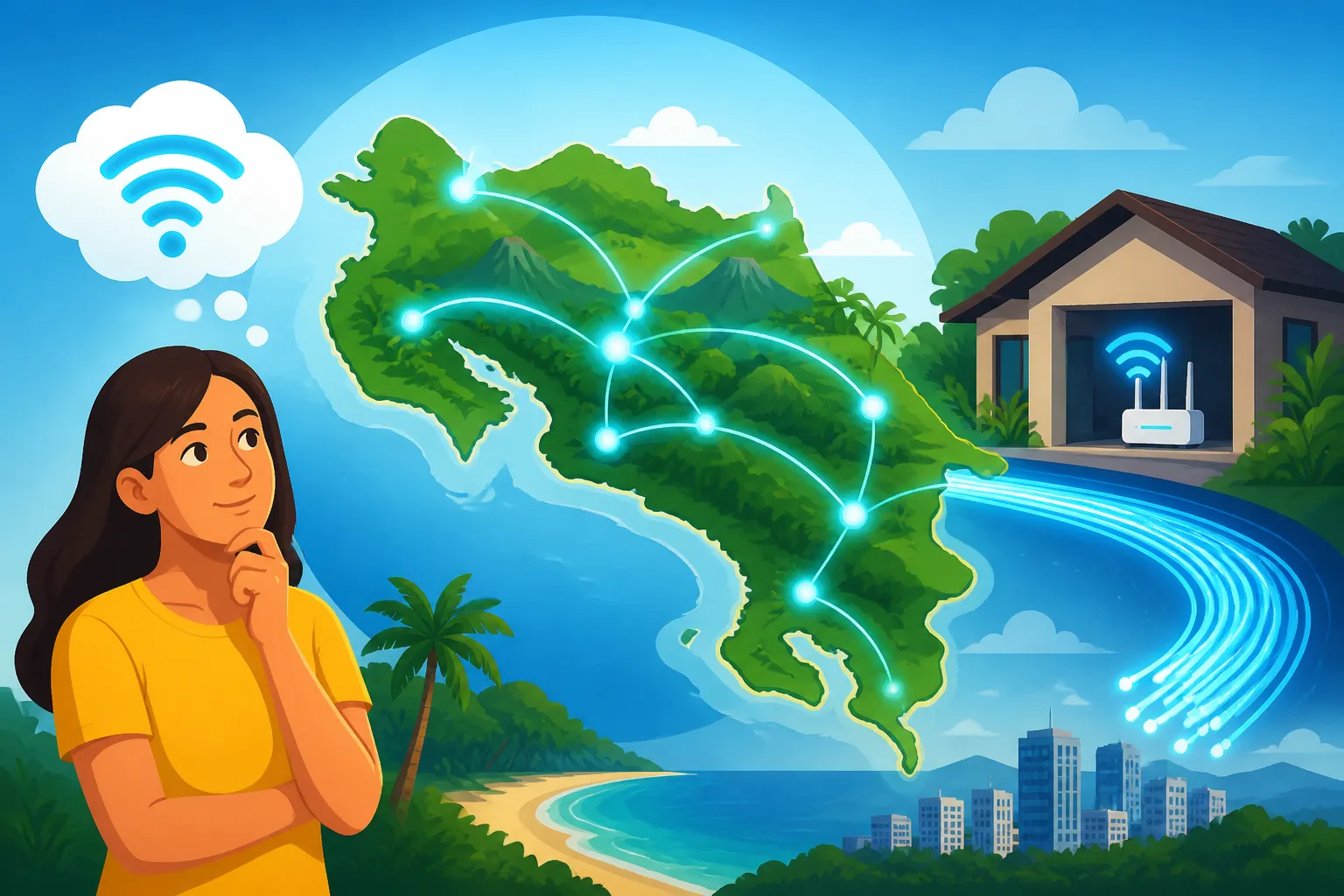
Costa Rica’s main telecommunications companies, like Kolbi (which is part of ICE, the state-owned electricity and telecom institute), Liberty (formerly Cable Tica and Movistar), and Claro, have been steadily investing in fiber optic infrastructure. However, the sheer cost of laying fiber through dense jungles, mountainous terrain, and sparsely populated coastal regions means they prioritize areas with higher population density and greater commercial demand. This often translates to a better chance of finding fiber in urban centers and popular expat enclaves.
The government's push, through entities like SUTEL (the Superintendencia de Telecomunicaciones), has definitely spurred growth, aiming to close the digital divide. But the reality on the ground for an expat often means a bit of detective work and a healthy dose of flexibility. You might find a small, independent provider has swooped in to connect a particular development, while the next town over is still on archaic copper lines. It truly depends on your exact location, sometimes even down to the street or specific condominio.
Where You Can Realistically Expect Fiber and Where You Might Struggle
Navigating the internet landscape here is less about a national guarantee and more about hyper-local exploration. Where you choose to live will heavily influence your internet experience.
Urban and Suburban Hubs: Fiber's Stronghold
If you're settling in the Greater Metropolitan Area (GAM), which includes cities like San José, Escazú, Santa Ana, Heredia, and parts of Alajuela and Cartago, your chances of getting fiber optic internet are pretty darn high. These areas have seen significant investment from providers like Kolbi, Liberty, and Claro. In places like Escazú and Santa Ana, known for their large expat communities and modern amenities, you'll often find multiple fiber providers competing, which means better speeds and sometimes more competitive pricing.
For instance, living in a condominio or a newer residential development in these areas, you'll likely have fiber already run to the complex or even directly to your unit. Speeds can be impressive, often reaching 100 Mbps, 200 Mbps, or even higher, up to gigabit speeds in some premium plans. This is fantastic news for remote workers, online gamers, and anyone who relies on heavy streaming. However, even within these hubs, there can be pockets where fiber hasn't quite arrived. Always, always check your specific address with providers. Don't assume. Just because your friend in Escazú has fiber doesn't mean the house you're looking at a few blocks away will.
Coastal and Rural Areas: A Game of Chance
This is where it gets tricky, and sometimes, a little heartbreaking, especially if you've dreamt of a remote jungle retreat with a perfect internet connection. Popular coastal towns, particularly those with a growing expat presence and tourism industry, are seeing fiber expansion, but it's often piecemeal. Areas like Tamarindo, Jacó, and parts of Guanacaste and the Southern Pacific are making progress. You might find fiber in the main town centers or in newer, planned communities, but venture a few kilometers out, and you could be back to square one.
For example, I know folks in Nosara who have surprisingly robust fiber connections, while others just down the road rely on satellite or mobile hotspots. The infrastructure costs for these spread-out communities are immense. If you’re looking at properties in more secluded or truly rural zones – think up in the mountains or deep within a less developed coastal stretch – expect that fiber might not be an option. You'll need to prepare for alternatives like advanced cable, DSL, or even satellite internet.
This is where having a backup plan is essential. For many digital nomads and expats who absolutely need to be connected, carrying a reliable mobile hotspot or having a robust data plan from a provider like Kolbi, Liberty, or Claro is non-negotiable. While not fiber, these can sometimes offer surprisingly decent speeds, particularly if you're in an area with good 4G or even 5G coverage. An eSIM service like Airalo can also be a fantastic temporary solution or backup, allowing you to get online immediately upon arrival without hunting down a local SIM card, giving you time to figure out the long-term internet situation for your home. You can learn more about how to choose the right provider for your needs in our guide on How to Choose a Mobile and Internet Provider in Costa Rica.
The Process of Getting Fiber Installed and What to Expect
Once you've found your dream spot, and ideally, confirmed that fiber is available, the real Pura Vida test begins: installation. This isn't like back home where you can often order online and have a self-install kit arrive in two days.
Checking Availability and Providers
The first step is always to contact the major providers directly. Kolbi (ICE) and Liberty are often the most widespread, but Claro is making significant inroads, especially in urban areas. You'll need the exact address of your prospective home. Don't just say "Tamarindo" or "Escazú"; give them the street name, house number, and any local landmarks. Some websites allow you to check availability online by entering your address, but a direct call (or, better yet, a visit to a service center if you're comfortable with Spanish) is usually the most reliable way to confirm. Asking neighbors or local expat Facebook groups in your specific area can also yield invaluable, real-world advice on which providers are best and most reliable in that particular micro-location.
Installation and Activation Hurdles
Once you've confirmed availability and chosen a provider, be prepared for a process that moves at its own pace. This is Costa Rica, after all!
- Appointments: Installation appointments can be weeks out, especially during peak moving seasons. Technicians might give you a wide window (e.g., "morning or afternoon") and may not always arrive precisely on time. Patience, my friend, is a virtue here.
- Paperwork: You'll need to provide identification, typically your DIMEX (Costa Rican residency card) if you have one. If you're still on a tourist visa or in the process of getting your residency, it can be a bit more complicated. Some providers might allow you to sign up with just a passport, but it often requires a larger deposit or a local guarantor. Getting your How to Get Your DIMEX Residency Card in Costa Rica sorted is crucial for many administrative tasks, including setting up utilities.
- Communication: While some providers might have English-speaking staff, especially in their main call centers, the technicians who come to your house will likely speak Spanish. If your Spanish isn't up to par, having a Tico friend or a translator assist you during the appointment can save a lot of headaches.
- Physical Installation: The installation itself can take a few hours. They'll run the fiber line, set up the modem and router, and ensure the connection is working. Be prepared for drilling and cable routing. Sometimes, a house might need additional internal wiring for optimal Wi-Fi distribution, which may or may not be included or properly explained.
- Activation: Once installed, activation is usually quick. Test the speeds immediately and make sure everything is working to your satisfaction before the technician leaves.
It’s definitely a good idea to factor in this installation time when you’re planning your move and figuring out when you’ll be truly settled. For those coordinating a full relocation, remembering to budget time for these essential setups is key. A service like Sirelo could assist in finding movers who understand international logistics, and they might even have resources or partners who can offer advice on local setup processes in Costa Rica.
Alternative Internet Solutions When Fiber Isn't an Option
If fiber proves elusive in your chosen slice of paradise, don't despair! There are other options that can still provide a decent, albeit different, internet experience.
Cable and DSL: The Reliable Workhorses
Before fiber became the gold standard, cable and DSL were (and still are) the backbone of internet connectivity for many.
- Cable Internet: Providers like Liberty and Telecable offer cable internet in many areas where fiber isn't yet available. Cable speeds are generally better than DSL and often offer competitive packages, especially when bundled with TV services. While not as fast or symmetrical as fiber, you can still get decent download speeds for streaming and general browsing. Reliability can vary based on local infrastructure and network congestion, particularly during peak hours.
- DSL (Digital Subscriber Line): Primarily offered by Kolbi (ICE), DSL runs over traditional copper telephone lines. It's generally the slowest option, with speeds often maxing out around 10-20 Mbps, sometimes even less. However, in very remote areas, it might be the only fixed-line option. If you're only doing light browsing and email, it might suffice, but for anything more demanding, you'll likely feel the pinch.
Mobile Hotspots and Data Plans: Your Go-Anywhere Connection
For many expats, a robust mobile data plan and the ability to tether or use a dedicated hotspot device are lifesavers.
- Mobile Data Plans: Kolbi, Liberty, and Claro all offer competitive mobile data plans. Coverage is generally good in most populated areas and along major highways. If you have a phone with good signal reception, you can use it as a personal hotspot to connect your laptop or other devices. This is an excellent solution for temporary needs, travel, or as a backup when your home internet goes down. Make sure to check the data limits and any fair usage policies, as unlimited plans might throttle speeds after a certain threshold.
- Dedicated Hotspot Devices: These are small, portable devices that run on mobile data and create a Wi-Fi network. They're great for families or individuals with multiple devices, providing a more stable connection than tethering from a phone. Just ensure you have a data plan with enough gigabytes to meet your needs. Again, an eSIM from Airalo can be a great way to jump-start this option without the hassle of a physical SIM in a new country.
Satellite Internet: Reaching the Unreachable
For those truly off-the-grid locations where no traditional infrastructure reaches, satellite internet is the answer.
- Traditional Satellite: Companies like HughesNet have offered satellite internet in Costa Rica for years. The main drawbacks have historically been high latency (due to the signal traveling to and from space), lower speeds compared to terrestrial options, and data caps. It's a "last resort" option for many, but it does provide connectivity where nothing else can.
- Starlink: Elon Musk's Starlink has been a game-changer for rural and remote connectivity worldwide, and it's available in Costa Rica. While the initial equipment cost is substantial, and the monthly subscription is higher than most terrestrial plans, it offers significantly faster speeds and much lower latency than traditional satellite internet. For expats with a demanding remote job who insist on living in a truly secluded area, Starlink might be the perfect (albeit costly) solution. You'll get speeds that rival urban fiber, which is truly incredible given the location independence it provides.
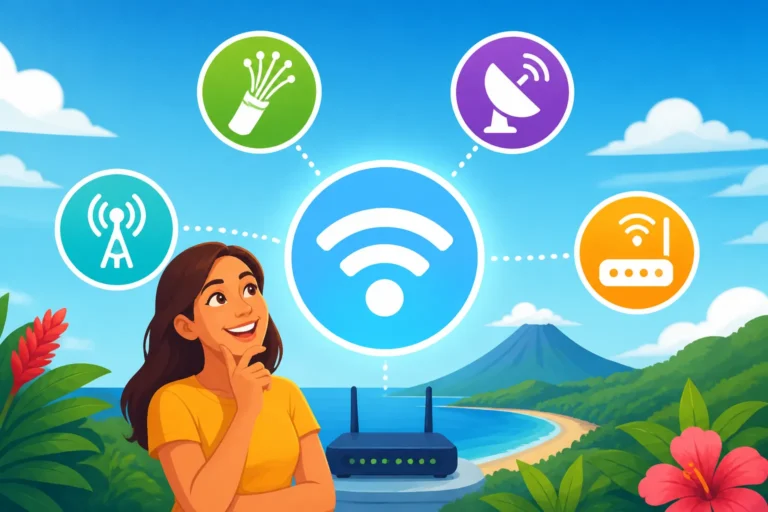
Here's a quick comparison of the common internet types you'll encounter:
| Internet Type | Typical Availability | Typical Download Speed Range | Reliability & Latency | General Cost (Monthly) | Best For |
|---|---|---|---|---|---|
| Fiber Optic | Urban/Suburban hubs, newer developments | 100 Mbps – 1 Gbps | Very high, very low latency | $40 – $100+ | Remote work, heavy streaming, gaming, multiple users |
| Cable Internet | Most populated areas | 50 Mbps – 200 Mbps | Good, moderate latency | $30 – $70 | General internet use, streaming, some remote work |
| DSL | Widespread, including some rural areas | 5 Mbps – 20 Mbps | Fair, moderate to high latency | $25 – $50 | Basic browsing, email, very light streaming |
| Mobile Hotspot/Data | Depends on cell tower coverage | 10 Mbps – 100 Mbps (4G/5G) | Good where signal is strong, variable latency | $15 – $60 (per GB or plan) | Portability, backup, light to moderate use |
| Starlink Satellite | Anywhere with clear sky access | 50 Mbps – 200 Mbps (usually) | High, low latency | $100 – $150+ (plus equipment) | Remote locations, demanding users |
| Traditional Satellite | Anywhere with clear sky access | 10 Mbps – 25 Mbps | Fair, high latency | $60 – $100 | Last resort in truly isolated areas |
Remember that The Cost of Living in Costa Rica for Expats (2026) can vary significantly depending on your lifestyle and location, and internet costs are just one piece of that puzzle. Setting up all your utilities, including internet, is a key part of moving to Costa Rica. Our guide on The Expat Guide to Setting Up Utilities (ICE/AyA) in Costa Rica offers more specific advice on connecting your home. If you're a remote worker, you might also find our article on Working Remotely from Costa Rica: The Definitive Expat Guide (2027) helpful for managing your connectivity needs. For general information about navigating your new home, check out The Complete Guide to Moving to Costa Rica: Your First 90 Days (2027). For those looking for a specific type of connection, be sure to read How to Set Up Internet and Cable in Costa Rica.
Finding Your Internet Sweet Spot
Ultimately, getting fiber internet anywhere in Costa Rica isn't a guarantee, but it's becoming increasingly common, especially in areas popular with expats. The key is to be diligent in your research, confirm availability for specific addresses, and be prepared to explore alternatives if fiber isn't an option.
Before you sign a rental contract or commit to buying property, always, always check the internet options available at that precise location. What kind of internet you get can significantly impact your day-to-day life here, especially if you rely on it for work or staying connected. While the process might require a bit more legwork and patience than you're used to, the reward of living in Pura Vida land often makes it all worthwhile. Just make sure you can upload those stunning sunset photos at a decent speed!
Disclaimer
The information provided in this article is for general guidance only and is subject to change. Telecommunications infrastructure and service availability are constantly evolving. Always verify current information directly with service providers and local authorities.