Are Private Schools Better Than Public Schools in Costa Rica?
Ah, the age-old question that keeps so many expat parents up at night when they first consider a move to Costa Rica: where do we send the kids to school? It’s not just about curriculum; it's about language, culture, cost, and ultimately, where your child will thrive. As someone who’s navigated these waters, I can tell you there’s no simple "better" answer, but this guide will meticulously break down the nuances of both public and private school systems in Costa Rica so you can make an informed choice for your unique family.
Understanding Costa Rica's Public School System
When you think about the public school system in your home country, you might have certain expectations. In Costa Rica, the Sistema Educativo Público (Public Education System) is a vibrant, integral part of Tico society, but it functions quite differently. It’s managed by the Ministerio de Educación Pública (MEP), and it's where the vast majority of Costa Rican children receive their education.
The Sistema Educativo Público at a Glance
The public system here is designed to be accessible to everyone, providing free education from preschool through high school. Structurally, you'll find primary schools (grades 1-6) and secondary schools (grades 7-11 or 12, depending on the academic track). The language of instruction is almost exclusively Spanish, which is fantastic news if your primary goal for your children is full immersion into the local culture and a rapid acquisition of the Spanish language. Many expat families see this as a huge advantage, as it forces children to integrate deeply, make local friends, and truly become "bilingual" and "bicultural."
However, this Spanish-only environment can also be a significant hurdle, especially for children who arrive with little to no Spanish proficiency. Imagine being dropped into a classroom where you understand almost nothing – it can be overwhelming, frustrating, and, frankly, quite isolating at first. Public school class sizes can also be larger than what you might be accustomed to, particularly in more populated areas like San José or Heredia. Resources, while adequate, are generally more basic compared to private institutions. You won't find the same level of technology or specialized equipment that some international private schools boast. But what public schools offer in abundance is a genuine connection to Costa Rican life, its rhythms, and its people. Your child will learn local customs, participate in national holidays, and truly become part of the Pura Vida fabric. For those whose children are younger and adaptable, or for families with a strong commitment to learning Spanish alongside their kids, the public system can be a profoundly rewarding experience.
Quality, Resources, and Curriculum in Public Schools
Let’s talk about the nitty-gritty: the quality, resources, and curriculum. The MEP curriculum is comprehensive, covering core subjects like Spanish, mathematics, social studies (with a strong emphasis on Costa Rican history and civics), natural sciences, and basic English as a foreign language. Arts and physical education are also included, though often with more basic facilities and less specialization than private schools. The academic focus is on national standards, and students prepare for standardized national exams at the end of primary and secondary cycles.
Teacher qualifications in the public sector are generally good; educators are trained at national universities and adhere to MEP guidelines. However, salaries aren't always competitive, which can sometimes lead to staffing challenges, particularly in rural or less desirable areas. The facilities vary widely. In urban centers, you might find more modern buildings, but in many parts of the country, schools are older, and resources like libraries, computer labs, or sports fields might be basic or shared. Textbooks are standardized, but access to additional learning materials or advanced technology can be limited.
One of the great strengths of the public system is its community focus. Parental involvement, especially through parent-teacher associations (known as Juntas de Educación or Juntas Administrativas), is vital, and these groups often play a crucial role in fundraising and maintaining school facilities. This creates a strong sense of local ownership and community spirit. While some public schools excel, others may struggle with overcrowded classrooms or limited resources, so the quality can be inconsistent. It really pays to visit the local schools in the area you're considering and speak to parents there. For a broader overview of the educational landscape, check out our guide on Schools and Education in Costa Rica: A Complete Guide for Expat Families.
Exploring Private School Options for Expats
For many expat families, especially those relocating with older children or with plans to return to their home country's education system, private schools often seem like the most straightforward choice. And indeed, Costa Rica has a robust private school sector, particularly in and around the Central Valley.
Types of Private Schools and Their Offerings
Private schools in Costa Rica come in a few distinct flavors, each catering to different needs and budgets:
-
International Schools: These are the top-tier, often most expensive, options. They typically follow curricula from other countries, such as the American (U.S. Common Core), British (Cambridge or National Curriculum), or the International Baccalaureate (IB) programs. Examples include schools like Lincoln School, Country Day School, and Blue Valley School in the greater San José area. The primary language of instruction is almost always English, with robust Spanish language programs tailored for non-native speakers. They usually boast excellent facilities, including advanced science labs, well-stocked libraries, dedicated art and music studios, and extensive sports complexes. They are also known for their wide range of extracurricular activities, from robotics clubs to competitive sports teams. The major benefit here is continuity with your home country's education system, making transitions smoother for university applications abroad.
-
Bilingual Schools: These schools bridge the gap between purely international and purely local. They often follow the Costa Rican MEP curriculum but integrate a significant amount of instruction in English, sometimes up to 50% or more. They aim to produce fully bilingual and bicultural graduates. While their facilities might not always be as lavish as the top international schools, they are generally very good, offering smaller class sizes and more individualized attention than public schools. They offer a strong academic foundation with a good balance of local integration and global perspective.
-
Local Private Schools: Many Costa Rican families, desiring smaller class sizes, better facilities, and often a religious component (Catholic schools are common), choose local private schools. These schools largely follow the MEP curriculum, just like public schools, but with enhanced resources and a generally higher teacher-to-student ratio. While some may offer English classes, the primary language of instruction remains Spanish. They are typically more affordable than international or bilingual schools but still require a significant financial commitment. These schools are excellent for families committed to living long-term in Costa Rica and desiring full integration into the local system, but with enhanced academic support.
The benefits of private schools are clear: generally higher academic standards, smaller class sizes, superior facilities, a broader range of extracurricular activities, and often a smoother transition for children accustomed to an English-speaking academic environment. However, they can also create an "expat bubble," where children primarily interact with other expat kids, potentially limiting their deeper immersion into Costa Rican culture.
Cost, Curriculum, and Accreditation in Private Schools
Let's not beat around the bush: private education in Costa Rica, especially at the international level, is a significant financial investment. Tuition fees can range from a few hundred dollars per month for local private schools to upwards of $1,000-$2,000+ per month for the most prestigious international schools. This doesn't even include other mandatory expenses such as:
- Enrollment/Registration Fees: Often an annual fee, separate from tuition.
- Application Fees: A one-time fee to process your child’s application.
- Materials and Books: Sometimes included, sometimes an additional cost.
- Uniforms: Almost always required and an extra expense.
- Transportation: School bus services are common but add to the monthly bill.
- Extracurricular Activities: Many sports and clubs come with additional fees.
- Technology Fees: For access to school-provided devices or online learning platforms.
To give you a clearer picture of these costs, take a look at our article, "How Much Are Private School Fees in San Jose?" It breaks down typical expenses in the Central Valley.
Curriculum-wise, international schools often align with the educational standards of the United States, United Kingdom, or Canada. The International Baccalaureate (IB) program is widely respected globally and offered by several top-tier schools here, known for its rigorous academic approach and focus on critical thinking. For families planning on their children attending universities in North America or Europe, these curricula, coupled with accreditation from bodies like the Southern Association of Colleges and Schools (SACS), the Council of International Schools (CIS), or the New England Association of Schools and Colleges (NEASC), are invaluable. This accreditation ensures that the quality of education meets international benchmarks and that transcripts are readily accepted by universities worldwide. Most of these schools offer excellent English language instruction, with strong Spanish as a second language programs to ensure students become proficient in both.
Making the Decision: Public vs. Private for Your Expat Child
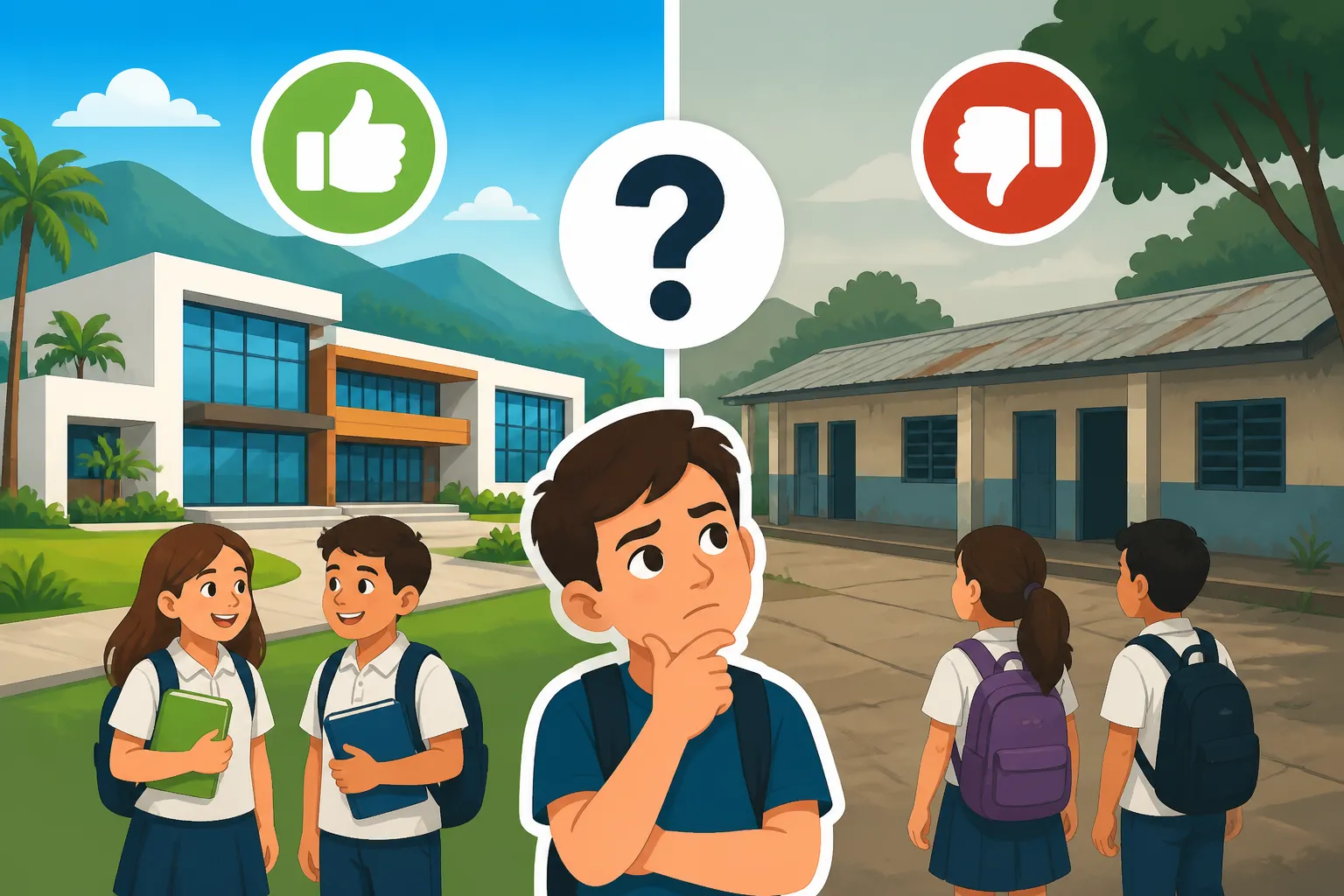
Choosing a school is a deeply personal decision, and what works for one expat family might be entirely wrong for another. There's no single "better" option; only the best fit for your family's unique circumstances, budget, and educational philosophy.
Key Factors to Consider for Your Family
Before you make any commitments, sit down with your family and honestly assess these critical factors:
- Language Proficiency: This is perhaps the biggest factor. How strong is your child's Spanish? If they are very young (under 8-10) and adapt quickly, full immersion in a public school might be a breeze. For older children with little to no Spanish, the linguistic and social challenges of a public school can be immense. Are you, as parents, committed to supporting their Spanish learning at home?
- Budget: Let's be real, private school tuition is a significant expense. Can you comfortably afford it without straining your finances? Factor in not just tuition, but all the hidden costs like uniforms, books, transportation, and extracurriculars. For comparison, public education is free, which can free up considerable funds for other expat living expenses.
- Academic Goals: What are your long-term plans for your child's education? Do you envision them attending university back in your home country, or are you open to them pursuing higher education in Costa Rica or elsewhere internationally? International schools with recognized curricula (like IB, US, or British systems) offer a more direct pathway to foreign universities. Public and local private schools will prepare them well for Costa Rican universities, but transcripts might require more effort to translate or validate for foreign institutions.
- Cultural Immersion vs. Familiarity: How much do you want your child to integrate into Costa Rican culture? Public schools offer unparalleled immersion. Private and international schools, while they often have diverse student bodies, can sometimes foster an "expat bubble" where interaction with local Ticos outside of school is less frequent. Do you prioritize deep cultural blending or a more familiar academic environment?
- Location: The availability of different school types varies by region. The Central Valley (San José, Escazú, Santa Ana, Heredia) has the highest concentration of international and bilingual schools. Coastal towns or more rural areas might have fewer private options, making public schools the primary choice. When looking for a place to live, consider "How Do I Find a Home Near Good Schools in Costa Rica?"
- Long-term Plans: How long do you plan to stay in Costa Rica? If it's a short stint (1-3 years), an international school might offer more stability and continuity with their previous education. If you're here for the long haul, investing in Spanish acquisition through the public system could be a valuable long-term asset.
Here's a quick comparison to help visualize the differences:
| Feature | Public Schools (Sistema Público) | Private Schools (General) | International Private Schools |
|---|---|---|---|
| Cost | Free (some minor fees for materials) | Moderate to High (hundreds to over $1000/month) | Very High ($1000 – $2000+ per month) |
| Language | Primarily Spanish | Spanish/Bilingual (often 50/50) | Primarily English, strong Spanish program |
| Curriculum | MEP (Costa Rican National Curriculum) | MEP, often with enhanced features/resources | US, British, IB, Canadian (internationally recognized) |
| Class Size | Larger (30-40+ students common) | Smaller (15-25 students typical) | Small (12-20 students typical) |
| Facilities | Basic, varies widely by location | Good to Excellent | Excellent, state-of-the-art |
| Cultural Immersion | High, deeply integrated with local culture | Moderate to High, mix of local & expat students | Lower, often an expat-centric environment |
| Extracurriculars | Basic, often informal | Good variety (sports, arts, clubs) | Extensive (wide range of sports, arts, academic clubs) |
| Accreditation | MEP | MEP, some local accreditations | International accreditation (SACS, CIS, NEASC, etc.) |
| University Path | Primarily Costa Rican universities | Costa Rican or international universities | Smooth path to international universities |
Navigating the Application and Enrollment Process
Once you’ve weighed the pros and cons, the next step is enrollment.
For public schools, the process is relatively straightforward. Enrollment is typically done at the local school based on your residential address. You'll need documents like your child’s birth certificate, your cédula or DIMEX (residency card), and proof of address. It's advisable to visit the school well in advance of the academic year (which typically starts in February) to understand their specific requirements and the available spots. While sometimes there's an informal interview or assessment for older children, it’s generally less rigorous than private school admissions.
For private schools, the process is more involved and often competitive, especially for the more sought-after international institutions. You'll typically need to:
- Submit an Application: Often done online, with an application fee.
- Provide Documentation: This usually includes your child's birth certificate, previous school transcripts (often requiring English translation and sometimes apostille), immunization records, and copies of parent/guardian ID and residency status.
- Entrance Exams/Assessments: Many private schools require students to take placement tests in English, Spanish, and/or Math to gauge their academic level and ensure they fit the school's standards.
- Interviews: Both parents and students might be interviewed by school administration to discuss expectations, academic philosophy, and readiness for the school environment.
- Tour the School: Always recommended to visit, see the facilities, and get a feel for the school's atmosphere.
Start this process early, especially for international schools, as they often have waiting lists. It's also a great idea to connect with other expat parents through online forums or local expat groups; they can provide invaluable insights into specific schools and the application process. For comprehensive steps, see our article, "How Do I Enroll My Child in School in Costa Rica?". And remember, managing the logistics of moving your family, including school applications, can be a lot. Services like Sirelo, a moving company marketplace, can help connect you with reputable international movers who understand the complexities of relocating with children.
Real-World Experiences and Expert Advice
As an expat who has seen many families navigate this journey, I can tell you that the "best" school often comes down to individual personality and family priorities. There's no one-size-fits-all answer.
The Expat Perspective: Stories and Insights
I’ve met families who chose public schools for their younger children and watched those kids blossom into fluent Spanish speakers, deeply integrated with their Tico friends. They embraced the challenge, and while there were initial tears and frustration, the rewards in terms of language and cultural understanding were immense. One family, for instance, put their 7-year-old into a local public school in Grecia. Within six months, he was chatting away in Spanish, translating for his parents, and completely immersed in neighborhood soccer games. For them, the cultural payoff was worth the initial academic adjustment.
On the flip side, I've also seen parents with high-schoolers opt for international schools, knowing their children were set on specific university paths back home. For these families, the familiarity of the curriculum and the direct pathway to international colleges were non-negotiable. They found the academic rigor and diverse student body of schools like Costa Rica Academy to be the perfect fit.
Some families even start in public school for the immersion, then transition to a bilingual or international private school for higher grades once their Spanish is solid, or if they seek a more specific academic program. It really highlights that flexibility and understanding your child's needs are paramount. Don't be afraid to change course if the first choice isn't working out. Remember that aside from academic learning, a holistic approach to your child's well-being is crucial. If you have younger kids, understanding "How Much Does Childcare Cost in Costa Rica?" might also be a useful consideration for after-school care or for pre-school options.
Beyond the Classroom: Holistic Development
Beyond the academic comparisons, consider the overall development of your child. Both public and private schools in Costa Rica offer opportunities for growth, just in different ways. Public schools, while perhaps lacking in high-tech sports facilities, often have strong community sports programs outside of school hours that are incredibly popular and accessible. Children learn to adapt, be resourceful, and appreciate the simpler things. The arts and music might be more informal but deeply embedded in local culture.
Private and international schools, with their extensive resources, often provide a wider array of structured extracurriculars, from competitive sports leagues to advanced robotics clubs, drama productions, and volunteer opportunities. This can be great for nurturing specific talents and building a well-rounded resume for college.
Regardless of your school choice, actively seek out ways for your children to connect with the wider Costa Rican community. Encourage local friendships, participate in community events, and explore the country. After all, living in Costa Rica offers an education in itself, one rich in nature, culture, and Pura Vida spirit. Where you decide to settle can also heavily influence school choices, so take a look at our guide to "What Are the Best Family Towns in Costa Rica?" to help with your decision-making.
Ultimately, "better" is entirely subjective. The best school for your child in Costa Rica is the one where they feel supported, challenged, and happy, and where the environment aligns with your family's values and long-term aspirations.
Disclaimer
The information provided in this guide is for general informational purposes only and does not constitute professional advice. While we strive to provide accurate and up-to-date information, educational policies, costs, and availability of schools in Costa Rica can change. We recommend verifying all details directly with the respective educational institutions and consulting with legal or educational professionals for personalized advice.