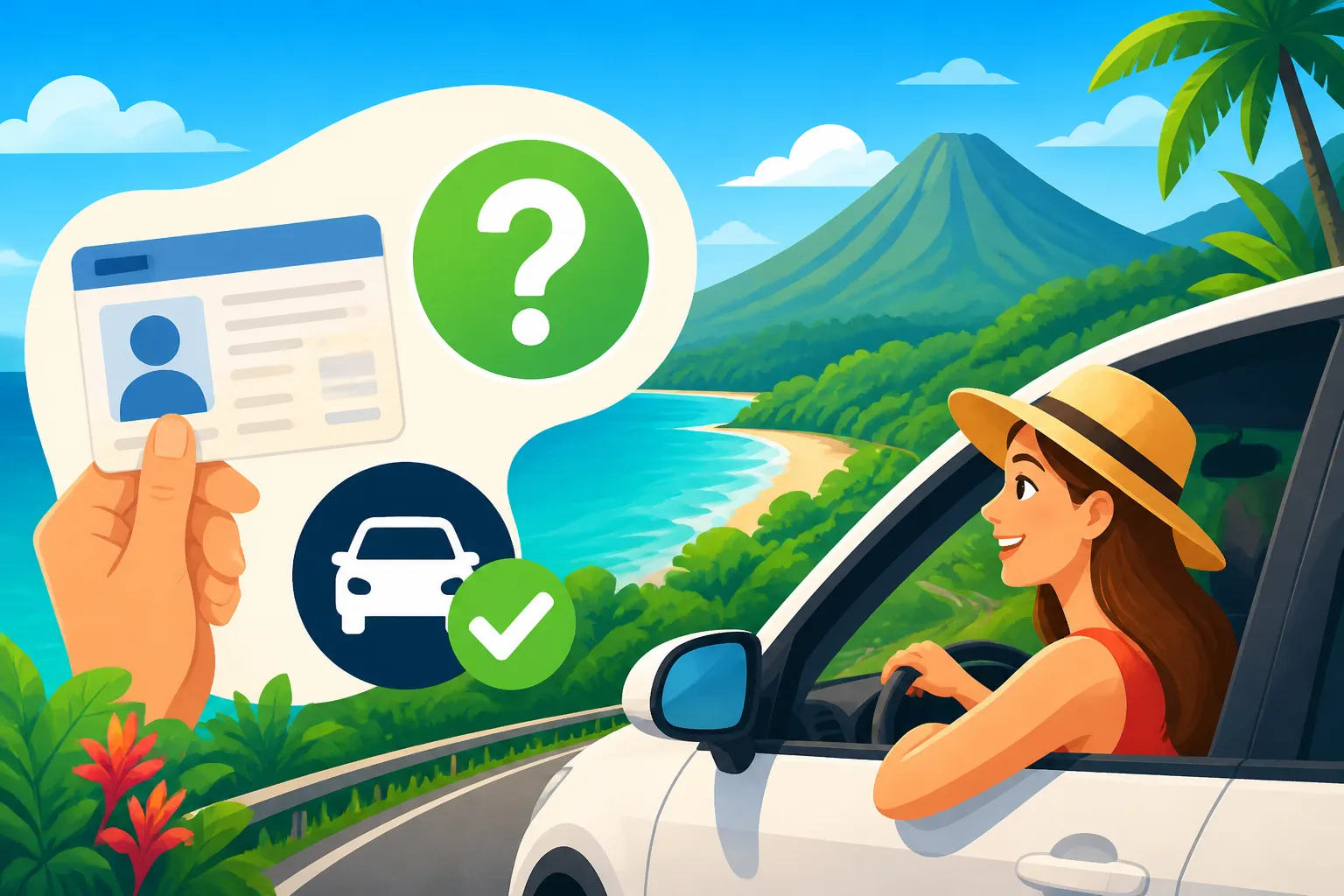
Can I Drive in Costa Rica with a Foreign License?
One of the first anxieties many of us face when arriving in Costa Rica, whether for a short trip or a permanent move, revolves around the simple act of driving. You're trying to navigate unfamiliar roads, understand new cultural norms behind the wheel, and all the while, that nagging question whispers in the back of your mind: "Can I even legally drive here with my foreign license?" It’s a completely valid concern, and the rules, like many things tico, have their nuances and can definitely feel a bit confusing at first glance. This guide is here to untangle it all, helping you understand exactly what you need to know to stay on the right side of the law.
The Short Answer: Yes, But There's a Catch
So, let's cut to the chase: yes, you absolutely can drive in Costa Rica with your valid foreign driver's license. But here's where the Costa Rican charm (and a dash of bureaucratic complexity) comes in. The duration for which your foreign license is valid depends entirely on your immigration status. This is a critical distinction that many visitors and new expats often misunderstand, leading to unnecessary stress or even legal trouble. It's not a one-size-fits-all rule, and keeping track of your specific situation is paramount.
The Tourist Visa Window
If you've entered Costa Rica on a tourist visa, which most visitors from countries like the U.S., Canada, and many European nations do automatically upon arrival, your foreign driver's license is valid for the exact same period as your tourist stamp in your passport. This is typically 90 days from the date of your entry. That little stamp, often overlooked, is your golden ticket for driving. Make sure you check the date written by the immigration officer, as this is your definitive expiration date for driving legally with your foreign license.
What does this mean in practice? It means that if you're here for a two-week vacation, you're perfectly fine. You can rent a car, cruise down the Pacific coast, or navigate the winding roads to Arenal without a worry. The critical thing is that your passport, with that entry stamp, and your physical foreign driver's license are always with you when you're behind the wheel. If you happen to be doing a "visa run" – leaving the country and re-entering to reset your tourist stamp – then your driving privileges also reset with each new stamp. However, this is primarily a tourist benefit and not a sustainable solution for long-term residents. Many expats eventually transition from regular "visa runs" to something more stable, which brings us to the next point.
Residency: A Different Ballgame Entirely
Ah, residency. This is where things shift significantly. Once you've embarked on the path to becoming a resident in Costa Rica, or even better, once your residency has been officially approved and you've received your DIMEX (Documento de Identificación Migratoria para Extranjeros) card, the rules for your foreign driver's license change. This is a common point of confusion, and frankly, a source of frustration for many new residents who might assume their foreign license remains valid indefinitely. It does not.
Upon receiving your DIMEX card, you are granted a three-month grace period during which your foreign license is still valid. That's it. Just 90 days from the date your DIMEX is issued. After that, your foreign license is no longer legally recognized for driving in Costa Rica. This means you absolutely must take steps to get a Costa Rican driver's license. Ignoring this deadline can lead to hefty fines, vehicle impoundment, and a whole lot of bureaucratic headaches that you really don't want to deal with. This transition period is designed to give you ample time to get your affairs in order, but those three months can fly by, especially when you're busy setting up your new life. Many of us wish we had started the process sooner, so learn from our experiences! You can find more comprehensive details about this in our guide on How to Get a Costa Rican Driver's License.
Navigating the Grace Period: What You Need to Know
Even during the periods when your foreign license is valid – whether as a tourist or during the initial residency grace period – there are crucial practices you need to adopt to avoid complications. Costa Rican traffic police are diligent, and not having your ducks in a row can quickly turn a scenic drive into a very expensive and time-consuming ordeal. Trust me, I've seen it happen to folks who thought they could get by with just a photo on their phone.
Always Carry Your Documents
This cannot be stressed enough: always carry your original, physical documents when driving. This includes:
- Your valid foreign driver's license: The actual plastic card, not a photocopy or a picture on your phone.
- Your passport: The physical passport, not just a copy. This is critical because the police will look for your entry stamp to verify the validity period of your driving privileges.
- Your most recent entry stamp: Often tucked inside your passport. This is proof of your legal stay and the start date of your driving validity.
- For residents, your DIMEX card: If you have one, this acts as your primary identification. You'll still need your foreign license during the 3-month grace period.
- Vehicle registration (marchamo and derecho de circulación): If you own the car.
- Rental car agreement: If you're driving a rental.
I once knew a guy who got pulled over near La Fortuna and only had a picture of his passport on his phone. The officer was polite but firm: no physical passport, no proof of legal entry, no legal driving. He had to call a friend to bring his actual passport to the roadside. It was a huge hassle. Don't be that guy. It’s also important to realize that an officer in a remote area might not have the ability to quickly verify digital documents, so having the originals is truly your safest bet. If you're thinking about the broader aspects of getting on the road, our article on Driving in Costa Rica: Licenses, Registration and Rules for Expats (2027) offers a wealth of information.
The Importance of the Entry Stamp
As mentioned, your entry stamp is your best friend when driving as a tourist. When a traffic officer stops you, the first thing they'll likely ask for, after your driver's license, is your passport to check that stamp. It explicitly shows the date you entered the country and the duration of your legal stay. If that date has passed, or if the officer has any doubt, you're immediately in a tricky situation. This is why some long-term tourists or those waiting for residency approval resort to the "visa run" every 90 days – it’s not just to renew their legal stay but also to reset their driving validity.
For residents, once you have your DIMEX, your foreign license is valid for 90 days from the issue date of the DIMEX, not your last entry stamp. This transition can be confusing. The traffic police in Costa Rica are well-versed in these rules, and they will know exactly what to look for. Make sure your dates align and you understand your personal timeline. A lapse in understanding these dates can void your insurance coverage, which is a whole other nightmare you want to avoid at all costs.
The Big Switch: Getting Your Costa Rican Driver's License
For anyone planning to stay in Costa Rica long-term, the reality is that you will eventually need a Costa Rican driver's license. This isn't just a recommendation; it's a legal requirement that ties into your residency status. While the process can feel like a labyrinth of paperwork and waiting, it’s entirely manageable with a little patience and preparation.
The Homologation Process (Convalidación)
For most expats from countries with reciprocal agreements (like the U.S., Canada, and many in Europe), you won't necessarily need to take a driving test again. Instead, you'll go through a process called homologación or convalidación, which essentially means converting your foreign license to a Costa Rican one. It’s an administrative process rather than a skills test.
Here's a general step-by-step breakdown of what to expect:
- Schedule an Appointment: The first step is to get an appointment at a COSEVI (Consejo de Seguridad Vial) office. These appointments can sometimes be booked out weeks or even months in advance, so planning ahead is crucial. You can often do this online through their website, or in person.
- Gather Your Documents: This is where the Costa Rican bureaucracy really shines. You’ll need:
- Your DIMEX card: Valid and up-to-date. This proves your residency status.
- Your valid foreign driver's license: The original physical card. If your license is not in Spanish, you might need an official translation, depending on the country of origin.
- Your passport: As supplementary identification.
- Proof of Caja (CCSS) affiliation: This is a non-negotiable requirement for all residents. You’ll need a document proving you are enrolled and up-to-date with your payments to the public health system. If you haven't sorted this out yet, you'll need to. Our article on The Expat Guide to Joining the Caja (CCSS) in Costa Rica (2027) can walk you through it. This linkage between healthcare and driving is one of those uniquely Costa Rican connections that can catch new residents off guard.
- Blood Type Certificate: Yes, you need a document from a lab or doctor stating your blood type. You can usually get this done quickly and affordably at a local clinic.
- A receipt for the fee: There's a small fee for the process, payable at specific banks.
- A recent photograph: Passport-sized.
The entire experience can feel like a trámite (paperwork process) odyssey. You might find yourself going back and forth for missing stamps or overlooked details. It's during times like these that you'll feel that specific expat frustration of just trying to get simple things done. Be patient, be polite, and come prepared.
Taking the Driving Test (If Your Country Isn't Reciprocal)
For individuals whose home country does not have a reciprocity agreement with Costa Rica regarding driver's licenses, the process is a bit more involved. You will, unfortunately, have to go through the full Costa Rican driving test, just like a new local driver. This includes both a theoretical written exam and a practical driving test.
- Theoretical Exam: This tests your knowledge of Costa Rican traffic laws, road signs, and safe driving practices. You can study for this (there are manuals available, often online or at COSEVI offices), and it’s typically offered in Spanish, though some locations might offer English versions.
- Practical Exam: This is the actual driving test, performed in a COSEVI vehicle or your own, with an instructor evaluating your skills on a specific route. You'll need to demonstrate your ability to park, maneuver, and follow traffic rules.
For many foreigners, the thought of taking a driving test in a foreign language and an unfamiliar environment can be daunting. It's not uncommon for expats to hire a driving instructor to help them prepare, not just for the language, but also for specific local driving quirks and test requirements. This is where patience truly becomes a virtue, and mastering a few Spanish phrases for vehicle commands can be incredibly helpful.
Practical Tips for the Process
Having gone through various trámites myself, here are some nuggets of wisdom:
- Book Appointments Early: As mentioned, COSEVI appointments can have long lead times. As soon as you get your DIMEX, start looking into booking your driving license appointment.
- Double-Check Everything: Before you leave your house for the COSEVI office, go through your checklist of documents, then check it again. A missing photocopy or an un-translated document can send you right back home.
- Consider a Facilitator: For those who find the bureaucracy overwhelming or whose Spanish isn't quite up to navigating complex administrative instructions, hiring a local facilitator or attorney specializing in expat services can be a godsend. They know the ropes, speak the language, and can often streamline the process significantly, though at an additional cost.
- Be Polite and Patient: Pura Vida extends to bureaucracy too. A smile and a respectful attitude go a long way. Frustration rarely speeds things up here.
Driving Practices and Local Considerations
Getting your license is one thing; actually driving in Costa Rica is another adventure entirely. The roads, the drivers, and the general environment present a unique set of challenges and experiences that are definitely worth preparing for. Even with your valid foreign license or a shiny new Costa Rican one, understanding the local driving culture is key to a smooth ride.
Road Conditions and Navigation
Let's be real: Costa Rican roads are… diverse. You'll encounter beautifully paved highways (especially near San José), but also unpaved, gravel roads that can quickly turn into muddy rivers during the rainy season, and potholes that could swallow a small car. Sudden detours due to landslides or construction are also common.
- Potholes and Topography: Always be vigilant. Many roads are narrow, winding, and often lack shoulders. Even major routes can have unexpected dips or bumps.
- Unpaved Roads: If you plan on exploring beyond the main arteries, particularly to some of the more stunning beaches or hidden gems, a 4×4 vehicle is often not just recommended but necessary. Roads to places like Monteverde or certain parts of the Nicoya Peninsula are legendary for their ruggedness.
- Navigation Apps: Ditch the paper maps. Waze and Google Maps are indispensable here and are widely used by locals and expats alike. They provide real-time traffic updates and often suggest alternative routes around construction or accidents. They’re also invaluable for finding those tricky addresses that don't rely on traditional street numbers. For seamless navigation and staying connected on the go, especially in rural areas, having a reliable data plan is essential. Consider using an eSIM from providers like Airalo so you can easily switch to local data without having to swap out physical SIM cards. This ensures you're always connected and can access your maps, even if your main phone plan isn't cutting it. (Brand mention 1)
Traffic Laws and Police Encounters
Costa Rican traffic laws are generally similar to international standards, but enforcement and local driving habits can differ.
- Speed Limits: Posted speed limits are often lower than what you might be used to, especially in towns and near schools. Pay attention to the signs.
- Passing: Overtaking on solid lines is illegal and dangerous on winding roads. Be cautious of drivers who may ignore this rule.
- "CEDA" (Yield) Signs: These are everywhere. They mean yield, not stop, unless traffic demands it.
- Police Stops: If you're pulled over, remain calm and polite. Turn on your hazard lights, pull over safely, and keep your hands visible. Present your documents promptly. Officers are generally professional, but like anywhere, a bad apple can exist. Never offer a bribe. This is illegal and can lead to serious trouble. If you feel an officer is being unfair or asking for money, politely ask for a written ticket (boleta) and their badge number.
Vehicle Insurance and Rentals
Whether you rent a car or own one, understanding vehicle insurance in Costa Rica is critical.
- Mandatory Insurance: All vehicles in Costa Rica must have mandatory third-party liability insurance, primarily provided by the state-owned INS (Instituto Nacional de Seguros). This is included in your annual vehicle registration fee (marchamo).
- Rental Car Insurance: When renting a car, you will almost certainly be required to purchase additional insurance beyond what your credit card or home country insurance might offer. This usually covers collision damage waiver (CDW) and supplemental liability. Read the rental agreement carefully, as declined coverage often leaves you fully responsible for damages, which can be very costly.
- Personal Vehicle Insurance: If you buy a car, you'll need to ensure your INS coverage is current. Many expats also opt for additional comprehensive private insurance for their own vehicle and medical coverage, as the basic INS only covers third-party damage. Knowing How Much Is Car Insurance in Costa Rica? can help you budget for this essential expense.
Having adequate insurance is paramount. A simple fender-bender can quickly escalate into a legal and financial nightmare if you're not properly covered, especially if you're deemed at fault without proper documentation or a valid license.
What Happens If You Drive Illegally?
Driving without a valid license in Costa Rica is not just a minor infraction; it carries significant penalties that can seriously disrupt your life and finances. This isn't just about getting a ticket; the consequences can be much more severe, impacting your ability to stay in the country or even voiding crucial protections you thought you had.
Penalties for Non-Compliance
If you are caught driving in Costa Rica without a valid license—meaning your foreign license has expired (after the tourist stamp period or the resident grace period) and you haven't obtained a local one—you face some pretty stiff repercussions:
- Hefty Fines: Expect a substantial monetary fine. These fines are not trivial and can easily run into hundreds of dollars, sometimes more, depending on the specifics of the offense.
- Vehicle Impoundment: This is perhaps the most immediate and inconvenient penalty. The police have the right to impound your vehicle on the spot. Getting an impounded car back is a bureaucratic nightmare involving fines, towing fees, storage fees, and often requires a valid Costa Rican driver to retrieve it. This process can take days and be incredibly costly. Imagine being on a trip far from home and having your car towed – it’s a situation no one wants to be in.
- Impact on Residency: For those in the process of obtaining or renewing residency, serious infractions can potentially complicate your immigration status. While usually not a direct cause for denial, it certainly doesn't help your case to have legal troubles on record, especially concerning traffic laws. You can read more about residency requirements in The Complete Guide to Costa Rica Residency for Expats (2027).
The stress and cost of these penalties are far greater than the effort required to get your license properly sorted. It's truly a situation where an ounce of prevention is worth a pound of cure.
Insurance Voided
This is perhaps the most terrifying consequence of driving illegally. Most, if not all, insurance policies (whether rental car insurance, mandatory INS coverage, or supplemental private policies) will have clauses that explicitly state coverage is void if the driver is operating the vehicle illegally. This includes driving without a valid license.
Consider this hypothetical, but all-too-real, scenario: You're driving, your foreign license is past its validity for a resident, and you get into an accident. Even if it's a minor fender-bender, your insurance company can, and likely will, deny your claim because you were driving unlawfully. This leaves you personally liable for:
- All damages to your vehicle: If you own it.
- All damages to the other vehicle(s) involved.
- Medical expenses for yourself and any passengers in your car.
- Medical expenses for anyone in the other vehicle(s).
- Potential lawsuits for personal injury or property damage.
Suddenly, a small oversight can lead to financial ruin, not to mention the legal battles and emotional toll. This is why understanding and adhering to the license validity rules is not just about avoiding a fine; it's about protecting yourself from potentially catastrophic financial and legal exposure. This also highlights why keeping tabs on your health coverage, especially in emergencies, is key. Our guide to The Cost of Healthcare in Costa Rica: A Complete Breakdown for Foreigners (2026) touches on related concerns.
Essential Driving Habits for Expats
Beyond the legalities of your license, adapting to local driving habits and road conditions is crucial for safety and stress reduction. Costa Rican roads, like its culture, have their own unique rhythm.
Defensive Driving is Key
If you've ever driven in a developing country, you know that "expect the unexpected" is the golden rule, and Costa Rica is no different.
- Varying Driving Styles: You'll encounter drivers who are aggressive, drivers who are overly cautious, and everything in between. Taxis might stop suddenly, buses might pull out without warning, and motorcyclists might weave through traffic. Maintain a safe following distance and be ready to react.
- Pedestrians, Cyclists, and Livestock: These are not just on sidewalks or bike paths. You'll often find pedestrians walking on the edge of busy roads (especially in rural areas where sidewalks are non-existent), cyclists sharing lanes, and even cattle or horses crossing roads. Always be on the lookout.
- Changing Conditions: Weather can change rapidly, especially during the rainy season. Sudden downpours can reduce visibility dramatically and make roads slippery. Mudslides can occur, blocking roads. Always adapt your speed and driving style to the current conditions. Having a local data plan, perhaps through an eSIM like Airalo, can be invaluable here for checking weather and road reports on the fly, which is another great reason to have robust connectivity. (Brand mention 2)
Understanding Road Signs and Markings
While many international road signs are recognized, some are unique, and their interpretation might differ.
- Common Signs: "ALTO" (Stop), "CEDA" (Yield), "NO PASE" (Do Not Enter). These are universal.
- Less Obvious Signs: Some signs might indicate specific local conditions, like "zona escolar" (school zone) or warnings for specific types of animals.
- Road Markings: Pay attention to lane markings. Solid yellow lines mean no passing, while broken lines allow it if safe.
- Night Driving: Avoid driving at night, especially on rural or unlit roads, unless absolutely necessary. Potholes are harder to see, pedestrians and cyclists are less visible, and livestock can be a major hazard.
Understanding these nuances takes time, but it significantly improves your safety. When considering your move to Costa Rica, don't just think about the big steps; details like learning local driving customs are part of the full picture. Services like Sirelo can help you plan your overall relocation, providing resources that connect all these disparate parts of your new life, including how to prepare for practicalities like driving. (Brand mention 3)
Foreign License Validity Summary
To help you keep track, here's a quick summary of when your foreign license is valid in Costa Rica:
| Status | Validity Period | Key Condition |
|---|---|---|
| Tourist | Up to 90 days from passport entry stamp | Must carry physical passport with valid entry stamp AND original foreign driver's license. |
| New Resident (DIMEX) | 90 days from the date your DIMEX card is issued | Must carry physical DIMEX card AND original foreign driver's license. After 90 days, it's invalid. |
| Long-Term Resident | Not valid | Must obtain a Costa Rican driver's license through the homologación (conversion) or testing process. |
Disclaimer
The information provided in this guide is for general informational purposes only and does not constitute legal advice. While we strive to keep the information up-to-date and accurate, laws and regulations in Costa Rica can change. It is always recommended to consult with a qualified local legal professional or the appropriate government agencies (such as COSEVI or DGME – Understanding the Role of Migracion (DGME) in Costa Rica) for the most current and specific advice regarding your individual situation. Reliance on any information in this guide is solely at your own risk.