How Do I Use My Foreign Driver’s License in Costa Rica?
Navigating the roads of a new country is always a bit of an adventure, and Costa Rica is no exception. Many expats and long-term visitors arrive here clutching their home country driver's license, wondering if it's enough to get by, or if they’re facing a bureaucratic labyrinth. The good news is, for a certain period, your foreign license is perfectly valid, but understanding the nuances and crucial time limits is key to avoiding fines and headaches. This guide will walk you through exactly how your foreign driver's license works here, when it's time to get a local one, and what steps you need to take.
The Tourist Grace Period: Driving on Your Foreign License
When you first arrive in Costa Rica as a tourist, or even as an aspiring resident, the rules around driving with your foreign license are pretty straightforward and relatively generous. This initial period is a welcome relief for many who are still getting their bearings in a new country.
The 90-Day Rule Explained
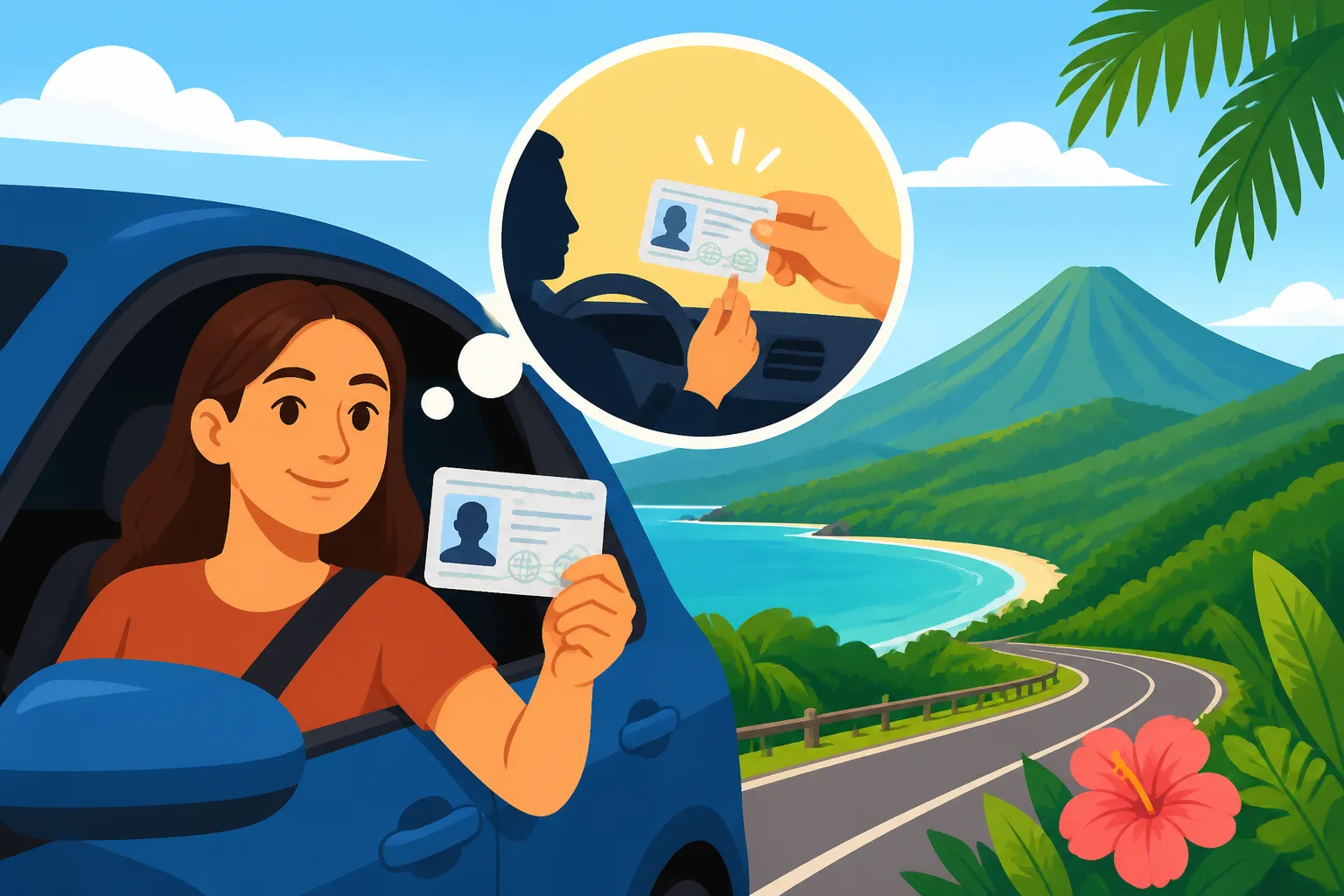
You are legally allowed to drive in Costa Rica using your valid foreign driver's license for the entire duration of your legal tourist stay. For most nationalities, this is a maximum of 90 days. The crucial thing to remember is that this period is tied directly to the entry stamp you receive in your passport upon arrival. This isn't just a suggestion; it's the law. If you're pulled over by transit police, they will ask for your passport to verify your entry date.
Now, imagine this scenario: You fly into Juan Santamaría Airport (SJO), get your passport stamped, and you're good to go for 90 days. You rent a car and hit the road. As long as your foreign license is current and you haven't overstayed your welcome, you're compliant. The system is designed to allow visitors to explore the country freely. However, if you're like many expats, those 90 days fly by, and suddenly you're doing a How Long Can I Stay in Costa Rica on a Tourist Visa? without realizing the implications for your driving privileges. This is a common pitfall! Once your tourist visa expires, so does the validity of your foreign driver's license in Costa Rica. If you try to drive after that date, you're essentially driving without a valid license, which carries significant penalties, including hefty fines and potentially having your vehicle impounded. Always carry your physical passport (or a certified copy, though originals are often preferred by police) and your driver's license with you when driving.
Requirements for Your Foreign License
To be valid for driving in Costa Rica during your tourist stay, your foreign driver's license must meet a few simple criteria. First and foremost, it needs to be current and valid in your home country. An expired license from back home won't cut it here. Secondly, if your license isn't in Spanish or English, it's highly recommended to carry an International Driving Permit (IDP) alongside it. While not strictly mandatory for all foreign licenses (many police officers are familiar with common formats from North America and Europe), an IDP acts as an official translation of your license, which can save you a lot of hassle and confusion if you're stopped by an officer who isn't familiar with your country's license format. It's a small investment for peace of mind.
Beyond the license itself, you must always carry proof of your tourist entry stamp (your passport) and the vehicle's registration (Riteve, Marchamo, and title documents), even if it's a rental car. Rental car companies will provide you with all the necessary vehicle documents, but it's your responsibility to keep them accessible. Remember, even with your foreign license, you're subject to all Costa Rican traffic laws, including speed limits, seatbelt laws, and absolutely no driving under the influence. It’s also wise to check your personal insurance, as some policies might have exclusions for driving abroad on a foreign license if you’re past a certain residency period, which becomes more complex once you move beyond tourist status.
Transitioning to Residency: The Urgency to Convert
Here’s where things get a bit more complex and, frankly, a source of major frustration for many new residents. Once you apply for residency in Costa Rica, your status changes, and so do the rules for driving. You're no longer just a tourist.
The Residency Application Limbo
The moment you submit your residency application to Migración (the immigration office), you enter a new phase. You're no longer just a tourist who can hop out of the country for a "visa run" to reset your driving privilege. Unfortunately, your foreign license still expires when your initial 90-day tourist stamp expires. There's no automatic extension simply because you've applied for residency. This is a huge point of stress for many expats because the residency application process can take a significant amount of time – often many months, sometimes even a year or more. During this period, you are legally in the country but often without a legal means to drive unless you go through the process of obtaining a Costa Rican license.
This grey area can leave you feeling stranded. You've sold your car back home, bought a car here, and now you can't legally drive it. It’s a classic “welcome to Costa Rica” moment of administrative challenge. While some lawyers might advise you to keep your last valid tourist stamp as proof of continued legal stay (especially if you're still entering and exiting the country while your application processes), legally, your foreign driver's license is only good for the current tourist entry period. This often means many new residents choose to get a local license as soon as possible, even while their residency is pending, to avoid driving illegally. This is crucial for anyone planning to The Complete Guide to Costa Rica Residency for Expats (2027).
Converting Your License After DIMEX
Once your residency is approved and you receive your DIMEX (the official residency card), the good news is you can finally convert your foreign driver's license into a Costa Rican one. This isn't just a formality; it's a crucial step that legitimizes your driving status for the long haul. The process, known as homologación, involves presenting your valid foreign license and your DIMEX at the Consejo de Seguridad Vial (COSEVI) offices. You'll need to pay a fee, undergo a basic medical exam (the Dictamen Médico), and sometimes, depending on the country of origin and current agreements, you might need to take a quick practical driving test, but often it's a direct swap.
The Dictamen Médico is a standard health check you'll need for any Costa Rican license. It's a quick visit to a certified doctor who checks your vision, hearing, blood pressure, and asks a few general health questions. They issue a digital certificate that COSEVI accesses directly. This homologación process is far simpler than taking the full battery of Costa Rican driving tests, which we'll discuss next. Having your DIMEX makes life much easier for various administrative tasks, including obtaining a local license. Remember, you can't convert an expired foreign license. So, make sure your home country license is valid when you go to COSEVI. For specifics on handling your residency, check out How Do I Get Your DIMEX Residency Card in Costa Rica?.
Obtaining a Costa Rican Driver's License
For those who either don't qualify for direct conversion, have let their foreign license expire, or simply want to do things by the book from the start, getting a brand-new Costa Rican driver's license from scratch is the path. This involves a few more steps and requires patience, but it’s entirely doable.
The Dictamen Médico and Theory Test (Examen Teórico)
The journey to a Costa Rican driver's license begins with the Dictamen Médico, just like with the conversion process. This medical examination is fundamental, ensuring you are physically and mentally capable of driving. You can get this done at many private clinics across the country. The cost is typically around 20,000 to 30,000 colones (roughly $35-$55 USD), and it's valid for six months. Don't let it expire before you finish the other steps!
Once you have your medical certificate, the next hurdle is the written theory test, or examen teórico. This test covers Costa Rican traffic laws, road signs, and safe driving practices. Many expats find this part challenging, not just because it’s in Spanish (though you can request an English version in some locations), but because the questions can be tricky and sometimes seem designed to catch you out. You can sign up for a preparation course (often offered by private driving schools) or study the official manual (Manual del Conductor) yourself. The manual is dense, but thorough. Scheduling the test can sometimes involve waiting lists, especially in popular areas. Once you pass, you receive a certificate that's also valid for a limited time. This phase truly tests your commitment to becoming a Costa Rican driver.
The Practical Driving Test (Examen Práctico)
After conquering the theory test, you'll face the practical driving test, or examen práctico. This is where many people, even experienced drivers, can get tripped up. The test routes and requirements can vary by location, but generally, they involve a series of maneuvers in a closed circuit, followed by a short road test. The closed circuit typically includes parallel parking, three-point turns, and driving through cones, all while adhering to strict rules about touching lines or hitting obstacles. The road test assesses your ability to navigate traffic, obey signs, and demonstrate safe driving habits in real-world conditions.
Booking your practical test (called a cita) can be notoriously difficult due to high demand. People often wake up in the early hours to try and secure a spot online when new appointments are released. Some opt to pay a driving school to arrange the cita for them, which can save a lot of frustration but adds to the cost. You'll need to provide your own vehicle for the test, which must be up-to-date with all its documentation, including the Marchamo (annual circulation tax) and Riteve (vehicle inspection). If you plan to How to Buy a Car as a Foreigner in Costa Rica, make sure it’s in tip-top shape for this test. Failing the practical test is common, so don't feel too bad if it takes a couple of tries. The key is perseverance and practicing the specific maneuvers required for the test.
Practical Tips and Navigating the System
Getting your driving privileges sorted in Costa Rica can feel like a maze, but a little preparation and understanding of the local quirks can make it much smoother.
Dealing with Traffic Police and Checkpoints
Encountering transit police (often wearing yellow or green uniforms) is a fact of life on Costa Rican roads. Checkpoints are common, especially on major routes or near holidays. When stopped, remain calm, polite, and cooperative. Have your documents readily available: your foreign driver's license (or Costa Rican one), your passport (or DIMEX card if you have residency), and the vehicle's up-to-date registration (Riteve and Marchamo). If you're driving on your foreign license, ensure your entry stamp is current. If your license has expired according to your tourist stamp, you are driving illegally, and police are within their rights to fine you heavily and potentially impound the car. This can be a very expensive mistake, easily in the hundreds of dollars for fines, plus tow and impound fees.
Always be respectful, even if you feel the stop is unwarranted. Arguing will almost certainly make things worse. Police officers here generally appreciate directness and honesty. If you don't speak much Spanish, having a translation app like Google Translate on your phone can be incredibly helpful. You might also want to look into local SIM cards, for example from a brand like Airalo, to ensure you have reliable data for such situations and for navigation. Understanding Driving in Costa Rica: Licenses, Registration and Rules for Expats (2027) will help you feel more confident.
Insurance and Vehicle Registration
Even if you're just using your foreign driver's license, having proper insurance is non-negotiable. The Instituto Nacional de Seguros (INS) provides the mandatory liability insurance (Seguro Obligatorio de Automóviles – SOA) that is included in your annual Marchamo. This covers third-party damages in an accident. However, many expats opt for additional private insurance (also available through INS or other providers) to cover their own vehicle against collision, theft, or other damages. This is especially important if you've invested in buying a car here. Understanding How Much Is Car Insurance in Costa Rica? can save you a lot of grief in the long run.
Beyond insurance, keep your vehicle's registration up to date. The Marchamo must be paid annually by December, and the Riteve (technical vehicle inspection) must be passed annually. Driving with expired Marchamo or Riteve is a serious offense that will incur fines and potential impoundment. If you're considering moving all your belongings, including a vehicle, perhaps using a service like Sirelo for shipping can help, but remember the vehicle will still need to pass Riteve and be registered here. For more details on vehicle paperwork, check out How to Register and Title a Vehicle with the Registro in Costa Rica and Understanding the Marchamo (Annual Vehicle Tax) and Riteve in Costa Rica.
Driving Culture and Road Conditions
Finally, a word about driving itself in Costa Rica. It's different. Roads can vary wildly from perfectly paved highways to unpaved, pothole-ridden tracks, especially in rural areas. Driving habits can be more aggressive than what you might be used to, and defensive driving is absolutely essential. Be prepared for sudden stops, unexpected pedestrians or animals on the road, and sometimes a lack of clear signage. Using navigation apps like Waze or Google Maps is highly recommended, as they offer real-time traffic updates and can help you navigate the often-confusing road system. Night driving, especially outside of metropolitan areas, requires extra caution due to poor lighting and road conditions. Pura Vida extends to the road, but safety should always be your number one priority.
| Feature | Tourist Driving (Foreign License) | Resident Driving (Foreign License while pending DIMEX) | Resident Driving (Costa Rican License) |
|---|---|---|---|
| License Validity | Tied to valid entry stamp (typically 90 days) | Tied to last valid entry stamp (usually 90 days from arrival) | Valid for 2-5 years (depends on license type and age) |
| Required Docs | Original foreign license, passport with current entry stamp | Original foreign license, passport (risk of invalidity after 90 days) | Costa Rican driver's license (DIMEX often also carried) |
| Legal Status | Fully legal during valid tourist stay | Legal during initial 90 days, then illegal without CR license | Fully legal |
| Police Stops | Generally smooth if documents current and valid | High risk of fines/impoundment if 90 days past entry stamp | Generally smooth if license and vehicle docs current |
| Conversion Option | No (must be resident with DIMEX) | No (must have DIMEX) | Yes, homologación possible if foreign license is valid at time of DIMEX |
| New License Path | Can take Dictamen & Teórico, but need DIMEX for Práctico & issuance | Can take Dictamen & Teórico, but need DIMEX for Práctico & issuance | Full process (Dictamen, Teórico, Práctico) or Homologación |
| Peace of Mind | High for 90 days, then drops to zero | Low to non-existent during limbo | High |
Final Thoughts on Your Driving Journey
Understanding the rules for using your foreign driver's license in Costa Rica is one of those essential pieces of knowledge that every expat or long-term visitor absolutely needs. Don't fall into the trap of thinking "it'll be fine" once your initial tourist stamp expires. The consequences of driving illegally can be severe, leading to unexpected financial strain and immense stress. Whether you decide to do regular visa runs to keep your tourist status and driving privileges active (which means leaving the country every 90 days) or embark on the journey of obtaining a Costa Rican license, plan ahead. Make sure you understand The Complete Guide to Moving to Costa Rica: Your First 90 Days (2027) so you can get organized from the start. Taking the time to get things sorted correctly will not only keep you on the right side of the law but will also contribute significantly to a more relaxed and enjoyable experience here in beautiful Costa Rica.
Disclaimer
The information provided in this article is intended for general guidance and informational purposes only, and does not constitute legal or professional advice. Laws and regulations in Costa Rica, particularly concerning immigration and driving, can change frequently. Readers are strongly advised to consult with a qualified legal professional or the relevant Costa Rican government agencies (such as Migración or COSEVI) for the most current and accurate information pertaining to their individual circumstances.