How Do I Get My UK Degree Recognized in Costa Rica?
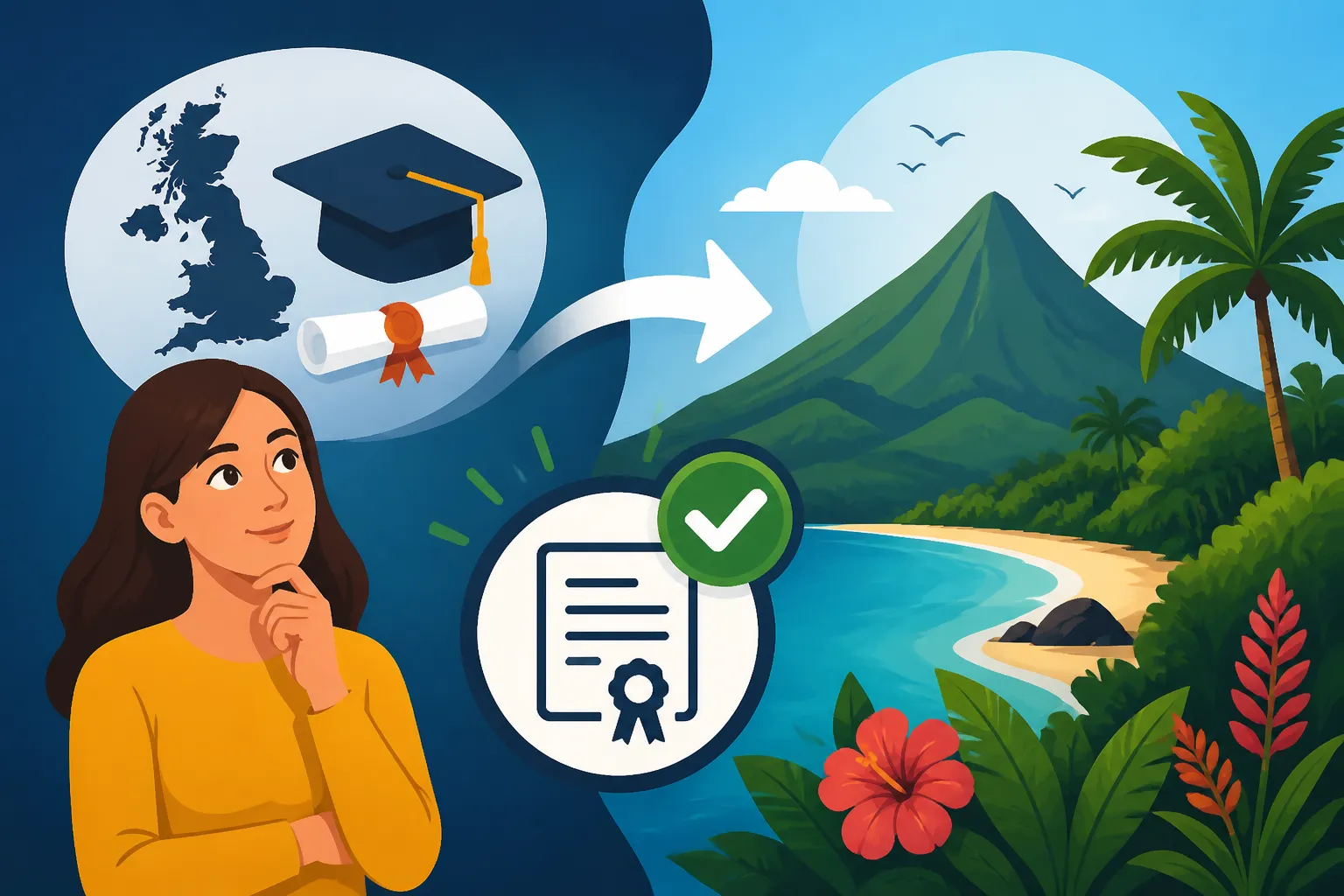
Moving to a new country like Costa Rica, you bring with you all the experience, hard work, and qualifications you earned back home. But then comes the moment you realize your hard-earned UK degree, something you assumed was universally understood, might not mean exactly the same thing here. It's a common, utterly frustrating hurdle for many expats trying to build a new professional life or pursue further education. This guide is here to walk you through the often-baffling process of getting your UK degree officially recognized in Costa Rica, sharing the realities and offering practical advice from someone who’s been through the bureaucratic wringer.
Why Your UK Degree Needs Recognition in Costa Rica
It might seem counter-intuitive, right? You’ve got a degree from a reputable British university, and surely that speaks for itself. Well, sí y no. In Costa Rica, for many formal purposes, your UK degree needs to go through a specific validation process. This isn't just about a potential employer understanding your qualifications; it's often a legal requirement.
The Bureaucratic Maze: Expect the Unexpected
One of the first lessons you learn as an expat in Costa Rica is that bureaucracy here has its own unique rhythm. It’s not necessarily intentionally difficult, but it operates on different principles than what you might be used to in the UK. The process of getting your degree recognized is a prime example. It’s detailed, it’s time-consuming, and it demands patience that often feels in short supply when you’re eager to get started with your new life. You'll likely encounter multiple steps that feel redundant or overly particular, but understanding that this is simply the way things are done can help manage expectations. Remember, it's not a personal affront; it's just the system.
When It's Absolutely Essential
So, when do you really need to get your UK degree recognized? The answer largely depends on your intentions here in Costa Rica. If you're looking to simply work remotely for an overseas company, often your degree might not need formal recognition by Costa Rican authorities, as long as your employer doesn't require it for their own internal processes. However, for most other scenarios, it becomes a crucial step:
- Professional Licensing: If your profession requires a license to practice in Costa Rica (think doctors, nurses, engineers, architects, lawyers, teachers, and even some specialized IT roles), then official recognition of your degree by the relevant professional Colegio (professional association) is non-negotiable. This often means your degree first needs to pass through the national recognition body.
- Employment in Costa Rican Companies: While some private companies, particularly those with an international focus or within Free Zones, might be more flexible, many local Costa Rican businesses will require a formally recognized degree, especially for roles that demand specific educational backgrounds. It's not uncommon for HR departments to ask for this, even if it's not strictly legally mandated for their specific industry, simply because it's standard practice.
- Further Education: If you're planning to pursue a Master's or PhD at a Costa Rican university, like the University of Costa Rica, they will absolutely require your previous UK qualifications to be recognized to ensure they meet local academic standards for entry. This can also apply if you're looking to simply transfer credits.
- Residency Categories: In some cases, while not directly tied to degree recognition, your professional background and qualifications can play a part in certain residency applications, or at least in demonstrating your viability to live and contribute here. For example, if you're seeking to apply for a specialized work visa, proof of your educational qualifications will be required, and having them recognized simplifies this. To fully understand the process of obtaining legal status, you might want to look into How to Get Permission to Work as a Resident in Costa Rica.
The Official Process: CONARE and Your Paperwork Journey
The main institution responsible for recognizing foreign university degrees in Costa Rica is the Consejo Nacional de Rectores (CONARE). This is the governing body for public universities, and they oversee the equivalence process for degrees from institutions outside Costa Rica. This isn't a quick trip to an office; it's a multi-stage process that requires meticulous attention to detail.
Gathering Your Documents: The Apostille Gauntlet
Before you even think about submitting anything to CONARE, you need to prepare your documents. And here's where the infamous "Apostille" comes into play. An apostille is a certification that authenticates the signature and seal of a public official on a document for use in countries that are members of the Hague Apostille Convention. Both the UK and Costa Rica are members, which makes things a bit simpler than if they weren't, but it's still a specific process.
You will need to have your original degree certificate(s) and academic transcript(s) apostilled by the Foreign, Commonwealth & Development Office (FCDO) in the UK. This often means sending your precious original documents back to the UK, which can be nerve-wracking. Make sure you also obtain an official letter from your university stating the duration, curriculum, and accreditation of your program. This letter will also need to be apostilled.
Once apostilled, these documents will then need to be translated into Spanish by an official public translator in Costa Rica. You cannot simply have a friend who speaks Spanish do it. These official translators are certified by the Ministry of Foreign Affairs and are the only ones whose translations are accepted for legal and administrative purposes. The costs for these translations can add up quickly, so be prepared for that expense. For more detailed information on document authentication, check out How Do I Get My Documents Apostilled for Costa Rican Residency?.
Navigating CONARE: The Application Deep Dive
With your apostilled and officially translated documents in hand, you’re ready to tackle CONARE. Here’s a general overview of the steps, but always, always double-check their official website or contact them directly for the most current requirements, as these can change:
- Request an Appointment: Often, the process starts with securing an appointment to submit your documents. This might be done online or by phone.
- Submit Application: You'll submit a formal application requesting the recognition of your degree. This application will require personal identification (your passport and potentially your DIMEX if you have one), the original apostilled documents, and their official Spanish translations. You may also need to provide a copy of your curriculum vitae (CV) and a detailed outline of the courses you took.
- Pay Fees: There will be administrative fees associated with the evaluation process. These fees can vary and are typically non-refundable.
- Evaluation Period: This is where your patience will be truly tested. The evaluation process can take several months, sometimes even up to a year or more, depending on the complexity of your degree, the university, and CONARE's current workload. They will review your academic program against Costa Rican standards to determine equivalence.
- Resolution: Once the evaluation is complete, CONARE will issue a resolution. This document will formally state whether your degree is recognized and what its equivalent Costa Rican degree is. This resolution is what you'll use for professional colleges, universities, or employers.
For those planning to study further here, understanding How to Apply to the University of Costa Rica as an International Student can give you a head start on what academic institutions look for.
Here’s a simplified table of the common documents required:
| Document Type | Requirement | Notes |
|---|---|---|
| Degree Certificate(s) | Original, Apostilled by UK FCDO | Must be the official certificate awarded by your UK university. |
| Academic Transcript(s) | Original, Apostilled by UK FCDO | Detailed breakdown of courses, grades, and credits. |
| University Letter | Original, Apostilled by UK FCDO | Confirms program duration, curriculum, accreditation, and degree classification. |
| Official Spanish Translations | By a Costa Rican public translator | All apostilled documents must be translated. |
| Passport & Residency Card (DIMEX) | Copies and originals for verification | If you have your DIMEX, bring it. Otherwise, your valid passport. |
| Curriculum Vitae (CV) | Updated, in Spanish | Standard professional resume. |
| Application Form | Filled out completely, often available on CONARE's website | Follow all instructions meticulously. |
| Payment Receipts | Proof of paid administrative fees | Keep these safe. |
Potential Hurdles and Real-World Advice
Let's be real, the process isn't always smooth sailing. There are common obstacles that many expats face, and anticipating them can save you a lot of grief.
Translators, Notaries, and Hidden Costs
Beyond the CONARE fees, the costs for official translations can be substantial. Prices vary, but expect to pay per page or per word, and a thick transcript can quickly add up. Always confirm the translator's certification; mistakes here can set you back months. You might also need notary services for copies of documents, or if your attorney is assisting you. These smaller fees, while seemingly minor individually, collectively contribute to the overall financial burden of this process. It’s also crucial to remember that this process happens parallel to other administrative tasks, like understanding The Complete Guide to Taxes in Costa Rica for Expats if you're planning to work, and ensuring your financial house is in order. Firms like Taxes for Expats can be incredibly helpful in navigating your tax obligations in both countries, ensuring no surprises down the line as you establish your professional life here.
Maintaining Your Sanity During the Wait
The waiting period is arguably the hardest part. Once you've submitted your documents to CONARE, it feels like they disappear into a black hole. Communication can be slow, and getting updates often requires persistence. My advice? Don't badger them daily, but establish a reasonable follow-up schedule. Maybe call once a month or send a polite email. During this time, it's easy to feel like you're in limbo, especially if your job prospects or educational plans hinge on this recognition. It's vital to develop other areas of your life here – immerse yourself in the culture, improve your Spanish, explore. This is part of the expat journey, and resilience is key.
Alternatives and Practical Considerations
What if formal recognition isn't immediately possible, or you find yourself stuck in a prolonged CONARE queue? Don't despair. There are other paths and practical realities to consider.
When Formal Recognition Isn't the Only Path
For many expats, especially those in the tech or online business sectors, direct employment with a Costa Rican company requiring a formally recognized degree isn't always the goal. If you're working remotely for a foreign company, or setting up your own online business, the urgency for full degree recognition might be lower. Your skills and experience often speak louder than a piece of paper, especially in these dynamic fields. Many employers, especially those used to international talent, will simply want to see proof of your degree, and an apostilled, translated copy might suffice for their internal records without needing the full CONARE stamp of approval.
Also, consider taking advantage of Costa Rica's digital nomad visa. While it has its own requirements, it focuses more on your ability to generate income remotely rather than the specific recognition of your degree for local employment. This can be a fantastic way to establish yourself here without the immediate pressure of the CONARE process. For a broader perspective on establishing your professional credentials, you might find How to Validate Professional Credentials in Costa Rica helpful, as it delves into various aspects of proving your qualifications.
Boosting Your Profile Beyond the Diploma
Even with the best degree in the world, integrating professionally into Costa Rica often comes down to more than just academic papers. Your soft skills, especially language proficiency, can be incredibly important.
- Spanish Language Proficiency: This is huge. While many in the service and tourism sectors speak English, for most professional roles in a Costa Rican company, a strong grasp of Spanish is essential. Even if your degree is recognized, struggling with the language will be a significant barrier. Investing time in improving your Spanish will yield immense dividends, professionally and personally. Platforms like iTalki offer flexible, affordable ways to connect with native Spanish tutors, allowing you to practice conversation and dive into local idioms. It makes a world of difference.
- Networking: Building connections is paramount. Costa Rica is a country where personal recommendations and relationships (known as "argolla" or "contactos") often open doors faster than formal applications. Attend expat meetups, industry events, and community gatherings.
- Local Experience: If possible, even volunteer work or short-term projects can give you valuable local experience and references, which employers highly value. This demonstrates your commitment to living and working in Costa Rica.
For those serious about integrating, developing your language skills, and finding your place within the local community are just as important as formal qualifications. Learning Spanish in Costa Rica: A Complete Guide for Expats is a great resource that can guide you through improving your fluency. It truly rounds out your profile and shows you're not just passing through.
The journey to getting your UK degree recognized in Costa Rica is a marathon, not a sprint. It demands organization, financial preparation, and a generous dose of patience. But by understanding the steps, anticipating the hurdles, and focusing on building a holistic professional profile, you absolutely can navigate this process and thrive in your new home.
Disclaimer
Please note that the information provided in this guide is for general informational purposes only and does not constitute legal or professional advice. Requirements for degree recognition in Costa Rica can change, and it is crucial to consult with the official authorities, such as CONARE, and potentially legal professionals specializing in education or immigration law for the most current and accurate information pertaining to your specific situation. This guide reflects common procedures as of 2026 but should not be solely relied upon for critical decisions.