Can My Spouse Get Residency Through My Pensionado Status in Costa Rica?
One of the biggest joys of retiring or moving to Costa Rica is the promise of a peaceful, slower pace of life, but for couples, that joy often comes with a nagging question: "Can my spouse actually join me under my hard-earned Pensionado status?" Let me tell you, as someone who’s navigated this bureaucratic maze, the answer is a resounding yes, and this guide is here to lay out exactly how you can ensure your beloved partner gets their own residency card right alongside you, making your Pura Vida dream a shared reality.
Understanding the Pensionado Residency for Spouses
When you decide to pursue the Pensionado residency in Costa Rica, it's often because you've found that sweet spot: a guaranteed income from a pension, military retirement, or Social Security that meets the minimum requirement. What many don't realize upfront, or might worry about, is how this impacts their family. The good news is that Costa Rican immigration law, while sometimes tedious, is generally quite family-friendly, allowing dependents like spouses and minor children to apply for residency under the primary applicant's umbrella.
This isn't a separate, complex application for your spouse; rather, they are included as a dependent on your Pensionado application. This means that the primary applicant's proof of income—that minimum of $1,000 USD per month—covers both of you. You don't need to show an additional $1,000 for your spouse, which is a huge relief for many couples budgeting their move. It’s one less financial hurdle to jump, letting you focus on the excitement of setting up your new life together. However, it's important to differentiate this from other residency categories, as each has its own rules for dependents. For a broader understanding of different paths, you might want to read The Complete Guide to Costa Rica Residency for Expats (2027).
What Pensionado Status Means for Family Unification
The Pensionado residency is specifically for foreign nationals who receive a lifetime pension from a foreign government or qualifying institution. The beauty of this category, especially for couples, is that it directly facilitates family reunification. Your spouse isn't just an afterthought; they are a recognized part of your application. This is a deliberate choice by Costa Rica to welcome retirees and their families, acknowledging that moving abroad is rarely a solo endeavor.
Think about it: after years of working and dreaming, the last thing you want is to be separated from your partner while you settle into your new home. Costa Rica understands this, and the process, while requiring diligence, is designed to keep families together. It means that once your Pensionado residency is approved, your spouse's dependent residency is processed in tandem. They receive their own DIMEX card, which is their official identification and residency document, enabling them to live here legally, open bank accounts, and access services. You can learn more about securing this crucial document in How to Get Your DIMEX Residency Card in Costa Rica.
Common Misconceptions and Initial Relief
One common misconception is that your spouse will need to qualify for their own residency category, which can cause unnecessary stress. People often wonder if their partner needs to have their own separate income, or if there's a different, more complicated visa for them. Let me ease your mind right now: if you qualify as a Pensionado, your legally married spouse almost certainly qualifies as your dependent. The key here is "legally married." Costa Rican immigration requires a marriage certificate as proof of your relationship.
Another source of relief for many is realizing that while the primary applicant cannot work as an employee in Costa Rica under the Pensionado visa (they can own a business or work remotely for a foreign company), the dependent spouse generally has the same restrictions. This is something to plan for, especially if your spouse was considering working locally. For couples planning to move their entire lives, including belongings, thinking about how your spouse's dependency eases the overall transition is a huge plus. It streamlines the paperwork and often the psychological burden of immigration. If you're pondering the big move, services like Sirelo can help coordinate the logistics of bringing all your worldly possessions for both of you.
The Step-by-Step Process to Add Your Spouse
Alright, let’s get down to brass tacks. Adding your spouse to your Pensionado application isn't rocket science, but it does require meticulous attention to detail and a heaping dose of patience. The process is essentially integrated into your own application for How to Get the Pensionado (Retiree) Residency in Costa Rica (2027), meaning you'll submit their documents right alongside yours.
Preparing Your Spouse's Documentation
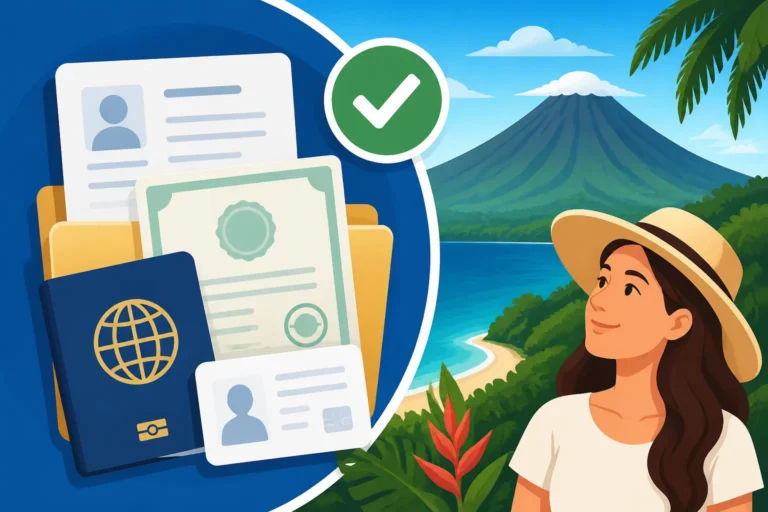
Just like you need a slew of documents, your spouse will need their own set. The golden rule here is: original documents, apostilled, and officially translated. This cannot be stressed enough. Think of it as a checklist, and don't skip a single item.
Here’s what your spouse will typically need:
- Birth Certificate: An original, recent copy (usually issued within the last six months to a year, depending on the consulate/immigration office) with an apostille from your home country.
- Marriage Certificate: The certified original copy, also apostilled. This is the lynchpin document proving your relationship. If you were married outside of your home country, ensure it's properly legalized according to international standards.
- Police Background Check: Your spouse will need a recent criminal record check from their country of origin and any country they’ve resided in for the last three years. This also needs to be apostilled. For those from the U.S., this is usually an FBI Identity History Summary. Again, mind the expiry dates on these – they are typically only valid for six months from the issue date.
- Passport Copies: Full copy of their passport, including all pages, even blank ones. Ensure it’s valid for at least six months beyond your intended application date.
- Passport Photos: Several recent passport-sized photos (check current requirements for specific dimensions and background color).
- Proof of Funds (Indirect): While your spouse doesn't need separate proof of income, their application rides on your Pensionado income proof. So, ensuring your financial documentation is impeccable is critical for both of you.
- Fingerprints: Once in Costa Rica, both you and your spouse will need to get your fingerprints taken at the Ministry of Public Security. This is a common requirement for all residency applicants and is usually straightforward.
For a deep dive into the specifics of document preparation, you’ll find Understanding the Documents and Apostille Needed for Residency in Costa Rica incredibly helpful. It breaks down the often-confusing world of apostilles and legalizations.
Submitting the Joint Application
You'll typically submit both applications simultaneously to the Dirección General de Migración y Extranjería (DGME). While you're the primary applicant for Pensionado, your spouse's application is intrinsically linked. You’ll present your documents, and then immediately present theirs, clearly indicating their status as your dependent spouse.
Many expats choose to use a local immigration lawyer for this process, and I highly recommend it. While it’s technically possible to do it yourself, the rules and requirements can change, and a lawyer familiar with the nuances can save you immense time and prevent costly errors. They can also help navigate any issues that arise, like documents being rejected for minor discrepancies. They often handle the official translations into Spanish, too, which is another crucial step. Remember, every single document not originally in Spanish must be translated by an official translator recognized by the Ministry of Foreign Affairs in Costa Rica.
Waiting Game and Follow-Ups
Ah, the waiting game. This is where your patience will truly be tested. Residency applications in Costa Rica can take anywhere from a few months to over a year, sometimes even longer. Don’t get discouraged; this is normal. You'll receive a comprobante, a receipt, for your application. Keep this safe, as it’s your proof that you’ve applied.
During this period, you might be asked for additional documents or clarifications. This is common, so don't panic. Respond promptly and accurately to any requests. Your lawyer, if you're using one, will usually handle these communications. It's also important to remember that during this waiting period, if your current visa status expires, you may need to continue doing "visa runs" out of the country every 90 days to maintain legal tourist status until your residency is approved. This isn't ideal, but it's the reality for many.
Essential Documents and Overcoming Common Hurdles
Navigating the bureaucratic landscape of Costa Rican immigration is a rite of passage for every expat. Even with a straightforward process like dependent spouse residency, there are always those little quirks and frustrations that can turn a simple step into a minor saga.
Apostilles and Translations: The Unsung Heroes (or Villains)
I cannot emphasize enough how critical apostilles and official translations are. This isn't just about having the right documents; it's about having them in the exact format Migración requires. An apostille is an international certification that makes a document valid for use in other countries that are part of the Hague Apostille Convention. If your country is not part of this convention, you'll need a different form of authentication, usually through the Costa Rican consulate in your home country. Always double-check this for each document.
Once apostilled, every document not in Spanish must be translated by an official Costa Rican translator. Don't try to save a few bucks by using a non-certified translator or, worse, Google Translate. Migración will reject it, and you'll be back to square one, losing precious time and money. This part often causes significant delays because many people underestimate the strictness. I've seen perfectly valid documents rejected because the apostille wasn't correctly attached, or a translation had a tiny typo. It's frustrating, but it's their system, and we play by their rules.
Proving Your Marriage: Beyond the Certificate
While the marriage certificate is the primary proof, sometimes Migración might ask for additional evidence, especially if the marriage is relatively new or if there are other complexities. This isn't to be nosy, but to ensure the relationship is legitimate. These requests are less common for Pensionado applications compared to, say, marriage-based residency, but it's good to be prepared.
Additional proofs could include things like:
- Joint bank accounts
- Utility bills in both names (once you're settled in Costa Rica and have utilities like ICE and AyA set up, this becomes easier, but for the initial application, it’s less likely)
- Shared property deeds
- Photos from your wedding or life together
- Correspondence (though less common now with digital communication)
Generally, for Pensionado dependent applications, the apostilled marriage certificate is sufficient, but knowing these possibilities exists can alleviate surprise if Migración has follow-up questions. Building a life together means sharing resources, and establishing a local bank account as a couple will be an important step once residency is underway. For insights on navigating local banking, check out The Expat Guide to Opening a Bank Account in Costa Rica.
Addressing Potential Delays and Solutions
Delays are almost inevitable in any immigration process, and Costa Rica is no exception. Some common causes include:
- Incomplete or Incorrect Documents: The number one culprit. A missing apostille, an expired police check, a poorly translated document—any of these can send your application back.
- Backlogs at Migración: Sometimes, it’s simply the volume of applications. There's little you can do about this except be patient.
- Changes in Requirements: While rare, laws and requirements can shift. Having an attorney who stays current with these changes is invaluable.
If you encounter a delay, the best approach is proactive and polite follow-up, usually through your immigration attorney. They can inquire about the status of your case and address any issues. Resist the urge to show up at Migración unannounced and agitated; it rarely speeds things up and can actually hinder progress. Staying calm and organized is your superpower here.
Maintaining Joint Residency and What Comes Next
Getting that coveted DIMEX card for both you and your spouse is a moment of pure triumph, a tangible symbol of your new life in Costa Rica. But the journey doesn’t end there. There are ongoing responsibilities and considerations for maintaining your joint residency and truly integrating into Tico life.
The Caja (CCSS) Requirement for Both Spouses
One of the most significant aspects of maintaining residency in Costa Rica is the mandatory enrollment in the Caja Costarricense de Seguro Social (CCSS), the public healthcare system. This isn't optional; it's a legal requirement for all residents, including your dependent spouse. Once your residency is approved and you both have your DIMEX cards, you’ll need to enroll. Your monthly contributions are calculated based on your declared income (or the income you used to qualify for Pensionado) and typically cover both you and your spouse.
While the Caja provides comprehensive care, it's also known for wait times for specialist appointments and certain procedures. Many expats choose to supplement this with private health insurance. Before your Caja coverage fully kicks in, or if you prefer a private option, robust international health insurance like Cigna Global can offer peace of mind, covering you and your spouse for various medical needs. Understanding this dual system is crucial, and you can delve deeper into it with Understanding the Caja Affiliation Requirement for Residency in Costa Rica and Health Insurance in Costa Rica: Caja, INS and International Options Explained.
Renewing Your Residency Together
Pensionado residency is initially granted for two years and then needs to be renewed. Each renewal typically grants you a further two years. This renewal process will also apply to your spouse. You'll need to demonstrate continued eligibility, primarily by showing that your pension income is still coming in and that you've maintained your Caja contributions. You will also need to provide updated police checks for both of you, issued from your home country within the prescribed timeframe (usually three months).
It’s another round of gathering documents, getting apostilles, and potentially official translations. Keeping meticulous records from your initial application can make renewals much smoother. Set reminders well in advance of the expiry date on your DIMEX cards, as applying late can incur penalties or even jeopardize your residency status.
Building Your Life as a Couple in Costa Rica
With both of you legally settled, you can truly focus on building your new life. This means setting up a home, connecting utilities, and managing your finances. You’ll find articles like The Expat Guide to Setting Up Utilities (ICE/AyA) in Costa Rica and The Complete Guide to Cost of Living in Costa Rica for Expats (2026) invaluable as you settle into your new rhythm as a couple.
Remember, living in Costa Rica is an adventure, and sharing it with your spouse makes it all the richer. There will be challenges, frustrations, and moments of utter confusion, but there will also be unparalleled beauty, incredible experiences, and the profound joy of living a life less ordinary, together. Embrace the learning curve, be patient with the process, and lean on the expat community for support. It’s a wonderful journey to embark on side-by-side.
Residency for Your Spouse: A Quick Comparison
To help visualize the key requirements for your spouse's dependent Pensionado residency, here's a handy table:
| Requirement | Details for Dependent Spouse | Notes |
|---|---|---|
| Relationship Proof | Certified, Apostilled Marriage Certificate | Must be a legal, recognized marriage. |
| Proof of Income | Not directly required; relies on primary applicant's $1,000/month pension. | The primary applicant's income covers both. |
| Background Check | Apostilled Police Background Check from home country (and any country resided in >3 years). | Must be recent (usually within 6 months of issue date). |
| Birth Certificate | Certified, Apostilled Birth Certificate | Must be recent (usually within 6 months to 1 year of issue date). |
| Passport | Copy of all passport pages | Passport must be valid for at least 6 months. |
| Photos | Recent passport-sized photos (specific dimensions) | Check current requirements for quantity, size, and background color. |
| Caja (CCSS) Enrollment | Mandatory once residency is approved | Monthly contributions cover both spouses, usually based on primary applicant's income. See How Much Does Caja (CCSS) Cost per Month in Costa Rica in 2026?. |
| Official Translations | Required for all documents not in Spanish | Must be done by an official Costa Rican translator. |
| Residency Card (DIMEX) | Issued individually to the spouse | This is their official identification for living in Costa Rica. |
| Renewal | Every two years, alongside the primary applicant | Requires updated documents (police check, proof of income continuation, Caja payments). |
This table simplifies the core components, but remember, the devil is often in the details when it comes to immigration. Working with an experienced immigration attorney can significantly ease this process.
Disclaimer
The information provided in this guide is for general informational purposes only and does not constitute legal, financial, or immigration advice. While we strive to keep the information up-to-date and accurate, laws and regulations in Costa Rica are subject to change without notice. It is highly recommended that you consult with a qualified Costa Rican immigration attorney or legal professional for advice tailored to your specific situation before making any decisions related to residency or immigration.