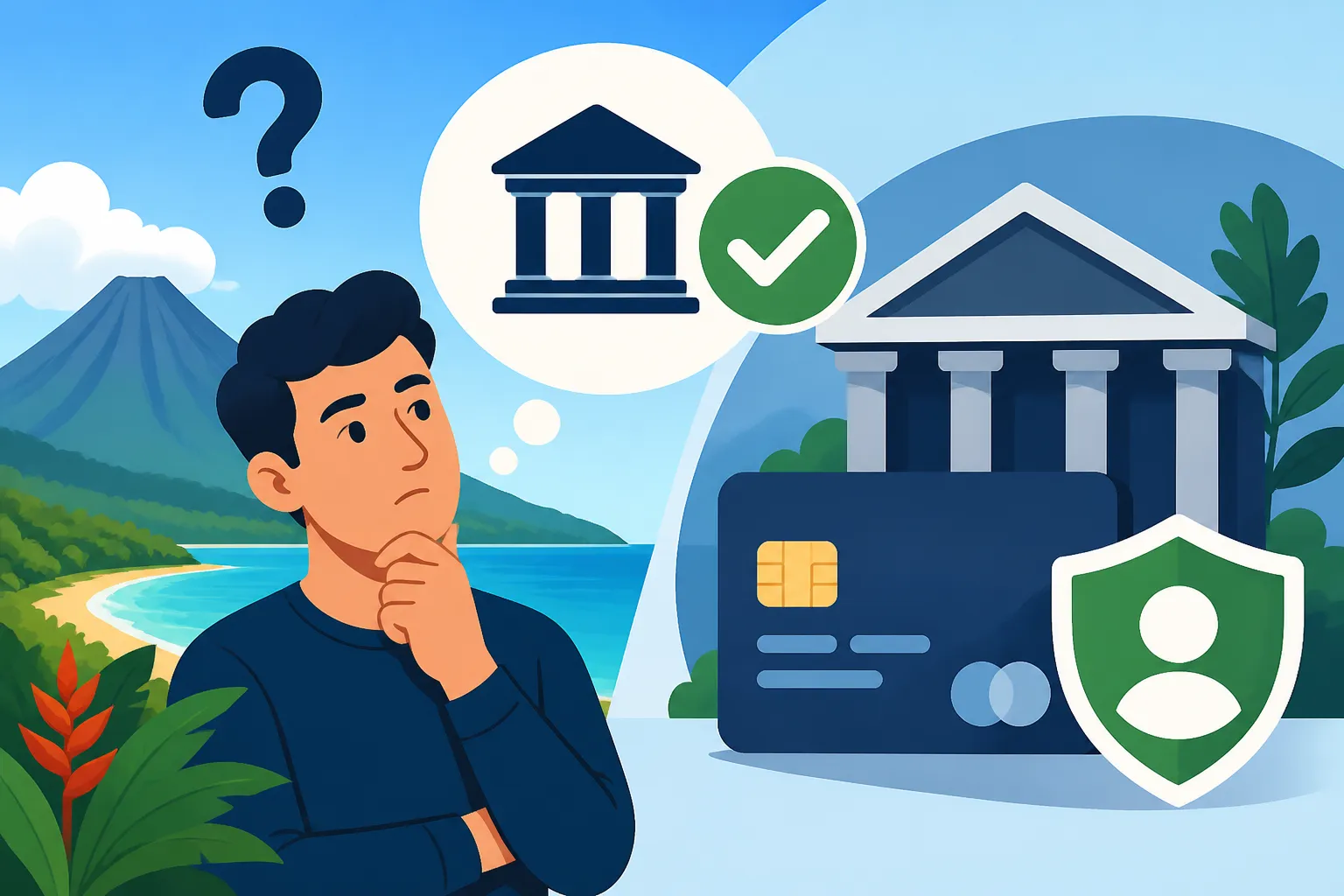
Can I Open a Costa Rican Bank Account Without Residency?
Oh, the infamous Costa Rican banking system! If you've just arrived in this beautiful country, perhaps on a tourist visa, or you're deep in the residency process but still waiting for that coveted DIMEX card, you've likely hit a wall trying to open a simple bank account. It's a common frustration, a rite of passage for many expats, and it often feels like you're caught in a bureaucratic tramite loop. This guide is here to shed some light on the reality of opening a Costa Rican bank account without residency and offer practical insights and workarounds based on real-world expat experiences.
The Uphill Battle of Banking Without Residency
Let's be brutally honest: opening a Costa Rican bank account without your official residency card (the DIMEX) is, for most people, an exercise in patience-testing futility. It's not impossible, but it's certainly not straightforward, and it's absolutely not the experience you'd expect from a banking system back home. The core of the issue lies in strict anti-money laundering (AML) and Know Your Customer (KYC) regulations that Costa Rican banks are mandated to follow.
When you walk into a bank here, whether it's a state-run institution like Banco Nacional or Banco de Costa Rica (BCR), or a private bank such as BAC Credomatic or Promerica, the first thing they ask for is your identification. If you present a foreign passport, you're immediately flagged as a "non-resident," and that's where the complications begin. They need to verify who you are, where your money comes from, and your ties to Costa Rica, all of which are much harder without a local ID or a permanent legal status. It’s not that they don't want your business; it's that the regulatory hoops they have to jump through for a non-resident are just too high, making it more trouble than it's worth for them for a simple individual account. You’ll often hear a polite, but firm, "no, lo siento."
Imagine trying to explain your entire financial history and future intentions in broken Spanish to a bank teller who has a checklist a mile long. It’s enough to make you want to throw your hands up in exasperation! This is a stark difference from many other countries where a passport and proof of address might suffice for a basic account. Here, the DIMEX isn't just an ID; it's a golden ticket to accessing many essential services, including banking. Without it, you're largely seen as a temporary visitor, even if you’re planning to live here indefinitely. The banking system, much like the process of obtaining residency itself, often tests the limits of your resolve.
The Elusive "Tourist Account": Myth or Reality?
For years, rumors have circulated among expat circles about a mythical "tourist account" – a basic bank account that could be opened with just a passport and a smile. The truth is, while some banks might have had a very limited, temporary option like this in the distant past, it is largely a myth in today's highly regulated financial landscape. The days when a bank might bend the rules for a "good client" are pretty much gone.
Most major banks in Costa Rica, both public and private, have significantly tightened their policies. If you approach them as a tourist, even with a valid entry stamp allowing you to stay for 90 or 180 days, you will almost certainly be turned away for a standard checking or savings account. Their internal compliance departments have little to no wiggle room. This is because providing banking services to non-residents, especially those without a clear legal pathway to residency, carries higher risks for the banks in terms of compliance with international financial regulations. They simply prefer to avoid that complexity.
However, there's a tiny, almost imperceptible crack in the door if you’re already well into your residency application. While you might not have your physical DIMEX card yet, if you can prove that your residency application has been formally received and is being processed by the Dirección General de Migración y Extranjería (DGME), some banks might consider offering a very basic, restricted account. This often requires a letter from your immigration lawyer, a copy of your application receipt, and perhaps even a letter from the bank’s legal department confirming your status. Even then, such accounts usually come with significant limitations:
- Low transaction limits: You might only be able to deposit or withdraw small amounts daily or monthly.
- Limited services: Online banking access might be restricted or non-existent, and you definitely won't be getting a credit card.
- Mandatory upgrades: The account will likely be temporary, with a strict deadline for you to present your actual DIMEX once it's issued. If you fail to do so, the account will be frozen or closed.
These are not convenient solutions but rather last-ditch efforts if you absolutely need a local account before your residency is finalized. It’s not something you can just walk in and demand; it often involves high-level approvals within the bank and exhaustive documentation. The best path for most people remains focusing on obtaining that residency.
Navigating the System While Your Residency is Pending
So, you're in Costa Rica, you've applied for residency, and you're staring down months of waiting for your DIMEX. How do you manage your money effectively and pay for daily expenses without a local bank account? This is where the expat ingenuity really kicks in, and where international services become your best friends.
First, let's acknowledge the elephant in the room: while your residency is pending, you are, for banking purposes, still largely considered a foreigner without permanent ties. This means traditional local banking is still mostly off-limits. However, there are crucial steps you can take to make your financial life smoother.
Utilizing International Money Transfer Services
One of the most popular and practical solutions for managing funds while your residency is pending is to rely on international money transfer services. Companies like Wise (formerly TransferWise) have revolutionized how expats move money across borders. With Wise, you can maintain balances in multiple currencies, including USD and Costa Rican Colones, send money to local Costa Rican bank accounts (yours, a landlord's, or a service provider's) at competitive exchange rates, and often receive a debit card that works internationally.
Here’s why Wise, and similar services, are a lifesaver:
- Cost-effective transfers: They typically offer much better exchange rates and lower fees than traditional bank wire transfers.
- Speed: Transfers often clear within hours or a day, which is crucial when you're paying rent or other time-sensitive bills.
- Multi-currency accounts: You can keep your funds in USD and convert them to Colones only when you need them, potentially minimizing foreign exchange rate fluctuations.
- Debit card access: The Wise debit card allows you to withdraw cash from ATMs in Costa Rica or make purchases, giving you flexibility without needing a local bank account.
Many expats use Wise to transfer a lump sum from their home country to their Wise account, then gradually send smaller amounts to a trusted local friend or service provider who does have a Costa Rican bank account, or simply use their Wise debit card for daily expenses. This strategy keeps your money accessible and allows you to participate in the local economy without a local bank account.
The Role of a NITE (Número de Identificación Tributaria Especial)
While a NITE is a tax identification number, not a banking credential, getting one is a smart move if you're serious about staying in Costa Rica, even before your DIMEX arrives. It signifies that you’ve registered with Hacienda (the tax authority) and are recognized as an individual with potential economic activity in the country. Some private banks might consider this an additional layer of legitimacy when combined with a pending residency application, though it's still a long shot for a personal account.
A NITE is primarily important for those who are starting a business or need to pay local taxes. For instance, if you're aiming for the Inversionista (Investor) Residency in Costa Rica: A Complete Guide (2026), you'll certainly need a NITE to register your investment. While it won't magically open a personal bank account for you, it's a step towards formalizing your presence here and can be helpful in other administrative processes down the line. You can learn more about how to get one in our guide on How to Get a NITE or Tax Number as a Foreigner in Costa Rica.
Consulting with Legal and Financial Experts
Engaging with a reputable local lawyer or financial advisor is always a good idea. They can offer tailored advice based on your specific situation. Sometimes, if you're setting up a business (like an S.A. or SRL), your lawyer might be able to facilitate the opening of a corporate bank account for the business entity, even if your personal residency is still pending. This is a complex route and comes with its own set of rules, but it's a possibility for entrepreneurs. These professionals are well-versed in the nuances of Costa Rican law and can guide you through the process, potentially saving you a lot of headaches.
Practical Alternatives and Workarounds
Since a traditional Costa Rican bank account without residency is mostly a non-starter, let's focus on the realistic strategies that thousands of expats successfully employ. This isn't just about surviving; it's about thriving financially in your new home, even if the banking system feels like it's designed to keep you out.
Embrace Digital Wallets and Foreign Cards
For daily transactions, your existing foreign debit and credit cards will be your primary tools. Most major grocery stores, restaurants, and many businesses in tourist areas and larger cities like San José and Escazú accept international credit and debit cards (Visa and Mastercard are dominant, Amex less so). Make sure to inform your home bank about your travel plans to avoid security flags and blocked transactions.
- ATM Withdrawals: You can withdraw Colones from ATMs using your foreign debit card. Be aware of transaction fees, which can come from both your home bank and the local Costa Rican bank operating the ATM. These fees can add up quickly, so larger, less frequent withdrawals are often more economical.
- Digital Wallets: Services like PayPal can be useful for online purchases or sending money to individuals, though it's not as universally accepted for direct payments in physical stores in Costa Rica as it is in some other countries.
Remember, relying solely on foreign cards means you’re subject to international transaction fees and fluctuating exchange rates, which can eat into your budget. This is where services like Wise still offer a significant advantage, allowing you to manage conversions more strategically.
Leveraging Trusted Local Relationships
This might sound old-fashioned, but in Costa Rica, personal relationships often open doors that bureaucracy keeps shut. If you have a trusted friend, landlord, or business associate who is a Costa Rican resident with a bank account, they might be able to help you with certain local payments. For example, you could transfer funds to them via Wise, and they could then pay a local utility bill or a smaller vendor on your behalf. This requires immense trust and should only be done with individuals you know exceptionally well, as it carries inherent risks.
The Power of the DIMEX: Your Ultimate Banking Key
Let’s be clear: the single most effective "workaround" for opening a Costa Rican bank account is getting your residency and thus your DIMEX card. Once you have this little plastic card in hand, the entire banking landscape changes dramatically. You go from being a suspicious, temporary visitor to a recognized resident.
With your DIMEX, opening a bank account becomes a relatively straightforward process. You'll typically need:
- Your valid DIMEX card
- Proof of address (a utility bill or rental contract)
- Proof of income or funds (this can vary; bank statements from your home country or a letter from your employer might suffice)
- A NITE (tax ID)
- Potentially a letter of reference from another bank or two personal references.
Once you have your DIMEX, you can confidently walk into almost any bank and start the account opening process. You'll be able to open both Colones and US Dollar accounts, access online banking, and enjoy all the services a resident is entitled to. The challenges you face without it really highlight just how essential the DIMEX is for full integration into Costa Rican life. We have a detailed guide on How to Open a Bank Account as a Resident in Costa Rica that walks you through the steps once you have your DIMEX in hand.
For managing your finances once you’re a resident, especially regarding tax compliance with both Costa Rican and your home country's regulations, services like Taxes for Expats can be incredibly helpful. They specialize in navigating complex international tax situations, ensuring you stay compliant and don't miss any critical filings. This ties directly into your financial stability here, from managing income to investments.
Comparing Banking Options for Expats
To help you visualize the difference, here's a quick comparison of what you can generally expect with and without a DIMEX for banking purposes in Costa Rica:
| Feature/Option | Without DIMEX (Tourist/Pending Residency) | With DIMEX (Resident) |
|---|---|---|
| Personal Bank Account | Extremely difficult, almost impossible for standard accounts. Limited "temporary" options might exist with extensive proof of pending residency, but very restrictive. | Straightforward. Can open Colones and USD accounts. |
| Online Banking Access | Highly restricted or unavailable even if a temporary account is secured. | Full access to online banking services, mobile apps, bill pay. |
| Debit/Credit Card | Only foreign-issued cards. Limited access to local ATMs (fees apply). | Local debit cards for easy purchases and ATM access. Eligibility for credit cards based on financial history. |
| Direct Deposits/Payments | Not possible for local income. Relies on international transfers (e.g., Wise) for paying local bills. | Easy direct deposits from local employers or for services, direct bill payments (ICE, AyA, etc.). |
| Utility Bill Payments | Requires cash, paying in person, or relying on a trusted local to pay for you. | Can easily set up auto-pay or pay online through bank portal. |
| Business Accounts | Very difficult for a personal business. Corporate accounts might be opened with legal assistance for a registered company. | Relatively straightforward for a legally registered business, provided you have a NITE and DIMEX. |
| Money Transfers | Primarily relies on international services like Wise for sending/receiving money. | Can use local bank services for transfers, as well as international options. |
| Financial Recognition | Minimal or none in the local financial system. | Recognized as a legitimate financial participant, building credit history. |
As you can see, the DIMEX truly unlocks the full potential of banking in Costa Rica. It’s a key piece of your integration puzzle, simplifying nearly every financial transaction. For more insights on financial matters in Costa Rica, you might want to check out our comprehensive guide on How the Costa Rican Tax Authority (Hacienda) Works (2027) – because once you're banking here, the taxman isn't far behind!
In the interim, don't despair. Equip yourself with knowledge about services like Wise, protect your foreign cards, and focus on progressing your residency application. The banking convenience will come in due time.
Disclaimer
Please remember that I am an expat blogger and not a financial or legal professional. The information provided here is based on personal experience, general knowledge, and publicly available information, and it should not be considered legal or financial advice. Banking regulations and requirements in Costa Rica can change, so always consult with official sources, banks, or qualified legal and financial professionals for the most accurate and up-to-date guidance pertaining to your specific situation.