Do I Have to Pay Any Exit Tax When Leaving Costa Rica?
As an expat who’s navigated the beautiful, bewildering maze of Costa Rican bureaucracy for years, I know the moment you start planning your departure, a whole new wave of questions hits. One common concern I hear echoing through expat forums and coffee meetups is, "Do I have to pay an exit tax when leaving Costa Rica?" It’s a fair question, often fueled by anxieties about lingering financial ties. This comprehensive guide is here to untangle the myths from the realities, detailing the true financial obligations you need to wrap up before you say your final adiós to Pura Vida.
The Myth of the "Exit Tax" and What it Really Means
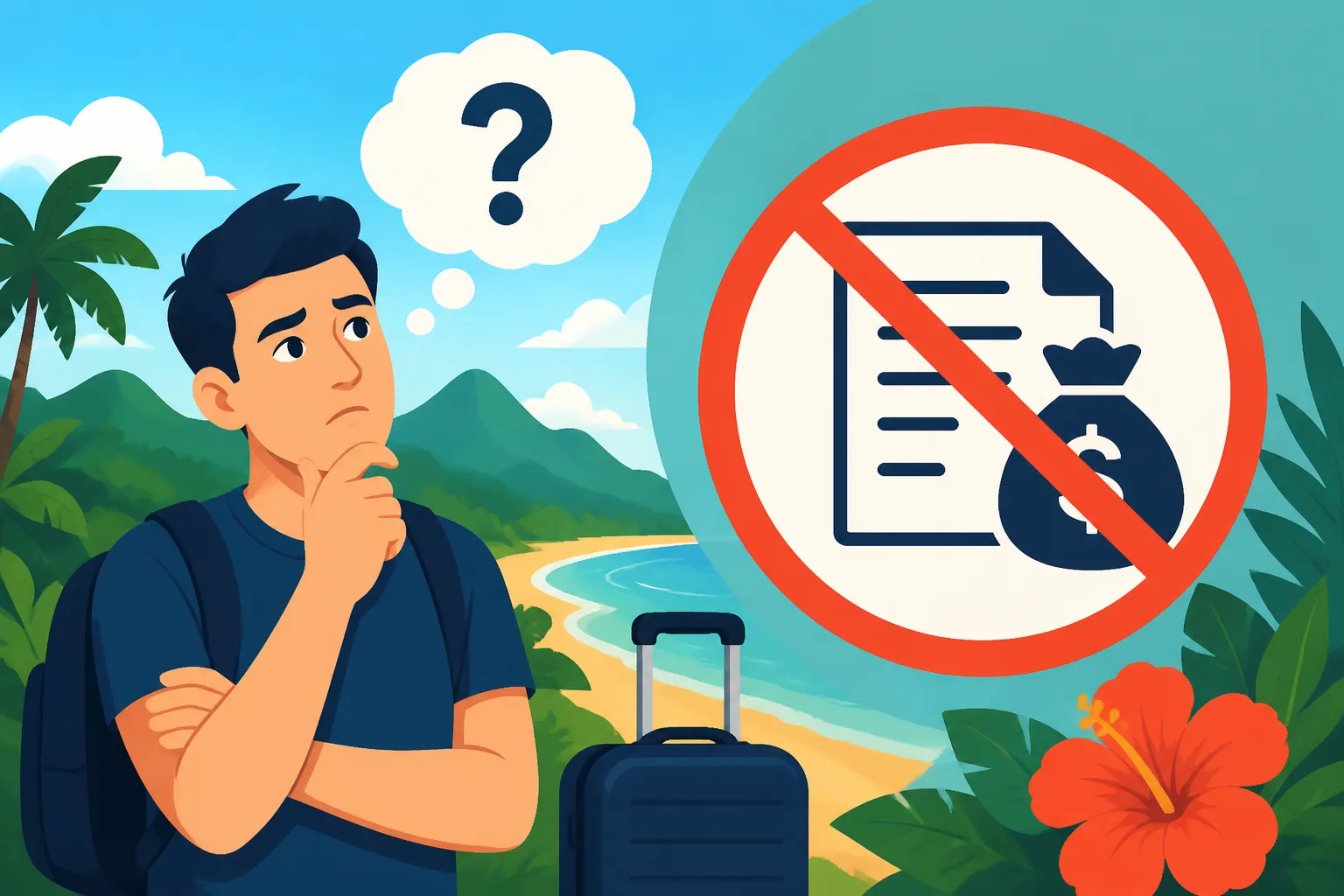
Let’s get straight to it: there isn't a specific, standalone "exit tax" in Costa Rica that foreigners must pay simply for the act of leaving the country, like a special fee on your person or possessions as you cross the border. The closest thing most people encounter is the airport departure tax, which, thankfully, is almost always included in your airline ticket price these days. If it's not, you'd pay it at the airport before checking in, but it’s a standard fee for all departing travelers, not a special "expat exit tax."
Dispelling the Common Misconception
The idea of an "exit tax" often stems from a fundamental misunderstanding or a conflation of various financial responsibilities. In some countries, there might be specific taxes or fees for renouncing citizenship or leaving with significant assets. That’s simply not the case here in Costa Rica for general expat departures. Your personal belongings, household goods, and vehicles generally don't incur an exit tax when you take them out, provided they were legally imported or acquired and aren't subject to export restrictions (which usually applies to things like protected national treasures, not your armchair).
The confusion really kicks in when people mistake the necessity of clearing all their existing financial obligations with the government as a direct "exit tax." Costa Rica's tax authority, Hacienda, and the social security system, Caja Costarricense de Seguro Social (CCSS), want to ensure all residents, whether they are staying or going, have fulfilled their duties up to the point of departure. This is about closing out your accounts responsibly, not paying an extra fee to leave. So, while you won’t be hit with a surprise bill at the airport gate for leaving, you certainly need to make sure your financial slate is clean.
Understanding Your True Financial Responsibilities
What you do need to focus on are the legitimate financial ties you've established during your time here. This includes your income tax obligations, any property taxes if you own land or a home, your monthly Caja contributions, and ensuring all utility bills and local debts are settled. Failing to properly close these out can lead to headaches down the road, even if you’ve already left the country. We're talking potential fines, interest accruals, or even issues if you ever plan to return to Costa Rica for an extended stay or residency in the future. It’s always better to take the time to dot your i's and cross your t's before you pack your bags for good.
Clearing Your Name with Hacienda: Tax Obligations Before Departure
This is arguably the most critical area to address. Costa Rica operates on a territorial tax system, meaning it primarily taxes income generated within Costa Rica. While this often means your foreign-sourced income might not be taxed here, any income you earned from local work, a local business, or rental properties in Costa Rica is certainly subject to Hacienda’s scrutiny. Before leaving, you need to ensure you're in good standing.
Your Final Income Tax Declarations
Every resident, including expats, is required to file an annual income tax return (Declaración de Impuesto sobre la Renta) with Hacienda. This is usually due by March 15th each year, covering the previous calendar year. If your departure date falls before the next filing deadline, you still need to ensure your income for the current year up to your departure date is accounted for.
Here’s a common scenario: you decide to leave Costa Rica in June 2026. You would have already filed your 2025 income tax return by March 15, 2026. Now, for the period of January 1, 2026, to your departure date in June 2026, you'll need to calculate your earnings and pay any corresponding income tax. This might involve filing a final, partial tax return. It’s crucial not to simply assume that because you’re leaving, your obligations magically disappear. Many expats find it incredibly helpful to work with a local accountant who specializes in expat taxes to ensure this is done correctly. Services like Taxes for Expats can be invaluable in navigating these specific scenarios, especially if your financial situation is complex or you have income from various sources. Ensuring your filings are complete will prevent future complications. For a deeper dive into the annual process, check out our guide on Filing Your Tax Return with Hacienda in Costa Rica: The Complete Walkthrough.
Obligations for Self-Employed Individuals and Business Owners
If you've been operating as a self-employed individual (profesional liberal, small business, etc.) or owned a registered company (like a Sociedad Anónima or SRL) in Costa Rica, your tax obligations are a bit more intricate. You're not just dealing with income tax; you might also be registered for Value Added Tax (IVA).
- IVA Declarations: You would have been filing monthly or quarterly IVA declarations. You need to ensure all outstanding IVA declarations and payments are made up to your departure date. Cancelling your IVA registration with Hacienda is a formal process.
- Corporate Taxes: If you own a company, you’ll need to ensure all corporate taxes (Impuesto a las Personas Jurídicas) are paid, and the company is either properly dissolved, transferred to new ownership, or maintained in compliance by someone remaining in Costa Rica. Dissolving a company can be a lengthy and somewhat costly legal process, so factor that into your timeline and budget.
- Employee Withholding: If your business employed staff, you would have been responsible for withholding income tax, Caja contributions, and other social charges from their salaries. All these must be properly remitted and reported to Hacienda and the Caja.
Neglecting these steps can lead to penalties and a black mark against your name or company, making any future dealings with Costa Rican authorities problematic.
Property and Other Asset-Related Taxes
For those who’ve truly put down roots and purchased property, there are additional considerations.
- Property Tax (Bienes Inmuebles): This is an annual tax paid to the local municipality. You must ensure all property taxes are paid up to date, ideally for the entire calendar year of your departure if you're selling the property, or at least for the portion of the year you owned it. If you're selling, your lawyer will typically ensure this is cleared as part of the closing process. Understanding Property Tax (Impuesto sobre Bienes Inmuebles) in Costa Rica can help you plan.
- Luxury Home Tax (Impuesto Solidario): If your property falls into the luxury category, you'll have paid this biennial tax. Ensure your payments are current.
- Vehicle Taxes (Marchamo): If you own a vehicle, the annual Marchamo (circulation permit, road tax, and mandatory insurance) must be current. If you’re selling the car, the buyer will typically take on this responsibility from the point of transfer, but you must ensure it was up to date for your period of ownership.
- Capital Gains Tax: As of a few years ago, Costa Rica introduced a capital gains tax. If you sell a property or other significant asset (like shares in a company) while resident here, you might be subject to a 15% tax on the profit from the sale. There are exemptions, notably for your primary residence if certain conditions are met. This is a complex area, and professional legal and tax advice is absolutely essential before selling any major assets.
Securing Your "Paz y Salvo"
For those with significant financial ties, especially business owners or those cancelling residency, obtaining a "Paz y Salvo" (literally "peace and save," meaning "clearance certificate") from Hacienda is a good idea, or sometimes even a requirement for other processes. This document certifies that you have no outstanding tax debts or issues with the tax authority. It's essentially your golden ticket proving you've left everything squared away.
The process for getting a Paz y Salvo can be a bit of a dance, requiring all your tax filings and payments to be completely up to date. You’ll likely need an accountant or lawyer to help you navigate this, as it involves interacting directly with Hacienda’s online portal (ATV) and potentially visiting their offices. Think of it as your final financial farewell to the government. We have a dedicated article on How Do I Get a Tax Clearance Before Leaving Costa Rica? which will give you detailed steps.
Untangling Yourself from the Caja: Social Security and Healthcare
Ah, the Caja. Costa Rica's universal healthcare system is both a blessing and a bureaucratic beast for expats. As a legal resident, you are required to contribute to the Caja Costarricense de Seguro Social (CCSS). This isn't just a recommendation; it's a fundamental condition of maintaining your residency status.
The Mandatory Nature of Caja Contributions
Whether you’re a Pensionado, Rentista, Inversionista, or working legally in Costa Rica, monthly Caja contributions are mandatory. These payments cover your access to the public healthcare system and contribute to your pension (though for many expats, the pension aspect might be less relevant if you're only here for a few years). For more information on your obligations, refer to Do I Have to Join the Caja to Keep My Residency in Costa Rica?.
The moment you decide to leave the country permanently, you need to formally cease these contributions. Simply stopping payments can lead to accumulating debt with the Caja, which will eventually be flagged if you try to re-enter the country as a resident or even apply for a tourist visa from certain regions in the future. I've heard stories of expats returning years later only to find they have a surprise Caja debt waiting for them. It’s not an "exit tax," but an outstanding bill that needs to be settled.
Formal Steps to Cancel Your Affiliation
Cancelling your Caja affiliation is a formal process that requires specific steps, and it’s critical to do it correctly:
- Settle All Debts: First and foremost, you must ensure all your Caja payments are completely up to date. If you have any outstanding balances, pay them off before proceeding. You can usually check your balance online or at a local EBAIS or Caja office. Our guide on How Do I Pay My Caja Bill Each Month in Costa Rica? can help with understanding the payment process.
- Gather Documents: You’ll typically need your DIMEX card (residency card), passport, and proof of your departure (like an airline ticket or a notarized declaration of intent to leave the country permanently).
- Visit a Caja Office: Go to a Caja office, usually the one where you originally registered or a larger central office. You will need to formally request the cancellation of your affiliation. Be prepared for some waiting time and potentially needing a Spanish speaker to assist you, even if they have English-speaking staff available. Patience is key here, as with most administrative tasks in Costa Rica.
- Confirm Cancellation: Ensure you receive a document confirming the cancellation of your Caja affiliation. This is your proof that you’ve formally severed ties and won’t accrue further debt. Keep this document safe!
It's absolutely vital to complete this process before you leave the country. Trying to do it from abroad can be a bureaucratic nightmare. For more detailed instructions on this important step, refer to our comprehensive guide on How Do I Cancel My Caja Affiliation When Leaving Costa Rica?.
Wrapping Up Loose Ends: Other Financial and Administrative Closures
Beyond Hacienda and Caja, there are numerous other financial and administrative threads to tie up before you leave. These might not be "taxes," but they are essential for a clean break and peace of mind.
Utility Accounts, Rental Agreements, and Local Debts
Imagine returning for a visit only to find your old electricity or water bill has gone unpaid because you didn’t formally close the account. Ay, caramba!
- Utility Accounts (ICE, AyA, Internet): If utilities are in your name (electricity with ICE or CNFL, water with AyA, internet with ICE Kolbi, Liberty, or another provider), you must formally close these accounts. Don't just stop paying! Call the companies, visit their offices, and ensure a final meter reading is taken and your final bill is paid. Get confirmation of closure. If you're selling a property, your lawyer will help transfer these, but if you're renting, this responsibility falls squarely on you.
- Rental Agreements: Ensure you properly terminate your rental contract according to the terms you agreed upon. This usually involves giving advance notice and arranging a final walk-through with your landlord. The big one here is getting your security deposit back. Document everything with photos and videos of the property’s condition when you move out to avoid disputes. Find out more about how to navigate this in How Do I Get My Security Deposit Back in Costa Rica?.
- Local Debts: This includes personal loans, credit cards from Costa Rican banks (like BAC Credomatic or Banco Nacional), or any other outstanding financial commitments. Pay them off entirely and get letters of clearance from the institutions. Don’t leave any lingering debt.
Managing Your Bank Accounts and Funds Transfers
Before you leave, you’ll need a solid plan for your Costa Rican bank accounts and any remaining funds.
- Transferring Funds Out: If you have significant funds in Costa Rican colones or USD in local banks, you’ll want to transfer them to your accounts abroad. Traditional bank wire transfers can be slow and expensive. This is where services like Wise (formerly TransferWise) really shine. They often offer more competitive exchange rates and lower fees for international money transfers, making it much more efficient to move your money out of Costa Rica. Always compare rates and fees before initiating large transfers. Our guide on How to Transfer Money Into and Out of Costa Rica as an Expat offers more insights.
- Closing Bank Accounts: Once you've transferred your funds and settled all local bills, you should formally close your Costa Rican bank accounts. This prevents any unexpected fees or fraudulent activity after you've left. You’ll typically need to visit the bank branch in person with your DIMEX and passport. Don't just leave a small balance and hope the account closes itself – it might not, and you could incur fees. If you opened an account recently, revisiting The Expat Guide to Opening a Bank Account in Costa Rica might remind you of some initial steps that are now reversed for closure.
- Credit Cards: If you have local credit cards, pay off the balance completely and formally close the account. Do not leave any outstanding balance, as interest and fees will quickly accrue.
Essential Document Management
Before you depart, ensure you have copies of all critical documents, both physical and digital.
- Residency Cancellation: If you are a resident, formally cancel your residency with Migración (DGME). This step often goes hand-in-hand with cancelling your Caja affiliation. Although not strictly a "tax," this ensures your official record is updated. Without this, you might still be considered a resident, theoretically accumulating obligations. Our comprehensive guide on The Complete Guide to Costa Rica Residency for Expats (2027) is a good reference point for understanding residency status.
- Tax Records: Keep meticulous records of all your final tax filings, payments, and any Paz y Salvo certificates from Hacienda. This is your proof that you’ve done everything correctly.
- Caja Cancellation Proof: As mentioned, keep the document confirming your Caja affiliation cancellation.
- Utility & Bank Closures: Keep confirmation letters or emails that your utility and bank accounts have been closed.
This might seem like a lot, but believe me, a few weeks of diligent administrative work can save you months or even years of headaches down the line. Don’t leave a paper trail of ambiguity in Costa Rica.
Checklist for a Smooth Financial Departure
To help you organize everything, here’s a quick checklist of the key financial actions you should take before leaving Costa Rica:
| Category | Action Item | Notes |
|---|---|---|
| Tax (Hacienda) | File final income tax return(s) | Cover earnings up to departure date; seek accountant help (e.g., Taxes for Expats). |
| Settle any outstanding IVA | For self-employed/business owners. | |
| Pay current property, luxury, and vehicle taxes | Ensure all municipal and national property taxes are current. | |
| Consider capital gains tax implications | If selling property or significant assets. | |
| Obtain "Paz y Salvo" from Hacienda | Essential for business owners or complex financial situations. | |
| Social Security (Caja) | Settle all outstanding Caja payments | Ensure no overdue balances. |
| Formally cancel Caja affiliation | Obtain written confirmation of cancellation. | |
| Banking & Funds | Transfer funds to international accounts | Utilize efficient services like Wise for favorable rates. |
| Formally close all Costa Rican bank accounts | Visit bank in person, get confirmation of closure. | |
| Pay off and close all Costa Rican credit cards/loans | Obtain letters of clearance. | |
| Utilities & Rent | Formally close all utility accounts (ICE, AyA, internet, cable) | Get final readings and pay final bills, obtain closure confirmations. |
| Properly terminate rental agreement | Give notice, conduct walk-through, secure security deposit return. | |
| Residency | Formally cancel residency with Migración (DGME) | Ensure your official status is updated to avoid future complications. |
| Documentation | Keep copies of all clearances, cancellations, and final payment receipts | Both digital and physical copies for your records. |
By systematically working through this list, you'll ensure your departure from Costa Rica is as smooth and financially uncomplicated as possible.
Disclaimer
The information provided in this article is for general guidance only and does not constitute legal, financial, or tax advice. Laws and regulations in Costa Rica can change frequently, and individual circumstances vary. It is essential to consult with qualified legal, tax, and financial professionals in Costa Rica to obtain advice tailored to your specific situation before making any decisions related to your departure.