Can I Open a Joint Bank Account with My Spouse in Costa Rica?
Moving to Costa Rica is a dream for many, but once you're on the ground, the reality of setting up your life, especially financially, can be a bit of a choque cultural. One question that comes up for so many couples, right after figuring out how to get your residency sorted, is "Can my spouse and I actually open a joint bank account here?" It’s not as straightforward as back home, and believe me, you’re not alone in feeling utterly bewildered by the hoops you might have to jump through. This guide will walk you through the ins and outs of opening a joint bank account with your beloved in this beautiful, yet bureaucratically complex, country.
Understanding Joint Accounts in Costa Rica for Expats
When you first start looking into banking in Costa Rica, it quickly becomes clear that it's a different beast entirely. The rules, the documents, the expectations – it’s all a bit more rigid, especially for foreigners. But yes, opening a joint bank account with your spouse is absolutely possible. It just requires patience, preparation, and a good understanding of the local system. The key here is proving your identity, your residency status, and your relationship in a way that aligns with Costa Rican regulations, which often means an extra layer of paperwork compared to what you might be used to.
The Legal Framework and Marriage Certificates
First things first, let's talk about the bedrock of any joint account: your marriage. In Costa Rica, the banks are meticulous about verifying legal relationships. If you were married outside of Costa Rica, your marriage certificate will need to be properly legalized. This usually means it needs to be apostilled in the country where the marriage took place. An apostille is an international certification that makes your document legally recognized in Costa Rica. Without it, the bank won't even look at your foreign marriage certificate.
Once apostilled, you'll need to get it translated into Spanish by an official translator here in Costa Rica. Don't try to use a friend or an online service; it has to be a certified translator. Some banks might even require your marriage to be registered with the Civil Registry (Registro Civil) in Costa Rica, especially if you're pursuing residency categories like vínculo (family ties). While it’s not always a hard and fast rule for simply opening a bank account, having your marriage registered locally can smooth the process significantly, as it provides an official Costa Rican document proving your marital status. It eliminates any ambiguity for the bank, making their compliance checks much easier. Remember, banks here are very risk-averse, and the more 'official' Costa Rican documents you can provide, the better.
Different Types of Joint Accounts
When it comes to joint accounts, Costa Rican banks generally offer two main types, which are important to understand before you commit. The choice between them dictates how you and your spouse can access and manage the funds.
The most common and often preferred type for couples is an "cuenta conjunta indistinta" or "indistinta" account. This essentially means "either/or." With an indistinta account, either spouse can conduct transactions, withdraw money, or sign checks independently, without the other spouse's signature or presence. This offers immense flexibility and convenience for daily banking, as one person doesn't need to be present for the other to access funds. Imagine one of you is traveling or simply busy, and the other needs to pay a bill or make a purchase – the indistinta account makes it simple. It's the equivalent of a "joint tenancy with right of survivorship" account in many other countries.
The second type, though less common for married couples seeking daily convenience, is the "cuenta conjunta conjunta" or "conjunta" account. This translates to "together/together," meaning both signatures are required for any transaction. Every withdrawal, every transfer, every check written would need both you and your spouse physically present or providing separate, verified authorizations. While it offers a higher level of financial control and security, ensuring both parties are always in agreement and present for every single financial move, it can be incredibly cumbersome for everyday living. For most expat couples, the indistinta option is usually the way to go for practical reasons. It's about weighing the convenience against the desire for dual control.
The Nitty-Gritty: Documents and Bureaucracy
Ah, documents! The bane of every expat's existence, isn't it? Opening any bank account in Costa Rica, especially a joint one, feels like assembling a puzzle where half the pieces are missing and the instructions are in a language you only vaguely understand. But fret not, we've all been there. The critical thing to remember is that Costa Rican banks operate under strict anti-money laundering (AML) and "know your customer" (KYC) regulations, similar to many other countries, but with a unique tico twist. This means they will ask for everything, and then probably ask for something else you didn't even know existed.
Essential Documents for Both Spouses
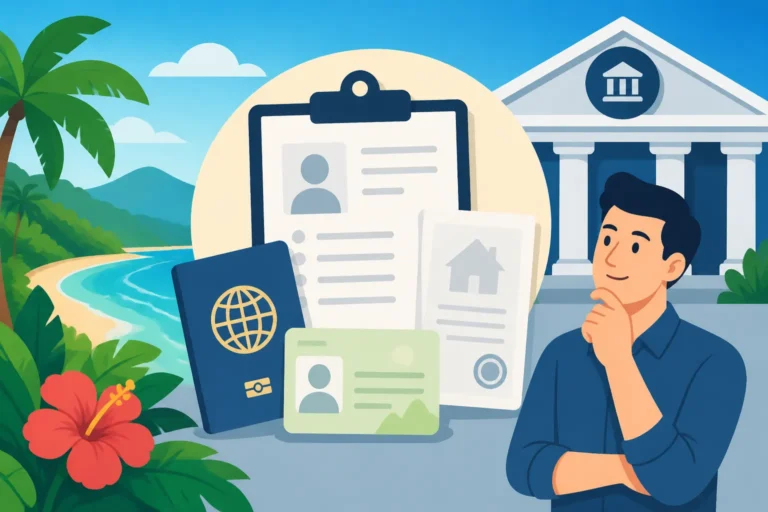
Prepare a comprehensive dossier for both you and your spouse. Here’s a typical checklist, but always call the specific branch you plan to visit first, as requirements can vary slightly from one bank or branch to another:
- Residency Card (DIMEX/Cédula de Residencia): This is non-negotiable for residents. If you're still waiting for your DIMEX, some private banks might open an account with your passport and proof of residency application (like the comprobante de solicitud), but this is becoming increasingly rare and more complex for joint accounts. Ideally, you want to have your physical DIMEX in hand. If you're still early in the process, you'll find great guidance on How Long Does It Take to Get a DIMEX in Costa Rica?.
- Passport: Even with a DIMEX, banks often ask for your valid passport for identification and to verify your country of origin.
- Marriage Certificate: As discussed, this needs to be apostilled and officially translated into Spanish if issued abroad.
- Proof of Address: A recent utility bill (electricity, water, or phone) in either of your names is usually sufficient. Sometimes they want one in each name, so be prepared. If you don't have one, some landlords can provide a carta de domicilio (letter of domicile) stating you reside at their property.
- Proof of Income/Source of Funds: This is a big one. Banks need to know where your money comes from to comply with AML regulations. This could be:
- Pension statements (for Pensionado residents)
- Bank statements from your home country showing consistent income (for Rentista or Digital Nomad residents)
- Employment letter and pay stubs from a Costa Rican employer
- Tax returns (foreign or Costa Rican, depending on your situation)
- Business registration documents if you're self-employed.
- For those still figuring out their tax obligations, understanding The Complete Guide to Taxes in Costa Rica for Expats (2027) will be crucial.
- Tax ID Number (NITE or Físico): If you've already registered with Hacienda, your NITE (Número de Identificación Tributaria para Extranjeros) or cédula física (if you have Costa Rican citizenship or permanent residency) will be required. If not, they might help you register for one, but it’s better to have it beforehand. Learn more about How to Register with Hacienda and Get a Tax ID in Costa Rica.
- Reference Letters: Sometimes, especially for higher value accounts or if you’re new to the country, banks may request a personal reference letter from another bank or even a character reference from a professional in Costa Rica.
It's always a good idea to bring originals and several copies of everything. When in doubt, more is always better than less when dealing with Costa Rican bureaucracy.
The FATCA and CRS Connection
For expats, particularly those from the United States, the banking landscape has an added layer of complexity due to international agreements like FATCA (Foreign Account Tax Compliance Act) and CRS (Common Reporting Standard). Costa Rican banks are obligated to report information about accounts held by foreign nationals to their respective tax authorities.
If you are a US citizen or green card holder, be prepared for additional forms like the W-9 and potentially specific declarations related to your US tax obligations. This is why when you open a joint account, both you and your spouse will be asked about your tax residency status in all countries where you might be considered a tax resident. This isn't just a nosy question; it's a legal requirement for the bank to comply with international financial reporting standards. It’s imperative to be honest and accurate here, as inaccurate reporting can lead to significant issues down the line. For comprehensive guidance on your tax situation, especially with foreign income, you might want to consult services like Taxes for Expats, who specialize in helping expats navigate these complex cross-border tax rules. They can help clarify how your joint account might impact your reporting obligations back home and in Costa Rica, particularly when considering Understanding Costa Rica's Territorial Taxation of Foreign Income.
Navigating the Bank Selection Process
Choosing the right bank can make a world of difference. Costa Rica has both state-owned and private banks, and they each have their pros and cons for expats.
State Banks (e.g., Banco Nacional, Banco de Costa Rica, Banco Popular):
- Pros: Generally more widespread branches, often better exchange rates for colones, and perceived as highly stable. They are also often the go-to for many official transactions.
- Cons: Can be notoriously bureaucratic, slow, and have longer wait times. Their English-speaking staff might be limited, and the process for opening accounts can be more arduous.
Private Banks (e.g., BAC Credomatic, Davivienda, Banco Promerica, Scotiabank):
- Pros: Often more streamlined processes, better online banking platforms, potentially more English-speaking staff, and a stronger customer service focus. They might be more accommodating to expats with complex financial situations.
- Cons: May have higher fees for certain services, fewer physical branches outside of major metropolitan areas, and their exchange rates might not always be as favorable as state banks.
For many expats, a private bank like BAC Credomatic tends to be a popular choice due to its more modern approach and willingness to work with foreigners. However, it’s worth researching each, and perhaps even visiting a few different branches, to get a feel for their customer service and specific requirements. Don't be afraid to walk in and ask questions – it's the best way to gauge their expat-friendliness. You can also dive deeper into the nuances by reading Understanding the Difference Between State and Private Banks in Costa Rica.
Consider also if you want a US dollar account. Many expats find it convenient to have both a colones account and a US dollar account in Costa Rica, especially if their income is in USD. Banks here allow you to hold accounts in both currencies, which simplifies transactions and currency management. If this is something you're considering, then How to Open a US Dollar Account in Costa Rica provides some valuable insights.
Practicalities and Pitfalls of Joint Accounts
So, you’ve gathered your documents, navigated the bank, and your joint account is open! Congratulations, that’s a huge step. But the journey doesn't end there. Managing your joint finances in a new country comes with its own set of practicalities and potential pitfalls that every expat couple should be aware of. It's about more than just having a shared pot of money; it's about understanding how to effectively use it within the Costa Rican financial ecosystem.
Managing Funds and International Transfers
One of the most frequent challenges for expats is getting money into and out of Costa Rica. Once you have a joint account, you'll want to ensure a smooth flow of funds, whether it's receiving your pension, a salary from abroad, or transferring money for larger purchases.
Incoming Transfers: Most international transfers (wire transfers) into Costa Rican bank accounts are relatively straightforward, but they can be slow and sometimes incur fees on both ends. You'll need the bank's SWIFT code, your account number, and your full name(s). Be aware that for larger sums, the bank might ask for the source of funds again, even after the account is open. This is part of their ongoing compliance. Using international money transfer services can often be more efficient and cost-effective than traditional bank wires. Companies like Wise (formerly TransferWise) offer competitive exchange rates and lower fees for transferring funds between different countries and currencies directly to your Costa Rican bank account. Many expats rely on them for regular transfers to cover living expenses, and it integrates seamlessly with local banking systems.
Outgoing Transfers: Sending money out of Costa Rica can be trickier due to tighter currency controls and regulations. Banks will typically require detailed documentation for any significant outgoing transfers, especially if it's going to a personal account abroad. This might include invoices, explanations for the transfer, and proof that the funds originated legally. This is where having a clear record of your income sources, as provided during account opening, becomes invaluable. Understanding How to Transfer Money Into and Out of Costa Rica as an Expat can offer more specific advice on this aspect.
Taxation and Reporting Obligations
Having a joint bank account in Costa Rica impacts your tax situation both locally and internationally. While Costa Rica operates on a territorial tax system, generally only taxing income earned within its borders, there are nuances, especially for residents.
If either of you is working in Costa Rica or earning income from Costa Rican sources (like rental properties), that income will be subject to Costa Rican income tax. If you are Rentista or Pensionado, your declared income that qualifies you for residency is generally considered foreign-sourced and therefore not taxed in Costa Rica, but you need to prove the source. The bank might even require you to register for a local tax ID number, especially if you intend to do any business or professional activity in Costa Rica. As mentioned earlier, international tax regulations like FATCA and CRS mean your Costa Rican bank will report your account details to your home country's tax authorities. This is where things get really intricate, particularly for US citizens who have worldwide income tax obligations. This is precisely the kind of situation where you want to consult with experts like Taxes for Expats. They can help you understand your filing requirements in both countries and ensure you're compliant, avoiding any nasty surprises. It's not just about opening the account; it's about responsibly managing its implications.
Common Challenges and Troubleshooting
Despite your best efforts, you'll inevitably encounter some hiccups. It's Costa Rica, after all!
- Language Barrier: While many bank employees, especially in major expat hubs, speak English, don't assume everyone will. Bring a Spanish-speaking friend or use a translation app for crucial conversations. Better yet, try to learn some banking vocabulary in Spanish yourself.
- Inconsistent Information: You might get slightly different answers from different bank tellers or even different branches of the same bank. This isn't uncommon. If you encounter resistance or confusion, calmly ask to speak to a supervisor (el jefe or la jefa) or try another branch. Persistence is key.
- Technological Differences: While online banking has improved significantly, it might not be as robust or user-friendly as what you're used to. Some processes still require an in-person visit. Also, setting up SINPE Móvil, Costa Rica's popular interbank transfer system that links to phone numbers, is incredibly useful for daily payments and often easier to do once your account is fully established.
- Security Deposits/Minimum Balances: Some banks might require a minimum initial deposit or a maintained minimum balance, especially for dollar accounts. Always clarify these requirements upfront.
Navigating the Costa Rican banking system, especially with a joint account, is a journey. It demands patience, thoroughness, and a flexible mindset. But once you've successfully set it up, you'll find it a fundamental part of integrating into your new life in Pura Vida land. For a broader overview, take a look at Banking in Costa Rica: A Complete Guide for Foreigners to get a full picture of the financial landscape.
Disclaimer
The information provided in this guide is for general informational purposes only and does not constitute legal, financial, or tax advice. While we strive to keep the information up-to-date and accurate, laws, regulations, and banking policies in Costa Rica can change frequently. Expats are strongly advised to consult with local legal, financial, or tax professionals for advice tailored to their specific circumstances before making any financial decisions or taking action based on this content.