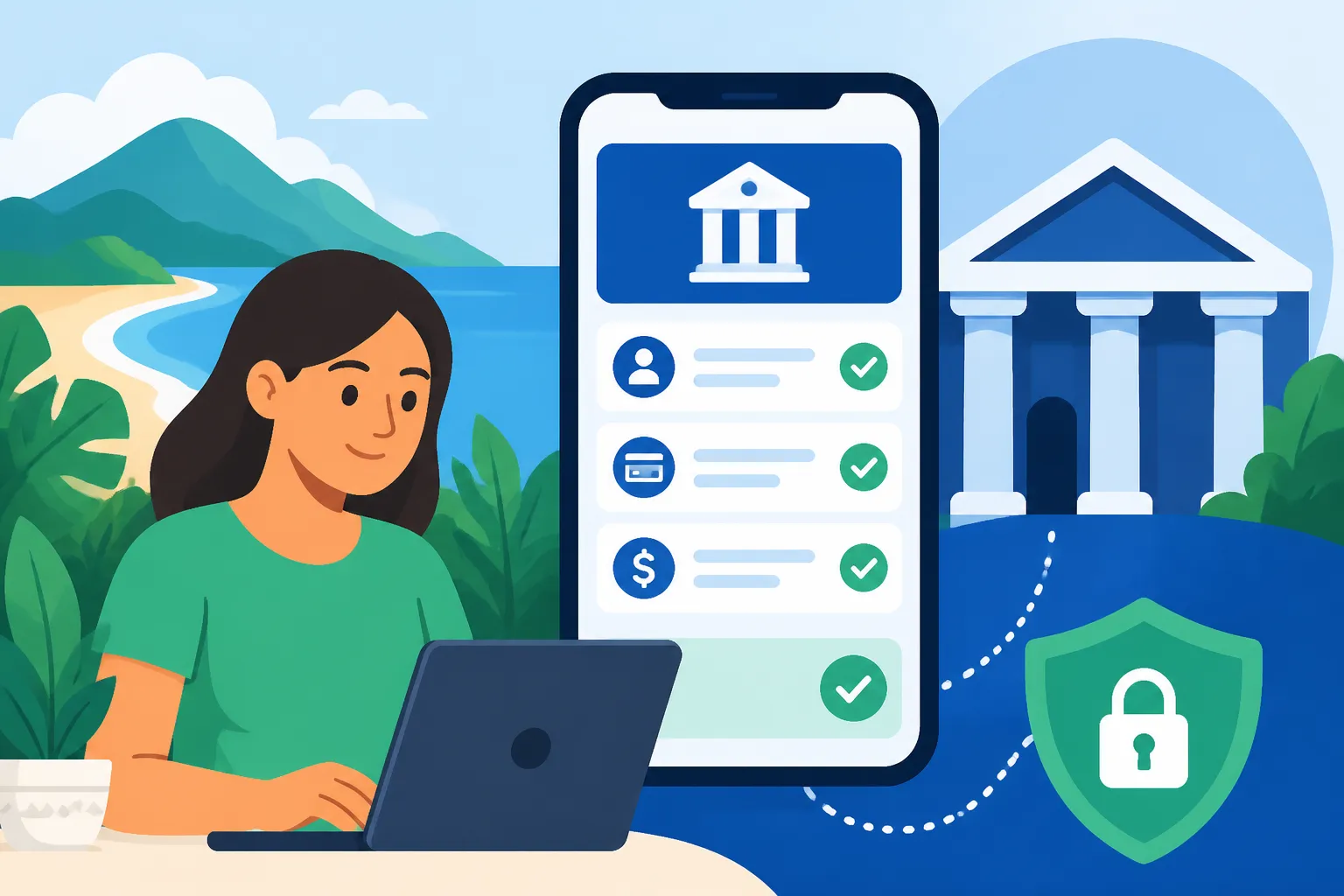
How to Set Up Online Banking with a Costa Rican Bank
Oh, the joy (and sometimes sheer terror) of setting up your life in Costa Rica! While the lush landscapes and the Pura Vida lifestyle are undeniably captivating, dealing with the nitty-gritty administrative tasks, especially banking, can sometimes feel like navigating the Amazon without a map. Many of us expats arrive here, excited about our new adventure, only to find that opening a bank account and then getting access to something as seemingly simple as online banking can be a process fraught with unique challenges. This guide is here to walk you through exactly how to set up online banking with a Costa Rican bank, easing those initial frustrations and helping you embrace digital convenience for your financial life here.
The Initial Hurdles of Costa Rican Banking for Expats
When you first land in Costa Rica, you’re probably thinking about soaking up the sun, not battling bureaucracy. But trust me, getting your banking sorted out is one of the most fundamental steps to truly settling in. It’s not just about having a place for your money; it’s about participating in the local economy and streamlining your daily life.
Why Traditional Banking Can Be a Headache
Let's be real: banking in a foreign country is rarely straightforward, and Costa Rica is no exception. The traditional banking system here can be quite… hands-on, shall we say. You'll likely encounter a preference for paper documents, original copies, and a fair amount of waiting in lines. Many of us have spent hours, sometimes entire mornings, sitting patiently in a bank branch, clutching a stack of papers, wondering if we’ve understood all the requirements correctly.
The language barrier is often the first and most significant hurdle. While many major branches in expat-heavy areas like Escazú or Santa Ana might have English-speaking staff, you can’t always count on it, especially in smaller towns. Trying to comprehend complex financial terms in Spanish, particularly when the person on the other side of the counter is speaking rapidly, can be incredibly daunting. Then there’s the cultural aspect – the pace is generally slower, and the emphasis is on thoroughness, which can feel like endless delays to someone used to instant gratification from banking back home. Getting your head around the initial process of opening a local bank account is key, and it's a topic we've covered extensively in our guide, The Expat Guide to Opening a Bank Account in Costa Rica.
The Importance of a Local Bank Account for Daily Life
You might think, "Can't I just use my international credit cards or services like Wise for everything?" While those are fantastic tools for certain transactions, a local Costa Rican bank account is truly indispensable for daily life. Imagine trying to pay your electricity bill (ICE) or water bill (AyA) without one – you'd be making trips to the local pulpería or bank branch every month, standing in queues. Many essential services, especially utilities, prefer or even require direct payment from a local account.
Furthermore, if you’re working here or receiving any local income, a Costa Rican bank account is non-negotiable for receiving direct deposits. Even for paying local service providers, from your gardener to your housekeeper, having a local account makes transfers incredibly simple through systems like SINPE Movil. Without it, you’re constantly dealing in cash, which isn't always convenient or safe, especially for larger amounts. It's about integrating into the local financial ecosystem, making your life smoother, and honestly, a lot less stressful in the long run.
Getting Your Foot in the Door: Prerequisites for Online Banking
Before you can even think about the digital convenience of online banking, you need to navigate the foundational steps of getting a bank account opened and ensuring you have the right identification. It’s a bit of a chicken-and-egg situation, but let’s tackle the chicken first.
Essential Documents You'll Need
The first step, and probably the most critical, is gathering the correct documents. Costa Rican banks are notoriously strict about "Know Your Customer" (KYC) regulations, so don’t expect to waltz in with just your passport. For most expats, a valid residency card (DIMEX) is paramount. If you're still in the process of obtaining your DIMEX, some banks might allow you to open a basic account with your passport and proof of residency application, but it will often come with severe limitations, such as transaction caps. Once you have your DIMEX, everything becomes significantly easier. You can learn more about securing your official ID in our guide, How to Get Your DIMEX Residency Card in Costa Rica.
Beyond your DIMEX, expect to need:
- Proof of Address: A utility bill (ICE, AyA, Kölbi) in your name, often from the last three months, is standard. If the utilities aren't in your name, a rental contract along with a utility bill in the landlord's name might suffice, but it can be more complicated.
- Proof of Income: Banks here want to know where your money is coming from. This could be bank statements from your home country, a letter from your employer, or proof of pension. They need to see a clear, legal source of funds.
- Your Passport: Even with a DIMEX, your original passport is usually required for identity verification.
- Tax ID Number (NITE): While not always an explicit requirement for opening a basic account, it's often needed to fully participate in the financial system and certainly for any tax-related dealings. If you haven't got one, they might ask you to apply for it.
Always, always bring original documents and several photocopies. It's a Costa Rican banking mantra: "bring more than you think you need." It saves you a return trip. For a more comprehensive checklist, check out our post on What Documents Do I Need to Open a Bank Account in Costa Rica?.
Choosing Your Bank Wisely
Costa Rica has a mix of state-owned and private banks, and they each have their pros and cons. Understanding these differences can significantly impact your online banking experience. State banks like Banco Nacional de Costa Rica and Banco de Costa Rica (BCR) are the largest and most widely accessible, with branches in almost every town. They often have more robust online platforms due to their size and public mandate. However, they can also be more bureaucratic, with longer wait times and sometimes less personalized service.
Private banks, such as BAC Credomatic, Davivienda, and Promerica, often cater more to international clients and might have more streamlined processes, English-speaking staff, and more modern online interfaces. However, they tend to have fewer branches, especially outside of urban areas like the Central Valley. The fees for certain services might also differ, so it's worth comparing. We've gone into detail about this very topic in our article, Understanding the Difference Between State and Private Banks in Costa Rica.
When choosing, consider:
- Branch Locations: Where do you live? Are there branches convenient to you for those times you do need to go in person?
- Customer Service: Do they have a reputation for being expat-friendly? Do they offer support in English, particularly for their online services?
- Online and Mobile App Features: This is what we're here for, right? Inquire specifically about their online banking capabilities, mobile app features, and security protocols.
- Fees: Check for monthly maintenance fees, international transfer fees, and any other charges that might impact you.
It’s not uncommon for expats to have accounts with more than one bank to take advantage of different services or accessibility. Personally, I found BAC Credomatic's online platform quite user-friendly, but Banco Nacional was essential for its widespread ATM network and government service payments.
The Step-by-Step Process to Activate Online Banking
You’ve got your documents, you’ve picked your bank, and you've successfully opened an account. Felicidades! Now comes the moment you've been waiting for: activating online banking. This isn't usually something you can do entirely from home initially; a visit to the branch is almost always required for the initial setup.
In-Branch Setup: What to Expect at the Bank
Even in this digital age, the process of activating online banking in Costa Rica typically begins in person at your chosen bank branch. This is for security reasons and to ensure you understand how everything works (or at least, that they've tried to explain it). Here's generally what to expect:
First, be prepared for some waiting. Even if you have an appointment, expect to spend some time there. When your turn comes, tell the teller or customer service representative that you want to activate "Banca en Línea" (online banking) and "Banca Móvil" (mobile banking). They will likely guide you through a series of steps on a computer at their desk, where you'll input your new username and password. Make sure to choose a password that is secure but also easy for you to remember – though you’ll probably be asked to change it upon first login anyway.
This is also the point where they will usually set up your security token. Many Costa Rican banks use a physical security token (a small device that generates a unique code every 30-60 seconds) or a virtual token via their mobile app (often called "Token Virtual" or "Soft Token"). This two-factor authentication is crucial for security. Make sure you understand how to use it before you leave the bank. Don't be shy about asking them to demonstrate it several times. This token is what allows you to make transfers and perform other sensitive transactions online, so it's a critical piece of the puzzle. Without it, your online banking access will be limited to viewing balances.
Navigating the Online Registration
Once you've completed the in-branch setup, you'll usually receive instructions (sometimes printed, sometimes just verbally) on how to log in for the first time. This first login often requires you to:
- Access the Bank's Official Website: Always double-check the URL to ensure you're on the legitimate bank site and not a phishing scam.
- Enter Your Initial Username and Password: These are the credentials you set up at the branch.
- Change Your Password: For security, you'll almost certainly be prompted to change your temporary or initial password immediately. Choose something strong, combining uppercase, lowercase, numbers, and symbols.
- Agree to Terms and Conditions: Read through these (or at least, scroll through them quickly if your Spanish isn't up to par and you trust the bank).
- Set Up Security Questions: These are common for password recovery, so pick questions and answers you won't forget.
- Activate Your Digital Token (If Applicable): If you opted for a virtual token on your phone, this is where you’ll link it. Follow the on-screen prompts and any instructions the bank gave you. This might involve entering a code sent to your registered phone number or using a QR code.
The process can feel a bit clunky, especially if you're not fluent in Spanish and the interface is entirely in Spanish. Take your time, and don't hesitate to use Google Translate on another device if you're unsure of a specific term. Remember, the goal is to get this done correctly so you don't face login issues later.
Understanding Security Measures
Costa Rican banks take online security seriously, which is why they often rely heavily on two-factor authentication. The most common methods you'll encounter are:
- Physical Security Tokens (Tokens Físicos): These small devices display a changing six-digit code. When you perform a sensitive transaction online (like a transfer), the system will ask for the current code from your token. This adds a crucial layer of security, as even if someone gets your username and password, they can't complete a transaction without the physical token. Keep this token safe, just like your debit card.
- Virtual Security Tokens (Tokens Virtuales / Soft Tokens): These are essentially an app on your smartphone that generates the same changing codes as a physical token. It's more convenient because you don't have another device to carry, but it means your phone becomes an even more critical component of your financial security. You'll typically link this to your account during the in-branch setup or initial online registration.
- SMS Verification: For some transactions, particularly initial logins or payments to new beneficiaries, the bank might send a one-time password (OTP) via SMS to your registered Costa Rican phone number. Ensure your phone number on file with the bank is always up to date.
It's vital to understand that you are responsible for safeguarding these security measures. Never share your token codes or OTPs with anyone, and be extremely wary of emails or calls asking for this information, even if they claim to be from your bank. Phishing scams are unfortunately global, and vigilance is key to protecting your accounts.
Key Features and Functions of Costa Rican Online Banking
Once you're all set up, the real magic begins! Online banking in Costa Rica offers a surprising range of functionalities that make managing your finances here infinitely easier. It's truly a game-changer for expats.
Paying Bills and Services
This is arguably one of the most useful features of online banking in Costa Rica. Instead of trekking to a bank branch, pulpería, or supermarket to pay each individual utility bill, you can do it all from your computer or phone, often with just a few clicks. Most banks have dedicated sections for "Pagos" (Payments) or "Servicios Públicos" (Public Services).
Here's how it generally works:
- Electricity (ICE/CNFL), Water (AyA), Internet/Phone (Kölbi, Liberty, Tigo): You'll typically select the service provider, enter your service contract number (which you can find on a previous bill), and the system will pull up your outstanding balance. You confirm, enter your security token code, and voilà, paid! It’s such a relief not to have to worry about missing payment deadlines or dealing with long lines. For a deeper dive, check out our guide on How to Pay Your ICE and AyA Bills Online in Costa Rica.
- Credit Cards: You can easily pay your Costa Rican credit card bills directly from your checking or savings account.
- Caja (CCSS) Contributions: If you’re self-employed or a resident, you’re required to pay into the Caja Costarricense de Seguro Social (CCSS). Many banks allow you to pay your monthly Caja contributions directly online, usually through a designated section for social security payments. This simplifies a crucial part of living here. If you're looking to simplify this, you might be interested in our post about How Much Does Caja (CCSS) Cost per Month in Costa Rica in 2026?.
- Other Services: Beyond utilities, you can often pay for other services like school fees, municipality taxes, or even some insurance premiums, all through the online portal.
Some banks even offer "Pago Automático" (auto-pay) options for recurring bills, which can be a lifesaver. This means you can set it and forget it, knowing your bills are handled each month. We've even got a guide to help you with How Do I Set Up Auto-Pay for My ICE and AyA Bills?.
Transfers (SINPE Movil, Local and International)
This is where Costa Rican online banking really shines for day-to-day transactions.
-
Local Transfers (SINPE / SINPE Movil): The Sistema Nacional de Pagos Electrónicos (SINPE) is the national electronic payment system that connects all banks in Costa Rica. This means you can transfer money seamlessly between accounts at any Costa Rican bank. No more needing to be with the same bank as your recipient. Just input their bank, account number (or IBAN for larger transfers, usually starts with CR), the amount, and your token code. The money usually arrives almost instantly. SINPE Movil, an extension of SINPE, allows you to send money directly to a phone number registered with the system, for smaller amounts (up to 100,000 colones per day, though this can vary by bank and recent changes). It’s incredibly popular here, akin to Venmo or Zelle in other countries, and used for everything from splitting a restaurant bill to paying your handyman. If you want to dive deeper into this convenience, read our guide on How to Use SINPE Movil and Local Payment Systems in Costa Rica.
-
International Transfers: While local transfers are instant, international transfers are a different beast. Most Costa Rican banks allow you to initiate international wire transfers (SWIFT/ABA) through their online platform. However, be prepared for higher fees, less favorable exchange rates, and longer processing times (often 2-5 business days). You'll need the recipient's full bank details, including their SWIFT/BIC code and IBAN/account number. For expats needing to move money between countries frequently, this is where services like Wise really come into their own. Wise (formerly TransferWise) typically offers much better exchange rates and significantly lower fees than traditional banks for international transfers. You can set up your Wise transfers online, fund them from your Costa Rican bank account via a local transfer (or even direct debit if available), and send money to accounts worldwide quickly and transparently. It’s a tool I’ve personally relied on heavily. For more options on how to manage your cross-border finances, our article How to Transfer Money Into and Out of Costa Rica as an Expat offers a lot of insights.
Checking Balances and Statements
Of course, the most basic but essential function: keeping tabs on your money. Online banking allows you to view your account balances in real-time, whether it's your checking (cuenta corriente), savings (cuenta de ahorro), or even credit card accounts. You can also view and download transaction history and official bank statements (estados de cuenta), which are often required for various administrative processes in Costa Rica.
Downloading statements digitally is a huge time-saver and often necessary for things like residency renewals, proving income, or applying for loans. It beats waiting for paper statements or making a trip to the bank just to request one. Many platforms allow you to filter transactions by date, type, or amount, making budgeting and record-keeping much more manageable.
Common Challenges and Troubleshooting for Expats
While online banking is a blessing, it’s not always a perfectly smooth sail. As an expat, you might encounter specific challenges that Ticos (Costa Ricans) take in stride, but which can be frustrating for newcomers.
Language Barriers and Technical Support
Even with a relatively user-friendly interface, if your bank's online platform is entirely in Spanish, it can feel like you're constantly guessing. Terms like beneficiario, número de cuenta cliente (IBAN), tipo de cambio, and comprobante can be confusing at first. Don’t be afraid to use browser translation tools or a separate dictionary app to help you navigate.
When you run into a technical issue, contacting customer support can also be challenging. Most phone support lines are primarily in Spanish. If you’re lucky, some of the larger banks, particularly private ones like BAC Credomatic, might offer an English option or have English-speaking agents available, but it's not guaranteed. Be prepared to speak slowly, clearly, and have a friend or translator ready if you anticipate a difficult call. Often, the best course of action for complex issues is still to visit your branch in person, especially during off-peak hours (mid-morning on a weekday is usually best).
Connectivity Issues and Banking Hours
Reliable internet is generally good in Costa Rica’s urban and popular expat areas, but depending on your location, you might experience occasional internet outages or slower speeds, which can disrupt your online banking experience. If you’re living in a more rural or remote area, always have a backup plan, like mobile data, in case your primary internet connection goes down, especially if you have an urgent payment to make.
Another thing to remember is that while online banking is "24/7" in terms of access, certain operations, especially interbank transfers (SINPE) and international wires, are processed during specific banking hours. If you initiate a SINPE transfer on a Saturday night, it might not be fully reflected until the next business day. International wires have even stricter cut-off times. So, if you have time-sensitive transactions, always plan ahead and execute them during standard banking hours (typically Monday to Friday, 8:00 AM to 4:00 PM). This is a common point of confusion for those used to instant transfers across any bank, any time, back home.
What to Do If Your Account is Blocked or You Forget Your Password
It happens to the best of us: you've tried your password too many times, or the bank's security system flags a suspicious transaction, and suddenly, your online access is blocked. Or, perhaps you simply forgot your password, which is an easy mistake with so many credentials to remember.
- Forgot Password: Most online banking platforms have a "Forgot Password" or "Olvidé mi Contraseña" link. This usually involves answering your security questions, receiving a code via SMS or email, and then resetting your password. Be sure your registered phone number and email are current. If you don't have access to your registered contact methods, you'll likely need to visit the bank in person.
- Account Blocked: If your account is blocked (e.g., cuenta bloqueada), it's usually for security reasons. Sometimes it's a minor issue that can be resolved with a phone call to customer service, where they might ask you to verify recent transactions. Other times, for more serious blocks or if fraud is suspected, a visit to your branch will be unavoidable. Always bring your DIMEX and a clear explanation of what happened. Don't panic, but be proactive in resolving it, as having a blocked account can bring your financial life to a grinding halt.
It's a good practice to periodically review your registered contact information with your bank and ensure it's up to date. This simple step can save you a lot of headache if you ever need to reset your password or resolve a security issue remotely.
Maximizing Your Online Banking Experience in Costa Rica
With the basics covered and potential pitfalls identified, let’s talk about really making your Costa Rican online banking work for you. There are ways to streamline your finances and maintain robust security that will make your expat life much smoother.
Utilizing Mobile Apps for Convenience
Most major Costa Rican banks, including Banco Nacional, BCR, and BAC Credomatic, offer dedicated mobile banking apps for both iOS and Android. These apps are incredibly convenient, essentially putting your bank branch in your pocket. They typically offer most of the functionalities available on the desktop online banking platform, but in a more streamlined, touch-friendly format.
With a mobile app, you can:
- Quickly check your balances on the go.
- Make SINPE Movil transfers to pay a friend or vendor instantly.
- Pay utility bills while waiting in line at the grocery store.
- Receive notifications for transactions (if you enable them), which is a great security feature.
- Access your virtual security token, if you use one, directly within the app, eliminating the need for a separate device.
I highly recommend downloading and setting up your bank's mobile app as soon as possible after activating online banking. It adds an immense layer of convenience to managing your finances here, freeing you from needing a computer for routine tasks. Just ensure you download the official app from your phone's app store and keep your phone's security up to date.
Integrating with Other Financial Tools
Your Costa Rican online banking doesn't exist in a vacuum. Integrating it with other financial tools can significantly enhance your money management, especially as an expat dealing with international finances and taxes.
- Wise (formerly TransferWise): As mentioned earlier, for international money transfers, Wise is often far superior to traditional bank wires. You can link your Costa Rican bank account to your Wise account and use it to send money home, or receive funds from abroad into your local account. The process is usually more transparent, faster, and cheaper. This integration means you're using your Costa Rican online banking for local needs and Wise for your international transfers, giving you the best of both worlds.
- Taxes for Expats: For many expats, managing taxes in both Costa Rica and their home country (like the US, which taxes citizens worldwide) can be a complex affair. Tools and services like Taxes for Expats specialize in helping foreign residents navigate this intricate landscape. While your Costa Rican bank account directly handles local tax payments (e.g., property tax, income tax to Hacienda via online banking), having access to your bank statements and transaction history through online banking is crucial data for any expat tax advisor. When filing your annual income tax return (Declaración) with Hacienda, having clear records from your online banking portal will be invaluable. You can learn more about this whole area in our comprehensive guide, The Complete Guide to Taxes in Costa Rica for Expats (2027).
- Budgeting Apps: Many budgeting apps can link to your bank accounts (though always verify security and privacy features before linking any financial account). This allows you to track your spending and categorize transactions automatically, giving you a clearer picture of your finances in Costa Rica.
By using your Costa Rican online banking as the hub for your local transactions and strategically connecting it with specialized international tools, you create a robust and efficient financial system tailored to expat life.
Keeping Your Account Secure
This cannot be stressed enough: your financial security is paramount. While Costa Rican banks implement various security measures, you are the first line of defense.
- Strong, Unique Passwords: Never use easy-to-guess passwords or reuse passwords across different online services. Consider a password manager.
- Beware of Phishing: Be extremely cautious of suspicious emails, SMS messages, or calls claiming to be from your bank. Banks will almost never ask for your full password, token codes, or personal information via email or unsolicited phone calls. Always go directly to the bank's official website or app to log in.
- Protect Your Token: If you have a physical token, treat it like cash or your debit card. Keep it safe and don't let anyone else use it. If you use a virtual token, ensure your phone is password-protected and has up-to-date security software.
- Public Wi-Fi: Avoid accessing your online banking or making sensitive transactions over unsecured public Wi-Fi networks. If you must, use a Virtual Private Network (VPN).
- Regularly Check Statements: Periodically review your transaction history for any unauthorized activity. Report anything suspicious immediately to your bank.
- Update Contact Information: Ensure your phone number and email address on file with the bank are always current so you can receive alerts and use recovery options.
By being diligent and following these best practices, you can enjoy the immense convenience of online banking in Costa Rica with peace of mind.
A Quick Comparison of Major Costa Rican Banks for Online Services
Choosing the right bank for your online needs is a personal decision, but having a general overview can certainly help. While all major banks offer online services, their user interface, app functionality, and English support can vary.
Here's a simplified comparison of what expats often consider when looking at online banking features:
| Feature/Bank | Banco Nacional (BNCR) | Banco de Costa Rica (BCR) | BAC Credomatic | Davivienda | Promerica |
|---|---|---|---|---|---|
| Online Platform | Robust, comprehensive, Spanish-centric | Comprehensive, Spanish-centric | Modern, often English option | Clean, modern, some English | User-friendly, some English |
| Mobile App | Full-featured, Token Integrated | Full-featured, Token Integrated | Excellent, highly rated, Token Integrated | Good, Token Integrated | Good, Token Integrated |
| SINPE Movil | Yes | Yes | Yes | Yes | Yes |
| Bill Pay | Extensive | Extensive | Extensive | Extensive | Extensive |
| International Transfers | Yes, via SWIFT (fees apply) | Yes, via SWIFT (fees apply) | Yes, via SWIFT (fees apply), often smoother | Yes, via SWIFT (fees apply) | Yes, via SWIFT (fees apply) |
| English Support | Limited (mostly in-branch) | Limited (mostly in-branch) | Often available (phone/chat) | Sometimes available | Sometimes available |
| Branch Network | Widest | Very Wide | Moderate (larger cities) | Smaller | Smaller |
| Expat Feedback | Reliable, traditional | Reliable, traditional | Innovative, expat-friendly, good service | Growing expat base, good technology | Good service, modern approach |
Disclaimer: This table provides a general overview based on common expat experiences and publicly available information. Specific features, fees, and service levels can change, and individual experiences may vary. Always verify current offerings directly with the bank.
Ultimately, for most expats, one of the state banks (BNCR or BCR) provides the widest accessibility and robust basic services, while a private bank like BAC Credomatic might offer a more modern and expat-friendly online experience, especially with English options. Many expats find a balance by using a combination of banks to meet all their needs.
Disclaimer
The information provided in this guide is intended for general informational purposes only and does not constitute financial, legal, or professional advice. While we strive to keep the information accurate and up-to-date, banking regulations, fees, and processes in Costa Rica are subject to change without notice. Expats are strongly advised to consult directly with their chosen bank and, if necessary, a legal or financial professional for personalized advice tailored to their specific situation. The author and publisher assume no responsibility for any actions taken based on the information contained herein.