Can I Get Residency in Costa Rica Without an Attorney?
Oh, the age-old question that every expat contemplating a move to Costa Rica asks themselves when they see the legal fees for residency applications! It’s enough to make your wallet weep before you’ve even packed a single box. Many dream of saving those precious dollars by tackling the bureaucratic beast themselves, but the reality can be a stark and frustrating journey. This guide is going to walk you through the honest truth about trying to secure your Costa Rican residency without the help of a local attorney, outlining the labyrinthine process, the hidden costs, and whether it’s genuinely a viable path for you.
The Allure of DIY Residency: Why Expats Consider Going Solo
Let's be real, when you're planning a move to a new country like Costa Rica, every penny counts. The thought of adding substantial legal fees to an already growing list of expenses can feel overwhelming. It's perfectly natural to look for ways to cut costs, and the idea of "doing it yourself" often seems like an attractive option.
The High Cost of Legal Assistance
There's no sugarcoating it: legal services in Costa Rica, especially for immigration, can be quite expensive. You'll find a wide range of fees depending on the attorney's experience, reputation, and the complexity of your case, but a ballpark figure for a straightforward residency application for a single person can easily run into the thousands of dollars. This might include not just the application processing, but also document preparation, translations, follow-ups with Migración (the immigration department), and handling any curveballs that come up. For a couple or a family, those costs can multiply quickly.
This financial burden is often the primary driver for expats to consider going it alone. You think, "I'm a smart, capable person, I can fill out forms and gather documents." And honestly, in many countries, that might be true. But Costa Rica has a unique flavor of bureaucracy that can surprise even the most seasoned international movers. The frustration you feel looking at those legal bills is completely valid, and it’s a shared sentiment among many who embark on this journey.
The Myth of Simplicity Versus Reality
When you first start researching the residency process online, it might seem deceptively simple. "Just gather these documents, fill out this form, pay a fee, and wait." You might read a few anecdotal accounts of people who claim to have done it themselves with relative ease. However, those stories often leave out the endless trips to government offices, the hours spent in lines, the unexpected requests for additional paperwork, and the sheer mental fortitude required to navigate the system without an experienced guide.
The truth is, while the steps might appear straightforward on paper, the execution is anything but. The requirements can change, the interpretation of rules varies between different officials, and the language barrier, even for those with some Spanish, can lead to critical misunderstandings. What looks like a simple checklist often unfolds into a multi-month, sometimes multi-year, saga filled with rejections, requests for "prevención" (further information), and the need for meticulous follow-up. It's not just about filling out a form; it's about understanding the intricate dance of Costa Rican administration.
Navigating the Bureaucratic Labyrinth Without a Lawyer
Deciding to pursue residency on your own means becoming intimately familiar with the inner workings of Costa Rica’s immigration system. It's a challenging, time-consuming endeavor that demands patience, meticulous attention to detail, and a decent grasp of Spanish – or a very reliable translator.
Understanding the Documentation Gauntlet
This is arguably the most critical and often the most frustrating part of the entire process. Costa Rica is a document-heavy country, and Migración is no exception. For any residency category, whether it's How to Get the Pensionado (Retiree) Residency in Costa Rica (2027), The Expat Guide to the Rentista Residency in Costa Rica (2027), or The Inversionista (Investor) Residency in Costa Rica: A Complete Guide (2027), you'll need a comprehensive array of personal and financial documents. This typically includes:
- Birth Certificate: Original, recently issued, and properly authenticated.
- Marriage Certificate (if applicable): Same requirements as the birth certificate.
- Police Record / Background Check: This usually needs to be from your country of origin and any country you’ve lived in for more than six months in the last three years, also apostilled and recent. The requirements around Understanding Background Checks and Criminal Record Requirements for Residency are very strict.
- Financial Proof: Depending on your residency type, this could be bank statements, pension letters, investment certificates, or a combination. The exact format and content are crucial.
- Passport: Copies of all pages, current and valid.
- Application Forms: Filled out accurately, in Spanish.
- Fingerprints: Taken locally in Costa Rica.
- Health Insurance/Caja Affiliation Proof: Once your residency is approved in principle, you will need to demonstrate enrollment in the national healthcare system (Caja Costarricense de Seguro Social, or CCSS), as discussed in Understanding the Caja Affiliation Requirement for Residency in Costa Rica. This is a mandatory requirement for all residents. Before that, some residency types, like the Digital Nomad Visa, may require proof of private international health insurance. Companies like Cigna Global offer plans that meet these requirements, ensuring you have coverage during your application period and before your Caja enrollment is finalized.
Every single one of these foreign-issued documents must be apostilled in its country of origin (or legalized by a Costa Rican consulate if your country isn't part of the Hague Apostille Convention). Then, once in Costa Rica, they must be officially translated into Spanish by a public translator authorized by the Ministry of Foreign Affairs. Even a tiny error in an apostille stamp, a missing detail on a birth certificate, or a non-standard translation can lead to your application being rejected or put on hold with a request for a "prevención." This often means starting the process over for that particular document, leading to immense delays and additional costs, sometimes even requiring you to fly back to your home country to rectify issues. Believe me, the term "patience is a virtue" takes on a whole new meaning when dealing with Costa Rican bureaucracy. For a deep dive, check out Understanding the Documents and Apostille Needed for Residency in Costa Rica.
The Migración (DGME) Process and Its Quirks
Once you have your meticulously prepared documents, the next step is submitting your application to the Dirección General de Migración y Extranjería (DGME), often just called Migración. This typically involves making an appointment, sometimes far in advance, and then presenting yourself at their offices, most notably in La Uruca, San José.
The submission itself can be an ordeal. You'll likely spend hours waiting, even with an appointment. The official reviewing your documents will scrutinize every single paper. If they find any discrepancies or missing information, even minor ones, they will issue a "prevención," which is a formal request for you to provide additional information or correct errors. This is where many DIY applicants get stuck. The prevention might be vague, or it might require you to obtain an entirely new document, restart the apostille process, and get new translations. Each prevention adds weeks or months to your waiting period.
Furthermore, communication from Migración is almost exclusively in Spanish, and often through official notices that need to be followed up on. If you don't have a solid grasp of the language, or an experienced local guiding you, understanding these notices and responding appropriately can be incredibly challenging. It's not uncommon for expats to lose track of their application status simply because they didn't understand a critical piece of correspondence. The entire process of How Long Does Costa Rican Residency Take to Process? can vary wildly, and without an attorney, it often leans towards the longer end of the spectrum.
Language Barriers and Cultural Nuances
Even if you consider yourself proficient in Spanish, navigating the nuances of legal and bureaucratic Spanish is a different beast entirely. Official documents, forms, and conversations with Migración staff often use very specific terminology that can be misinterpreted by even intermediate speakers. It’s not just about understanding individual words, but the subtle implications and expectations.
Beyond language, there are cultural factors at play. The concept of "Pura Vida" extends to bureaucracy in some ways – things often move at a slower pace, and direct confrontation or impatience can be counterproductive. Building a good rapport, being respectful, and demonstrating extreme patience can go a long way, but it's often an unwritten rule. A local attorney understands these dynamics and can navigate them effectively, knowing when to push, when to wait, and who to speak with to get things done. When you are submitting your application or going for your How to Get Your DIMEX Residency Card in Costa Rica appointment, these small cultural considerations can make a difference in your experience.
The Practicalities and Risks of Self-Representation
Choosing to bypass legal representation for your Costa Rican residency application isn't just about saving money; it's about taking on a significant amount of personal responsibility for a complex, high-stakes process. There are very real practical implications and risks involved.
Time Commitment and Opportunity Cost
Let's not kid ourselves: if you decide to go it alone, you will be spending a lot of time on this. This isn't a "fill out a form on a Sunday afternoon" kind of task. You’ll be dedicating hours, days, and potentially weeks to research, gathering documents, scheduling appointments, travelling to and from San José for various steps, waiting in lines, and following up.
Imagine this scenario: you live in Guanacaste, and Migración is in San José. That's a several-hour drive each way, plus the time spent at the office. If you have to do this multiple times for different steps – submitting initial documents, fingerprints, picking up the DIMEX, responding to a prevención – those trips add up. Each trip costs you gas, tolls, maybe a night in a hotel, and certainly precious time you could be spending establishing your life, looking for work, or simply enjoying the beauty of Costa Rica. This "opportunity cost" of your time can sometimes outweigh the money you saved on legal fees, especially if delays become extensive. While a service like Sirelo can certainly help streamline the physical moving of your belongings, freeing up time, it won't help with the bureaucratic legwork.
Potential Pitfalls and Delays
The most significant risk of self-representation lies in the potential for errors and the subsequent delays. Common mistakes include:
- Incorrect or Expired Documents: You need to present recent documents, often issued within the last six months. An old police record or a birth certificate that isn't a "long form" or "full-size" copy could lead to a rejection.
- Improper Apostille/Legalization: The apostille process can be tricky, and even a small error by the issuing authority in your home country might not be caught until it's too late.
- Inaccurate Translations: Not all translators are authorized by the Costa Rican government. Using an unauthorized one means your documents will be rejected.
- Missed Deadlines: When Migración issues a "prevención," there's a strict deadline to respond. Missing it can lead to your application being archived, forcing you to start all over again and lose any fees already paid.
- Lack of Follow-up: The system doesn't always notify you proactively. Regular, persistent follow-up is often necessary to track the status of your application. If you don't know who to call or how to interpret the status updates, you can easily fall into a black hole of waiting.
Each of these pitfalls can result in substantial delays, additional expenses for re-obtaining documents, and significant stress. In the worst-case scenarios, prolonged delays can even put your legal status in Costa Rica at risk if your tourist visa expires while your residency application is stalled. For new residents, the challenge extends to subsequent steps like learning How to Enroll in the Caja (CCSS) as a Foreigner in Costa Rica once residency is approved.
When a Lawyer Becomes Indispensable
While some straightforward cases might theoretically be doable without an attorney, there are many situations where a lawyer transitions from "helpful" to "indispensable."
- Complex Family Applications: If you're applying with a spouse, children, or even parents (like for Family Residency in Costa Rica: How to Bring Your Spouse and Children), the number of documents multiplies, and the potential for errors increases exponentially.
- Non-Standard Income Sources: If your income doesn't fit neatly into a pension or a fixed deposit (e.g., complex investment portfolios, multiple income streams), an attorney can help ensure it's presented in a way that Migración will accept.
- Criminal Records (even minor ones): Any blot on your record, however small or old, can complicate the background check process significantly. A lawyer can advise on the best way to handle this, or if it's even possible.
- Language Barrier is Significant: If your Spanish isn't strong enough for detailed bureaucratic communication, a lawyer is your lifeline to understanding requirements and responding to official inquiries.
- Time Constraints: If you absolutely need your residency within a certain timeframe, a lawyer, with their experience and contacts, is more likely to help expedite the process or at least provide realistic expectations.
- Changing Rules or Interpretations: Immigration laws and their interpretations can evolve. A good immigration attorney stays current on these changes and knows how to adapt your application accordingly.
In these situations, the investment in legal counsel is not just about convenience; it's about minimizing risk, navigating complexity, and ultimately increasing your chances of a successful and timely outcome. For anyone considering The Complete Guide to Costa Rica Residency for Expats (2027), weighing the DIY option against professional help is a critical first step.
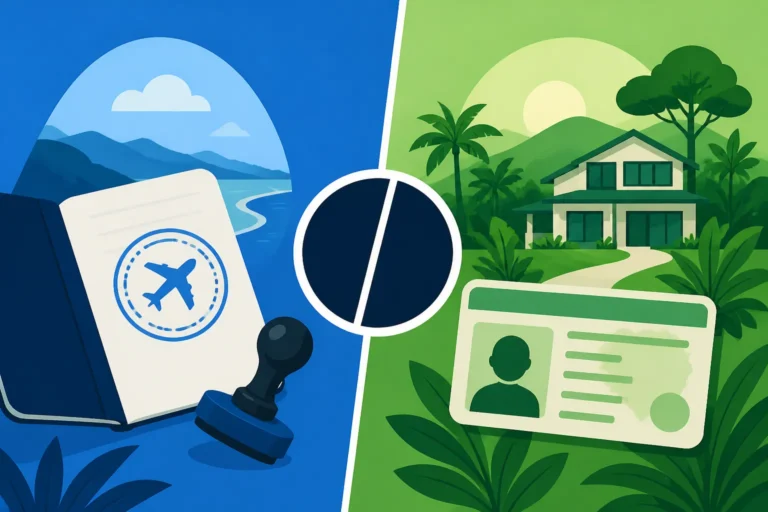
Here's a quick overview to help you weigh your options:
| Aspect | DIY Residency (Without Attorney) | Attorney-Assisted Residency |
|---|---|---|
| Cost | Lower upfront fees (government fees, translations, travel) | Higher upfront fees (attorney fees + government fees, etc.) |
| Time Investment | Very High: Requires extensive personal research, travel, waiting | Lower: Attorney handles most legwork, communication, and follow-up |
| Complexity Management | Challenging: Requires deep understanding of laws, forms, and procedures | Managed by expert: Attorney simplifies process, interprets laws |
| Error & Delay Risk | High: Minor mistakes can cause significant delays or rejections | Lower: Attorney's expertise minimizes errors, handles preventions |
| Language Barrier | Significant hurdle if not fluent in legal Spanish | Non-issue: Attorney handles all Spanish communication |
| Stress Level | Very High: Navigating bureaucracy, uncertainty, potential rejections | Lower: Peace of mind knowing an expert is managing your case |
| Personal Effort | Extreme: You are the project manager, researcher, and liaison | Minimal: You provide documents, attorney handles the rest |
| Follow-up | Your responsibility: Constant monitoring of application status | Attorney's responsibility: Proactive monitoring and updates |
Ultimately, while it is technically possible to obtain residency in Costa Rica without an attorney, it is not a path for the faint of heart. It requires an extraordinary amount of patience, resilience, time, and a high tolerance for bureaucratic frustration. For most expats, especially those with complex situations or limited Spanish, the peace of mind and efficiency that a good local immigration attorney provides can be well worth the investment. Don't forget that even after securing your temporary residency, you'll need to know How to Renew Your Temporary Residency (DIMEX) in Costa Rica periodically, another step where professional guidance can be beneficial.
Disclaimer
The information provided in this guide is for general informational purposes only and does not constitute legal or professional advice. Immigration laws and procedures in Costa Rica are subject to change and vary depending on individual circumstances. We strongly recommend consulting with a qualified Costa Rican immigration attorney or legal professional for advice tailored to your specific situation before making any decisions related to residency.