What Is the Difference Between the Digital Nomad Visa and Rentista?
Trying to figure out which residency path is right for you in Costa Rica can feel like trying to navigate a jungle in the dark – confusing, full of unknowns, and frankly, a bit overwhelming. Many of us expats arrive with dreams of pura vida only to get tangled in the administrative vines of immigration. This guide aims to shine a light on two popular options for those looking to stay long-term: the Digital Nomad Visa and the Rentista residency, breaking down their differences so you can make an informed choice.
Navigating Costa Rica's Residency Landscape: Why the Confusion?
The appeal of Costa Rica is undeniable – stunning beaches, lush rainforests, and a relaxed way of life. But beneath the surface of this tropical paradise lies a bureaucracy that can test the patience of even the most seasoned expat. It’s a common frustration, believe me. You hear whispers of different visas, income requirements, and hoops to jump through, and it's easy to get lost in the details. The government, bless their hearts, has tried to make things easier, but sometimes new options just add more layers to the puzzle.
The Allure of Pura Vida and the Reality of Bureaucracy
We all come here for that "pura vida" lifestyle, don't we? The idea of waking up to the sound of howler monkeys, surfing before work, or simply enjoying the tranquility of nature. But before you can truly settle into that rhythm, you have to face the administrative reality. Getting your ducks in a row for residency involves a lot of paperwork, patience, and often, a good dose of humor to get through the inevitable delays. It's a rite of passage for every expat, and distinguishing between various residency categories is often one of the first major hurdles. You might think, "I just want to live here, why is it so complicated?" And you'd be right to feel that way.
Initial Choices: Tourist, Digital Nomad, or Traditional Residency?
For many, the journey starts with a simple tourist visa, typically allowing a 90-day stay. This is great for a trial run, but if you’re serious about staying, you quickly realize it’s not sustainable to keep doing those 90-Day Visa Runs from Costa Rica every few months. Then you start researching, and suddenly you're bombarded with terms like Pensionado, Rentista, Inversionista, and now, the Visa Nómada Digital. Each has its own set of rules, benefits, and income requirements, and trying to decipher which one fits your unique situation can be a headache. Understanding How to Move to Costa Rica Legally from Abroad involves sifting through these options carefully.
Deep Dive into the Digital Nomad Visa (Visa Nómada Digital)
Let's talk about the new kid on the block, the Digital Nomad Visa. This one has generated a lot of buzz, and for good reason. It’s designed specifically for the modern workforce – those who can work remotely, untethered from a specific office location.
Who is it For? The Modern Remote Worker's Dream
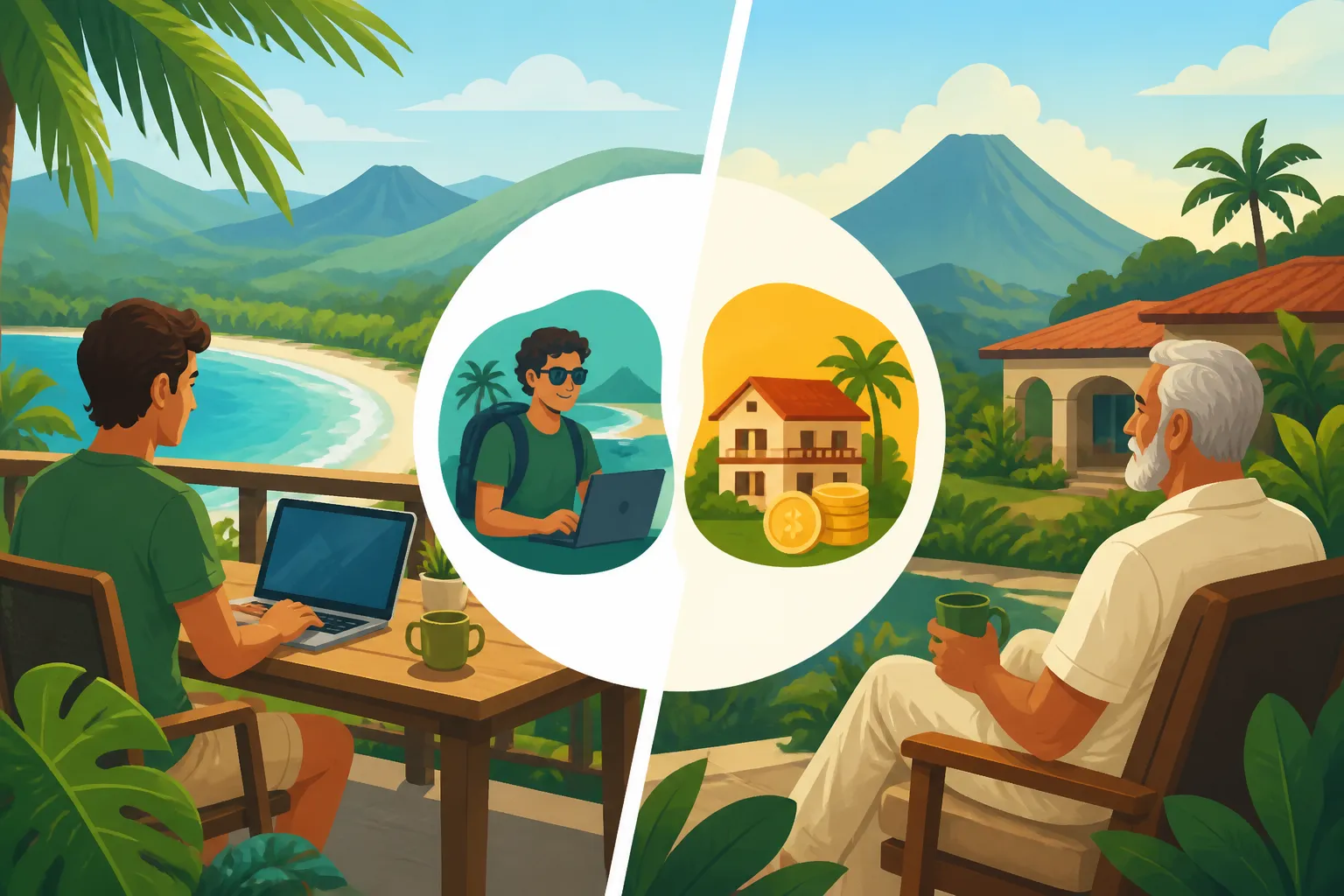
The Digital Nomad Visa is explicitly tailored for individuals who derive their income from sources outside Costa Rica. Think freelancers, remote employees working for foreign companies, online entrepreneurs, or consultants whose clients are not physically located within Costa Rica. If your laptop is your office and your income stream originates beyond Costa Rican borders, this visa is likely designed with you in mind. It's for people who want to experience the beauty of Costa Rica without disrupting their existing international work arrangements. You're not looking to enter the local job market; you're simply bringing your international work with you.
Key Requirements and the Application Process
To apply for the Digital Nomad Visa, there are specific criteria you must meet. The most significant is the income requirement: you need to prove a consistent monthly income of at least $3,000 USD from foreign sources. If you're applying with your spouse or dependents, that income threshold increases to $4,000 USD per month. This isn't just a casual declaration; you’ll need bank statements, pay stubs, or contracts to demonstrate this financial stability.
The application process is largely online, initially through a platform, and it generally aims to be more streamlined than traditional residency routes. You'll need a valid passport, a criminal record check (apostilled or legalized), a sworn declaration of your remote work, and proof of international medical insurance that covers you for the duration of your stay. Companies like Cigna Global are popular choices for comprehensive international coverage that can satisfy this requirement, giving you peace of mind while you're here. One of the attractive elements is that you can often start this application from your home country, simplifying the initial steps of How to Apply for the Costa Rica Digital Nomad Visa. Once approved, you get a special visa stamp in your passport and then receive your DIMEX card locally.
Perks and Limitations of the Digital Nomad Visa
The Digital Nomad Visa offers several enticing perks. First, it grants you a stay of up to one year, with the possibility of a one-year extension, provided you meet the requirements again. This gives you a two-year window to live and work in Costa Rica without needing to become a permanent resident immediately. You're exempt from local income tax on your foreign-sourced income, which is a huge advantage for many. Additionally, you can open a local bank account, get a Costa Rican driver's license, and you don't have to pay into the Caja Costarricense de Seguro Social (CCSS) – the public healthcare system – if you can prove you have private international health insurance.
However, there are limitations. This visa does not automatically lead to permanent residency, nor does it count towards the time required for naturalization. It's a temporary status. You also cannot work for Costa Rican companies or offer services to local clients. The spirit of the visa is to bring foreign income into the economy, not to compete with local workers. So, if your long-term plan involves becoming a permanent fixture in the local economy, this might just be a stepping stone or not the right fit at all.
Unpacking the Rentista Residency (Residencia Rentista)
Now, let's turn our attention to the Rentista residency, a more traditional pathway that has been around for much longer. This option is geared towards individuals who have a reliable, consistent income from investments or other passive sources.
Who is it For? Those with Consistent Passive Income
The Rentista residency is designed for individuals who can demonstrate a stable, independent income from passive sources, usually a fixed deposit or investments. It’s not about working remotely for an employer; it's about having sufficient financial resources to support yourself and your family without needing to work in Costa Rica. This often appeals to those who have built up their wealth through savings, property rentals outside Costa Rica, or other investment vehicles, and are looking for a place to enjoy their earnings without actively engaging in employment. It’s a classic choice for those seeking The Complete Guide to Costa Rica Residency for Expats (2027) who don't fit the retiree (Pensionado) category.
Financial Commitments and Document Scrutiny
The core requirement for Rentista residency revolves around your financial capacity. You must prove a consistent income of at least $2,500 USD per month. The unique part here is how this is demonstrated: you must deposit $60,000 USD into a Costa Rican bank account, which is then drawn down at $2,500 per month for a period of two years. This capital must be deposited upfront. Alternatively, you can prove an equivalent stream of income from investments, rents, or other sources, but the $60,000 deposit is often the most straightforward route for many. The government wants to see that you have a secure, guaranteed income stream that doesn't rely on you actively working.
The application for Rentista residency is far more involved than the Digital Nomad Visa. It requires a multitude of documents, many of which need to be apostilled or legalized in your home country before you even arrive. Think birth certificates, marriage certificates, criminal background checks, and detailed financial statements. This process can be lengthy, often taking over a year, and requires meticulous attention to detail. This is why many expats opt for legal assistance when trying to How to Apply for Rentista Residency in Costa Rica.
Advantages and Disadvantages of the Rentista Path
A major advantage of the Rentista residency is that it’s a pathway to permanent residency. After three years as a temporary resident (Rentista), you can apply for permanent residency, offering a long-term future in the country. This is a significant difference from the Digital Nomad Visa. As a Rentista, you are also required to enroll in the Caja Costarricense de Seguro Social (CCSS), the public healthcare system. While this adds a monthly cost, it provides comprehensive medical coverage for you and your dependents, which is a major draw for many. Understanding The Expat Guide to Joining the Caja (CCSS) in Costa Rica (2027) is essential here.
On the flip side, the upfront financial commitment of $60,000 USD can be a barrier for some. While the money is yours, it's locked into a Costa Rican bank account for a specific purpose. The application process is notoriously slower and more complex compared to the Digital Nomad Visa, demanding a high level of patience and persistence. Also, while you generally can't take on employment in Costa Rica, you can own and operate a business here, which some Rentistas choose to do. This nuance is important: active employment (working for a local company as an employee) is generally restricted, but entrepreneurship with a local company you own can be permissible if structured correctly.
Side-by-Side Comparison: Digital Nomad vs. Rentista
Let's lay out the key differences clearly, as trying to grasp them separately can be tricky. Both visas allow you to live in Costa Rica, but their underlying philosophies and requirements are quite distinct.
Income Source and Stability: A Crucial Distinction
This is perhaps the biggest differentiator. For the Digital Nomad Visa, your income must come from outside Costa Rica. It's about bringing foreign currency into the country while you continue your remote work. The focus is on your active remote earnings. The Understanding the Income Requirements for the Digital Nomad Visa clarifies this.
The Rentista residency, however, is about passive, consistent income, usually derived from investments or a fixed deposit, typically in a Costa Rican bank account. The intent is to show self-sufficiency without needing to work, especially not for local employers. The Understanding the $2,500 Income Requirement for Rentista Residency is a clear indicator of this capital-based approach.
Flexibility, Renewals, and Path to Permanent Residency
The Digital Nomad Visa is fundamentally a temporary visa, granting a one-year stay with a single one-year extension. It offers great flexibility for those not ready to commit to a permanent move but does not directly lead to permanent residency or citizenship. It's a great option for a "test drive" of expat life.
The Rentista residency, while temporary initially (granted for two years, then renewed), serves as a direct stepping stone to permanent residency after three years. This makes it a much more attractive option for those who envision Costa Rica as their forever home. It's a longer-term play.
Practical Considerations: Healthcare and Dependents
For healthcare, Digital Nomads are required to have international private health insurance. This means you’ll typically use private clinics and hospitals. Options like Cigna Global are ideal for this, offering peace of mind and access to modern facilities like Hospital CIMA or Clínica Bíblica.
Rentistas, on the other hand, must enroll in the CCSS, Costa Rica's public healthcare system. This means regular monthly contributions based on your declared income (or the Rentista minimum), providing access to public hospitals and EBAIS clinics. It's a socialized system, and while it might have longer wait times for specialists, it's incredibly comprehensive and affordable once you're in. This is a significant factor when considering Public vs Private Healthcare in Costa Rica: Which Should Expats Choose?.
Both pathways generally allow you to include dependents (spouse and minor children), though the income requirements may increase accordingly.
Here’s a quick overview in a table:
| Feature | Digital Nomad Visa (Visa Nómada Digital) | Rentista Residency (Residencia Rentista) |
|---|---|---|
| Primary Income Source | Foreign-sourced remote work/freelance income | Consistent passive income (investments, fixed deposit) |
| Minimum Monthly Income | $3,000 USD (single) / $4,000 USD (family) | $2,500 USD (or $60,000 USD deposit over two years) |
| Local Work Permitted? | No, only foreign-sourced income | No employment, but can own and operate a local business |
| Initial Validity | 1 year (extendable for 1 more year) | 2 years (renewable) |
| Path to Permanent Residency? | No direct path | Yes, after 3 years as a temporary resident |
| Required Healthcare | Private international health insurance | Mandatory enrollment in CCSS (public healthcare) |
| Tax Exemption | Income tax exemption on foreign-sourced income | No specific tax exemption for income |
| Application Complexity | Generally simpler, mostly online, faster | More complex, requires significant documentation, slower |
| Upfront Financial Commitment | None beyond proof of income & insurance | $60,000 USD fixed deposit (or equivalent income proof) |
Making the Right Choice for Your Costa Rican Dream
Deciding between these two pathways boils down to your personal circumstances, financial situation, and long-term goals for living in Costa Rica. There’s no single "best" option; it's about finding the best fit for you.
Assessing Your Financial Situation and Lifestyle Goals
First, honestly assess your income sources. Is your income primarily from active remote work or passive investments? If you're a young professional just starting your remote career, the Digital Nomad Visa might be an easier entry point due to its lower income threshold and less stringent upfront financial commitment. If you've accumulated wealth and prefer a hands-off approach to income, Rentista might be more suitable.
Consider your long-term aspirations. Do you envision Costa Rica as a temporary adventure, a place to spend a few years before moving on? The Digital Nomad Visa offers that flexibility. Or do you see yourself settling down, perhaps even pursuing citizenship down the line? In that case, the Rentista residency, with its path to permanent status, aligns better with those goals. Think about how important having How the Caja Requirement Connects to Your Residency in Costa Rica is to you.
Finally, think about your moving logistics. Services like Sirelo can help you plan your international move, regardless of your visa choice, but the complexity of your residency application might influence your overall timeline and stress levels.
The Importance of Professional Guidance
I cannot stress this enough: navigating Costa Rica's immigration system is not for the faint of heart. While this guide gives you a solid foundation, every individual's situation is unique. Regulations can change, and the interpretation of rules can sometimes feel subjective. Investing in professional legal advice from an experienced immigration lawyer in Costa Rica is not just a good idea; it's practically essential. They can help you gather the correct documents, navigate the application portals, and address any unforeseen issues that arise. They’ll also be up-to-date on the latest requirements for both How to Apply for the Costa Rica Digital Nomad Visa and How to Apply for Rentista Residency in Costa Rica.
Many expats try to go it alone and end up making costly mistakes or experiencing significant delays. A good lawyer will be your advocate and guide through a process that can, at times, feel like pushing a boulder uphill. It’s an investment in your peace of mind and your future here in paradise.
Disclaimer
The information provided in this article is for general informational purposes only and does not constitute legal, financial, or professional advice. Immigration laws and requirements in Costa Rica are subject to change without notice. Always consult with a qualified legal professional or immigration expert for advice tailored to your specific situation. We are not responsible for any actions taken based on the information provided herein.