What Is the Capital Gains Tax Rate in Costa Rica?
Moving to Costa Rica is a dream for so many, full of Pura Vida vibes and stunning nature. But let's be real, eventually, you’re going to run into the nitty-gritty financial stuff, and one of the questions that often pops up for expats, especially those looking at real estate, is about capital gains tax. It can feel like wading through quicksand to figure out what applies to you when you’re used to a different system. This guide will cut through the confusion and explain exactly how capital gains tax works in Costa Rica, helping you understand your obligations whether you're selling property or other assets.
Demystifying Capital Gains Tax in Costa Rica
Ah, capital gains! Just the phrase can send shivers down an expat's spine, conjuring images of complex calculations and hefty tax bills from back home. In Costa Rica, the concept isn't entirely new, but its application, especially concerning real estate, saw a significant shift not too long ago. For years, one of the unofficial "perks" of owning property here was the absence of a direct capital gains tax on the sale of real estate, provided you weren't operating as a professional real estate developer. That all changed with the Fiscal Strengthening Law (Law 9635) that came into effect on July 1, 2019. Now, selling assets, particularly property, comes with a specific tax obligation that you need to understand.
Costa Rica operates under a territorial tax system. This is a crucial concept for expats to grasp, as it means that generally, the country only taxes income generated from sources within its borders. This is fantastic news for many who have income streams from outside Costa Rica, as that money typically isn't subject to Costa Rican income tax. However, when it comes to capital gains from assets located or generated within Costa Rica, the territorial principle means those gains are taxable. This is where many expats get caught out – assuming all "foreign" income rules apply to all their financial dealings here. It's not just about income from a job; it's about the appreciation of your investments and assets located right here in paradise.
The Standard Capital Gains Tax Rate for Real Estate
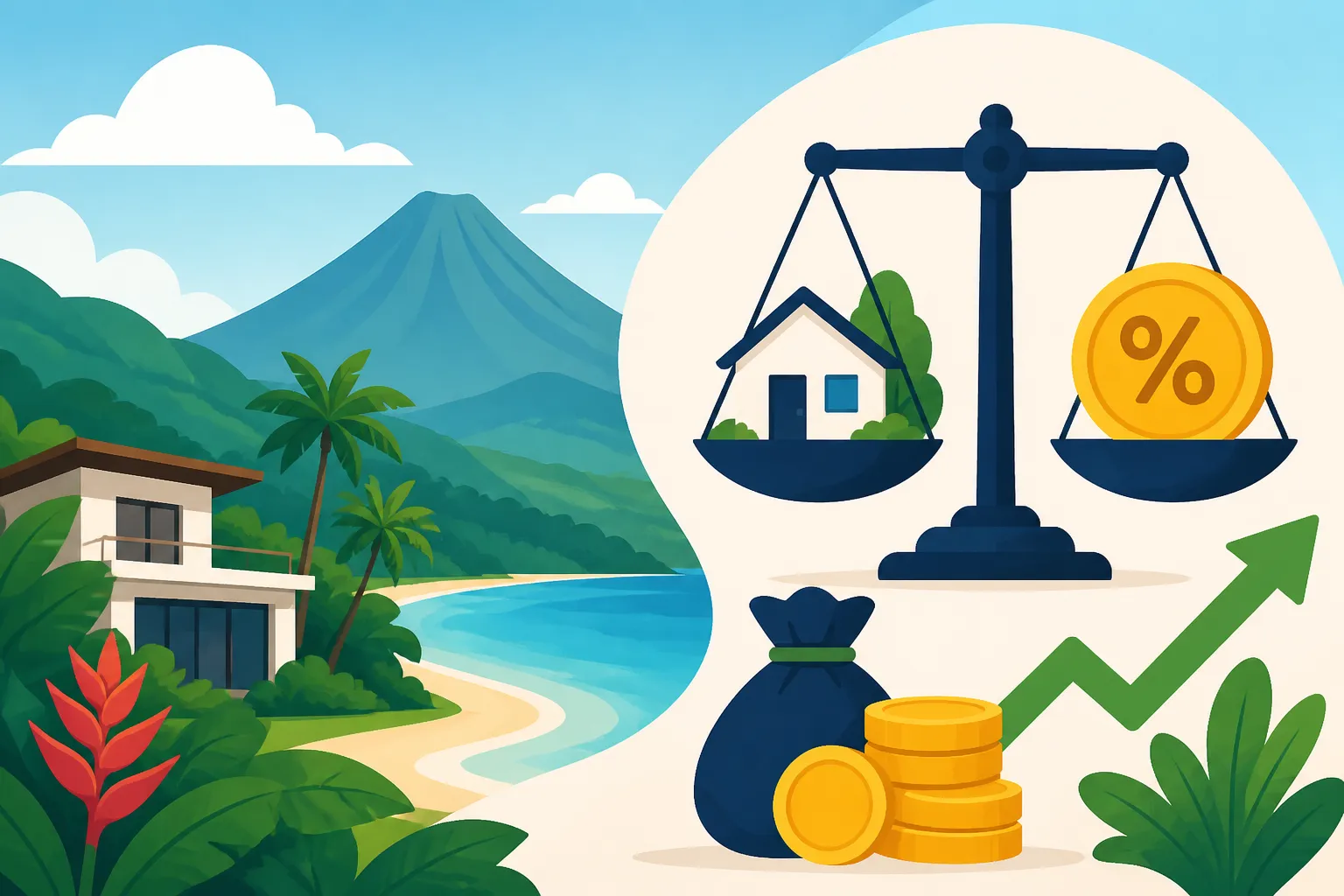
Let's get straight to the point: the standard capital gains tax rate in Costa Rica is 15%. This rate primarily applies to the profits made from the sale of real estate and other capital assets that were acquired after July 1, 2019. This date is absolutely critical, acting as a dividing line for how your property sale might be taxed.
Imagine you bought a lovely condo in Tamarindo in 2020. You paid $250,000 for it, and now, five years later, you've found a buyer for $350,000. Your capital gain, before expenses, is $100,000. Under the new law, this $100,000 profit is subject to the 15% capital gains tax. So, you'd be looking at $15,000 in tax. It's a significant amount, and it’s something you absolutely must factor into your selling price and financial planning.
Now, what about those properties acquired before July 1, 2019? This is where a lot of the confusion and frustration arises for long-term expats. The government introduced a transition period and a couple of alternatives to soften the blow for those who purchased property under the old tax regime. You essentially have a choice: either pay the 15% on the capital gain, calculated from the date of acquisition until the date of sale, or opt for a different calculation. This choice can make a huge difference, so it’s not something to gloss over. Many foreign residents find it incredibly helpful to consult with experts like Taxes for Expats to navigate these nuances and ensure they choose the most advantageous option. Understanding these specifics is vital, especially when considering The Complete Guide to Property and Transfer Taxes in Costa Rica (2027).
Capital Gains on Other Assets and Investments
While real estate often grabs the headlines, capital gains tax in Costa Rica isn't exclusively about land and buildings. The 15% rate also applies to gains derived from the sale of other capital assets, such as shares, bonds, and other movable assets, provided these assets are registered or operate within Costa Rica.
For instance, if you invested in shares of a Costa Rican company listed on the local stock exchange after July 1, 2019, and then sold those shares at a profit, that profit would typically be subject to the 15% capital gains tax. The same principle applies to bonds or other financial instruments issued by Costa Rican entities. It's important to remember the territoriality rule here: if you're buying and selling shares on the New York Stock Exchange, for example, your gains from those transactions are generally not subject to Costa Rican capital gains tax, regardless of your residency status, because the income source is outside the country. This distinction is a cornerstone of Understanding Costa Rica's Territorial Taxation of Foreign Income.
However, the world of investments can be complex, and there can be exceptions or specific rules for certain types of investments, especially those that might straddle the line between being "local" or "foreign-sourced." For example, some investment funds or structured products might have their own tax treatment. Always clarify with a local tax professional if you're dealing with anything beyond straightforward real estate or publicly traded local shares. The key takeaway is that if the asset generating the gain is situated in Costa Rica, or the transaction takes place here, the 15% rate is likely to apply.
Calculating Your Capital Gains Tax
Okay, so you know the rate is generally 15%. But 15% of what, exactly? This is where the calculation comes in, and thankfully, it’s fairly logical. The capital gain is determined by subtracting the acquisition cost and any approved expenses directly related to the acquisition and sale of the asset from the sale price.
Let’s say you’re selling that condo in Tamarindo again.
- Sale Price: $350,000
- Acquisition Cost: $250,000 (what you paid for it originally)
- Approved Expenses: This is where you can reduce your taxable gain. These might include:
- Notary fees and legal costs incurred when you bought the property.
- Significant improvements or renovations you made to the property (you'll need receipts and proof!).
- Real estate agent commissions paid when you sell the property.
- Legal fees associated with the sale.
- Any other fees specifically approved by Hacienda (the Costa Rican tax authority) as deductible costs.
For our example:
- Sale Price: $350,000
- Original Purchase Price: $250,000
- Buyer's notary fees when you bought it: $5,000
- Major kitchen renovation (with receipts): $20,000
- Real estate agent commission for selling: $17,500 (5% of sale price)
- Seller's notary fees for the sale: $2,500
Your deductible expenses would be $5,000 + $20,000 + $17,500 + $2,500 = $45,000.
So, your capital gain would be ($350,000 – $250,000) – $45,000 = $100,000 – $45,000 = $55,000.
Then, 15% of $55,000 is $8,250.
You can see how diligent record-keeping can significantly reduce your tax burden. Every receipt, every invoice for improvements or acquisition costs, becomes precious. This isn't a country where you can just wave your hand and say, "I spent a lot." Hacienda needs proof. So, keep a meticulously organized file for any significant asset you own, especially real estate. This is sound advice for anyone looking at The Complete Guide to Taxes in Costa Rica for Expats (2027).
Special Considerations for Property Sales
Real estate, being such a common investment for expats, has a few extra layers of complexity worth understanding. These special considerations can be deal-makers or breakers depending on your situation.
First, there's the single primary residence exemption. This is a huge relief for many: if the property you are selling has been your only and primary residence for at least the two years immediately preceding the sale, then the capital gain from that sale is exempt from the 15% tax. The key here is "only and primary." You can't have owned another property and called this one your main home if you were living elsewhere, and it truly has to have been your actual domicile. This exemption is designed to protect homeowners, not investors, so don't try to stretch the definition. Proving this usually involves demonstrating utility bills, mail, and other residency evidence tied to that address.
Then, we revisit that crucial date: July 1, 2019. If you acquired your property before this date, you have an alternative tax option. Instead of paying 15% on the capital gain (sale price minus acquisition cost and expenses), you can choose to pay 2.5% on the recorded value (valor fiscal) of the property. The recorded value is what the property is registered for at the municipality, and it's almost always significantly lower than the actual market value. This alternative can result in a much lower tax bill for properties purchased before the law changed. For example, if your property has a recorded value of $100,000, 2.5% would be $2,500 – a far cry from what 15% on a substantial capital gain might be. This flexibility is a blessing, but you must choose wisely.
It's important to understand who pays this tax. The capital gains tax is generally the responsibility of the seller. However, in Costa Rica, when you sell a property, the transaction typically goes through a notary public. The notary has a legal obligation to collect this tax at the time of sale and remit it to Hacienda on your behalf. This means the funds are usually withheld from the proceeds of the sale, so you won't see that portion of the money directly hit your bank account. This ensures compliance and removes a significant administrative burden from the seller's shoulders. This is part of the larger process of Understanding the Property Transfer Tax (Traspaso) in Costa Rica.
The Role of the Notary Public and Hacienda
The notary public is an indispensable figure in any property transaction in Costa Rica, and their role in the capital gains tax process is paramount. They are not just witnesses; they are legal experts who facilitate the transfer of title and ensure all taxes and fees are properly calculated and paid.
When you're selling a property, your notary will be the one to:
- Calculate the capital gain: They will work with you to determine the acquisition cost, valid expenses, and the final sale price to arrive at the taxable gain. They'll also help you evaluate whether the 15% gain on profit or the 2.5% on recorded value is more beneficial for properties purchased before July 1, 2019.
- Verify the primary residence exemption: If you're claiming the primary residence exemption, the notary will help you gather and present the necessary documentation to Hacienda to support your claim.
- Withhold the tax: Crucially, the notary will withhold the calculated capital gains tax directly from the sale proceeds. This ensures the tax is paid immediately upon transfer of the property.
- Remit to Hacienda: The notary is responsible for remitting these funds to Hacienda, along with the necessary documentation, ensuring the transaction is compliant with tax law.
This means you, as the seller, won't typically be dealing directly with Hacienda regarding the capital gains tax on a property sale. Your notary handles the heavy lifting, acting as the intermediary. This system is designed to streamline the process and ensure tax compliance, even for those unfamiliar with How the Costa Rican Tax Authority (Hacienda) Works (2027). It’s why choosing a trustworthy and experienced notary is non-negotiable for any major transaction here.
Navigating the Tax Landscape: Tips for Expats
Navigating any new country's tax system can feel like learning a new language – full of unfamiliar terms, subtle nuances, and potential pitfalls. Costa Rica is no different, especially with recent changes to capital gains. Here are some seasoned expat tips to help you through.
First and foremost, always seek professional tax advice. I cannot stress this enough. While I'm here sharing my experience and research, I'm not a tax lawyer or accountant in Costa Rica. Your personal situation, residency status, and specific assets can drastically alter your tax obligations. A local professional will have the most up-to-date knowledge of the laws and any recent interpretations or changes by Hacienda. For specific and complex expat tax situations, services like Taxes for Expats are invaluable as they often specialize in bridging the gap between your home country's tax rules and Costa Rica's. Don't cheap out on this; it can save you far more than it costs in the long run.
Secondly, you absolutely must understand the territorial tax system inside and out. It’s the backbone of Costa Rican taxation. It means that generally, if your income or capital gain originates outside Costa Rica, it's not taxed by Costa Rica. This is fantastic for those with foreign pensions, investments, or remote work income from international clients. However, any gain from an asset physically located in Costa Rica, like your house or shares in a local company, is considered Costa Rican-sourced and is therefore taxable under the capital gains law. This fundamental principle is elaborated upon in resources like Understanding Costa Rica's Territorial Taxation of Foreign Income.
Finally, be mindful of currency considerations and how you transfer funds. When you sell an asset here, the proceeds might be in USD, but the tax might be calculated in Colones, or vice-versa, depending on how the transaction is recorded. This can sometimes lead to slight discrepancies or require currency conversion at the time of payment. When moving significant amounts of money internationally, either into Costa Rica for an acquisition or out after a sale, services like Wise are incredibly helpful for their transparent exchange rates and lower fees compared to traditional banks. This ties into How to Transfer Money Into and Out of Costa Rica as an Expat.
Keeping Meticulous Records
This is not just a suggestion; it's a golden rule for financial peace of mind in Costa Rica. When Hacienda comes knocking, or when your notary needs to calculate your capital gain, they will ask for proof. No proof, no deduction. It's that simple.
You need to document everything related to the acquisition and improvement of your assets. For property, this includes:
- The original purchase contract (escritura): This will clearly state your acquisition price.
- Notary bills from the purchase: These show the fees you paid at the time of acquisition.
- Receipts and invoices for major improvements: Did you add a pool, renovate a bathroom, or put on a new roof? Keep every single receipt, invoice, and contract from licensed professionals. This isn't just for tax purposes; it's good practice for increasing your property's value. Make sure they are facturas electrónicas (electronic invoices) if issued by a registered business, as these are the only ones recognized by Hacienda for tax purposes.
- Real estate agent commission statements for the sale: Proof of what you paid your agent.
- Notary bills for the sale: Detailing the legal costs associated with the transfer.
Consider creating a dedicated digital folder and a physical file for each major asset. Scan all documents and save them in the cloud, but also keep hard copies. Costa Rica is still quite paper-heavy in its official dealings, so having originals readily available is always wise. This diligence will not only help with capital gains calculations but also with understanding your overall The Cost of Healthcare in Costa Rica: A Complete Breakdown for Foreigners (2026) if you ever need to analyze your finances.
Understanding Tax Residency and Your Obligations
Your tax obligations in Costa Rica are profoundly influenced by your tax residency status. This isn't the same as immigration residency, although the two are often closely linked. Tax residency determines whether you're liable for taxes on your worldwide income (if the country had a worldwide tax system) or solely on your Costa Rican-sourced income (which Costa Rica does).
As an expat, understanding Tax Residency in Costa Rica: A Definitive Guide for Expats (2027) is crucial. Generally, if you spend more than six months (183 days) in Costa Rica during a tax year, you are considered a tax resident. However, even if you are a tax resident, Costa Rica's territorial tax system means that only income or gains derived from activities or assets within Costa Rica are typically subject to local tax. Foreign-sourced income, like pensions from your home country or profits from international investments that have no connection to Costa Rica, usually remains untaxed here.
The capital gains tax, however, is a clear example of a tax on Costa Rican-sourced gains. Whether you are a full tax resident or a non-resident selling a Costa Rican asset, this tax generally applies. The main difference might be in how certain exemptions (like the primary residence exemption) are applied or documented, or in specific reporting requirements if you have other types of Costa Rican income. For instance, if you are self-employed and selling an asset used in your business, the rules might intertwine with How Much Tax Does a Small Business Pay in Costa Rica?. Always consult with a tax professional to clarify your exact obligations based on your individual residency status and income streams.
Capital Gains Tax Scenarios in Costa Rica
Here's a quick look at how capital gains tax might apply to different scenarios, focusing on real estate which is often the biggest concern for expats.
| Scenario | Asset Acquired Date | Tax Rate / Method | Notes |
|---|---|---|---|
| Sale of Real Estate | After July 1, 2019 | 15% on the capital gain (Sale Price – Acquisition Cost – Approved Expenses) | Standard application. This is the most common scenario for new purchases. |
| Sale of Real Estate | Before July 1, 2019 | Option 1: 15% on the capital gain (Sale Price – Acquisition Cost – Approved Expenses) | You can choose this if it's more favorable than Option 2. |
| Sale of Real Estate | Before July 1, 2019 | Option 2: 2.5% on the recorded value (valor fiscal) of the property. | Often a much lower tax burden for older properties where the recorded value is low. The notary calculates and applies this. |
| Sale of Primary Residence | Any Date (if conditions met) | Exempt from Capital Gains Tax | Must be your only and primary residence for at least 2 years prior to sale. Requires documented proof. |
| Sale of Shares/Bonds (Local Entity) | After July 1, 2019 | 15% on the capital gain | Applies to financial instruments issued by Costa Rican companies or registered locally. |
| Sale of Shares/Bonds (Foreign Entity) | Any Date | Generally No Capital Gains Tax | Due to Costa Rica's territorial tax system, foreign-sourced gains are typically not taxed. |
| Sale of Other Movable Assets (Local) | After July 1, 2019 | 15% on the capital gain | Applies to items like intellectual property or significant local business assets not covered by other specific taxes. |
Disclaimer
The information provided in this guide is for general informational purposes only and does not constitute legal, financial, or tax advice. While we strive to provide accurate and up-to-date information, tax laws in Costa Rica can be complex and subject to change. Your individual situation may vary, and we strongly recommend consulting with a qualified Costa Rican tax attorney or accountant to obtain personalized advice before making any financial or tax-related decisions.