Can I Hold Dual Citizenship with Costa Rica?
Oh, the dream of calling Costa Rica home, truly home, with all the legal rights and protections that come with it! Many of us arrive here, fall head over heels for the pura vida lifestyle, and eventually start wondering about taking that ultimate step: becoming a citizen. But then the nagging question pops up – "What about my original passport? Do I have to give it up?" It's a perfectly natural concern, and a significant hurdle for many. This guide will walk you through the ins and outs of holding dual citizenship with Costa Rica, demystifying the process and giving you the realistic lowdown on what to expect.
Costa Rica's Stance on Dual Citizenship
Let's cut right to the chase, because this is often the biggest relief for aspiring Ticos and Ticas: Costa Rica generally does permit dual citizenship. That's right, you usually don't have to renounce your original nationality when you become a Costa Rican citizen. This is fantastic news for many expats who want to fully integrate here but also maintain ties, rights, and ease of travel with their birth country. It’s a point of anxiety for countless foreigners, and it's wonderful to confirm that for most, you can indeed have the best of both worlds.
The Legal Framework and General Rule
Costa Rica’s Constitution and its Law of Options and Naturalization (Ley de Opciones y Naturalización) lay out the framework. While there have been historical nuances, the modern interpretation and practice are quite clear: obtaining Costa Rican citizenship does not automatically strip you of your previous nationality. This is in stark contrast to some other nations that have stricter laws regarding multiple citizenships, demanding formal renunciation.
It means that when you swear allegiance to Costa Rica, you're not simultaneously severing ties with your country of origin in the eyes of Costa Rican law. This permissive approach reflects a more globalized perspective and acknowledges that people often have deep connections to more than one nation. However, this isn't a free pass; the process itself is still rigorous and demands adherence to many steps laid out by the Dirección General de Migración y Extranjería (DGME). Understanding the intricacies of how Costa Rica Citizenship: Routes Through Residency and Marriage (2027) works is paramount before you even consider dual nationality.
How Costa Rica Views Your Original Citizenship
From Costa Rica's perspective, once you become a citizen, you are a Tico or Tica, plain and simple. You'll be expected to use your Costa Rican passport when entering and exiting Costa Rica. This isn't just a suggestion; it's a legal requirement. Trying to use your old passport to enter or leave Costa Rica once you've been naturalized can lead to significant headaches and delays at immigration, something no one wants.
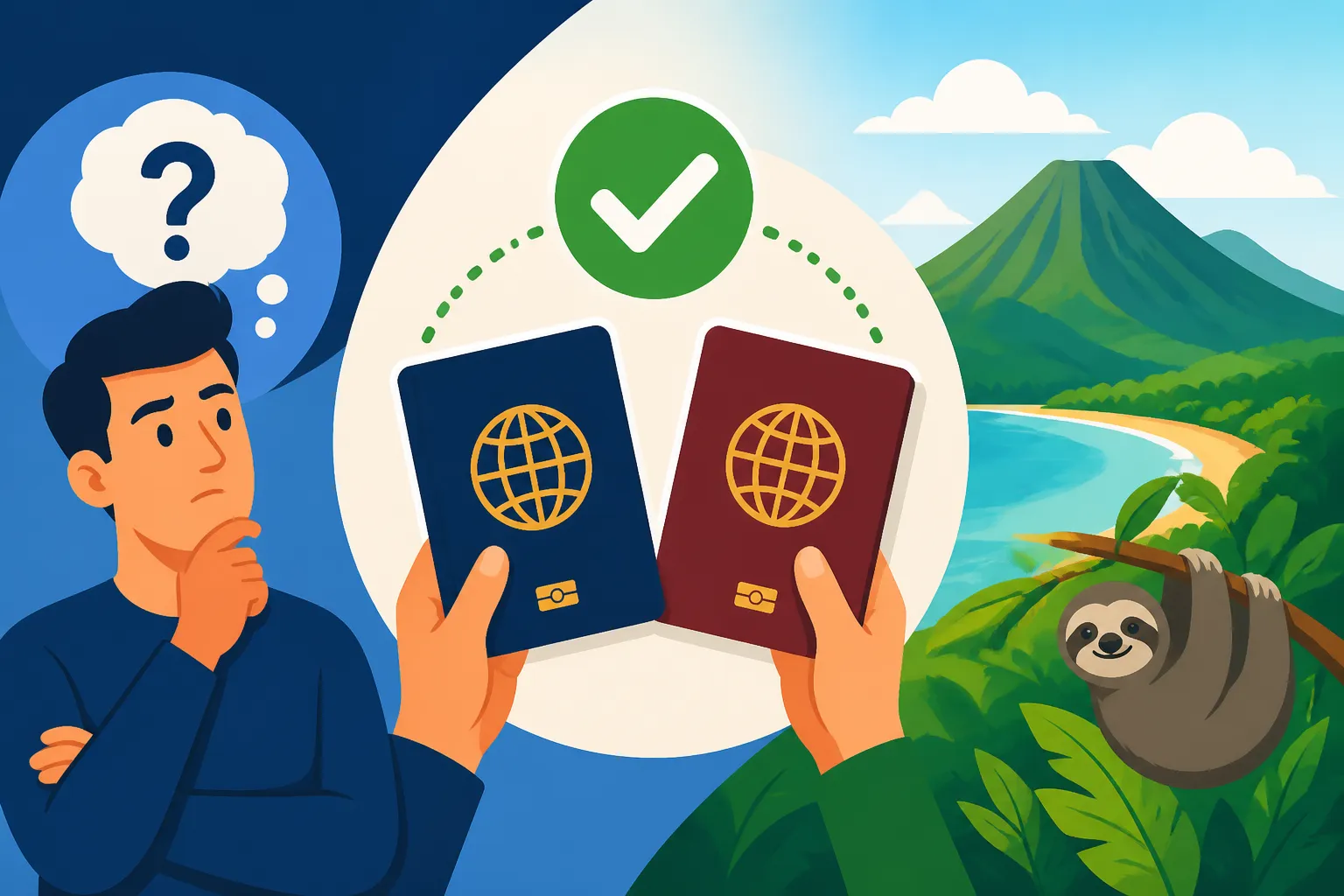
For all other travel outside Costa Rica, you're generally free to use whichever passport grants you the easiest entry or has the most beneficial visa rules for your destination. For instance, if your original passport offers visa-free access to a country that the Costa Rican passport doesn't, you can certainly use it when traveling there. This flexibility is one of the most practical benefits of dual citizenship. However, it's crucial to remember that while Costa Rica permits you to hold onto your previous nationality, your country of origin might have different rules. For example, some countries automatically revoke citizenship upon acquiring another, or they might not recognize your Costa Rican citizenship while you're within their borders. Always check your birth country's specific laws on dual nationality to avoid any nasty surprises.
Paths to Costa Rican Citizenship
Becoming a citizen of Costa Rica is a significant journey, requiring time, patience, and a deep dive into paperwork. It's definitely not a quick fix or a tourist visa extension, as many hopeful expats quickly learn. The most common pathways involve a period of legal residency, demonstrating your commitment to living here.
Naturalization Through Residency
This is the route most expats take. After living in Costa Rica legally as a resident for a certain period, you can apply for naturalization. The length of this required residency varies depending on your country of origin:
- Seven years for citizens of most other countries (e.g., USA, Canada, UK, European Union).
- Five years for those from Ibero-American countries (Spanish-speaking countries in Latin America, plus Spain, Portugal, and Andorra).
During this period, you must maintain your residency status, pay into the Caja (Costa Rican social security and public healthcare system), and generally be a law-abiding resident. The process of getting through the initial residency application, maintaining it, and then applying for citizenship can feel like navigating a bureaucratic labyrinth. It's a marathon, not a sprint, and requires diligent record-keeping and a lot of follow-up.
Once you meet the residency timeframes, the naturalization application itself has its own set of demanding requirements. You'll need to pass a Spanish language test, demonstrating your proficiency in the official language. Don't underestimate this; it's not just basic conversational Spanish. You’ll also face a civics test, proving your knowledge of Costa Rican history, geography, and government. Additionally, you must provide proof of good conduct (criminal record checks from Costa Rica and any other countries you’ve lived in), and demonstrate financial stability. The entire process, from initial residency application to final citizenship approval, can easily take over a decade, sometimes more. It truly tests your commitment to the country, but the reward of full integration is immense. If you're currently navigating the initial stages, you might find a lot of useful information in The Complete Guide to Costa Rica Residency for Expats (2027).
Citizenship by Marriage
For those who marry a Costa Rican citizen, the path to naturalization can be significantly expedited. Instead of the typical seven years of residency, you generally only need two years of marriage and two years of legal residency in Costa Rica to apply for citizenship. This is a considerable advantage, but don't think it's a loophole for a quick passport! The authorities are very stringent when it comes to marriage-based applications. They scrutinize these relationships heavily to prevent fraudulent marriages entered into solely for citizenship purposes.
You'll need to provide ample evidence of a genuine, ongoing relationship. This can include shared utility bills, joint bank accounts, photos, sworn affidavits from friends and family, and even home visits from immigration officials. The intent is to ensure that the marriage is legitimate and that you and your spouse are genuinely building a life together in Costa Rica. While it offers a faster track, it's still a rigorous process that requires careful documentation and proof of your marital bond.
Citizenship by Birth and Descent
While this guide focuses on obtaining dual citizenship, it's worth briefly touching upon how citizenship is acquired from birth, as this is the foundation for dual nationality for many.
- Jus Soli (Right of Soil): Generally, anyone born within the territory of Costa Rica is considered a Costa Rican citizen. This is straightforward and means that if you're an expat and have children here, they will likely be Costa Rican citizens by birth, regardless of your nationality.
- Jus Sanguinis (Right of Blood): Children born abroad to at least one Costa Rican parent are also entitled to Costa Rican citizenship, provided their birth is registered with the Civil Registry. This allows for generational transmission of citizenship and is another common way dual nationality naturally arises for Costa Ricans living abroad.
These routes are primarily about initial acquisition of citizenship rather than holding dual citizenship, but they illustrate Costa Rica's broadly inclusive approach to nationality.
Practical Implications of Holding Dual Citizenship
Once you've navigated the extensive journey to become a dual citizen, you open up a world of new possibilities, but also some unique responsibilities and considerations. It’s not just about having two pretty passports; it affects how you live, travel, and even how you're viewed by both nations.
Travel and Documentation
This is where things can get a little tricky, but once you get the hang of it, it's seamless. The golden rule, as mentioned, is to always use your Costa Rican passport when entering and exiting Costa Rica. This establishes your identity as a citizen in your home-away-from-home. When you're traveling to your country of original citizenship, or any third country, you should typically use the passport that makes the most sense for that destination. For instance, if your US passport offers easier entry to Europe, use that for your European trips. If you need a visa for a certain country on one passport but not the other, then pick the one that lets you sail through.
However, be prepared for occasional questions or confused looks from immigration officers who might not be accustomed to seeing a different exit stamp than entry stamp in a single passport. It's usually easily resolved by presenting both passports if asked, clearly explaining your dual nationality. Just make sure both passports are valid and up-to-date!
Rights and Responsibilities
As a naturalized Costa Rican citizen, you gain all the rights and responsibilities of someone born and raised here, with very few exceptions. This includes the fundamental right to vote in national and local elections, the ability to hold public office (though some high-level positions might be reserved for Ticos por nacimiento), and the invaluable right to Costa Rican consular protection when you're abroad. This means if you get into trouble in a third country, the Costa Rican embassy can intervene on your behalf.
On the flip side, you are now fully subject to Costa Rican law and civic duties. While military service is not mandatory in Costa Rica (a truly beautiful thing!), you are expected to fulfill any other obligations of citizenship. From a financial perspective, Costa Rica operates on a territorial tax system, meaning it primarily taxes income earned within its borders. This is fantastic news for many expats, but it doesn't absolve you of your tax obligations to your original country, especially if you're an American citizen, which requires worldwide income reporting regardless of where you live. Understanding how Understanding Tax Residency Rules and the Territorial System in Costa Rica works is crucial to avoid any unexpected tax burdens.
Potential Pitfalls and Considerations
While dual citizenship is largely beneficial, it comes with its own set of potential headaches.
- Tax Complexity: For U.S. citizens, the Foreign Account Tax Compliance Act (FATCA) means U.S. banks require foreign banks to report U.S. account holders. This adds a layer of complexity to your financial life. Always consult with a tax professional who specializes in international taxation for both countries to ensure compliance.
- Consular Protection Limitations: Your original country's embassy might not be able to offer full protection if you're having legal issues within Costa Rica. When you're in Costa Rica and a Costa Rican citizen, Costa Rican law applies to you, and your birth country's consular assistance might be limited.
- Succession Planning: Estate planning and inheritance laws can become more intricate when you hold citizenship in two different countries. It's wise to consult with legal experts in both jurisdictions to ensure your wishes are clearly understood and legally binding.
- Bureaucratic Hassles: As with everything here, expect forms, waiting, and a bit of "come back tomorrow" even after you're a citizen. It’s the way things often work.
The Journey to Becoming a Tico Citizen
The path to Costa Rican citizenship is truly a test of endurance and patience. It's a journey that many embark on with high hopes, only to be met with bureaucratic hurdles that would challenge even the most seasoned expat. But for those who persevere, the reward of full integration into this beautiful country is immeasurable.
Navigating the Bureaucracy
Let's be honest, the Costa Rican bureaucracy, while well-intentioned, can be a beast. It's not uncommon for the citizenship process to stretch on for years after you've even met the initial residency requirements. You'll deal with multiple government entities, primarily the Civil Registry (Registro Civil) and the Dirección General de Migración y Extranjería (DGME). Each step requires meticulous documentation, often including original birth certificates, criminal record checks from every country you've lived in, proof of income, apostilles, and official translations into Spanish by certified translators. The sheer volume of paperwork alone is enough to make anyone's head spin.
This is why many, many expats choose to hire an experienced immigration lawyer. A good lawyer can guide you through the maze of requirements, ensure your documents are correctly prepared and submitted, and follow up with the relevant agencies on your behalf. It costs money, yes, but for many, it's worth the peace of mind and the saved time and frustration. For those starting their journey, Understanding the Documents and Apostille Needed for Residency in Costa Rica will give you a head start on preparing for the eventual citizenship application. Relocating can be overwhelming, and services like those offered by Sirelo can really smooth out the rough edges, especially when you're managing complex paperwork across borders. They can often provide resources or connect you with services that help with the entire relocation process.
Costs and Timeframes
The cost of obtaining Costa Rican citizenship can add up, and it's important to budget for it realistically. You'll have application fees, which are relatively modest, but then there are the legal fees if you hire an attorney, translation costs, apostille costs for foreign documents, and the cost of traveling back and forth to various government offices. These can easily run into thousands of dollars over the multi-year process.
More significantly, you'll need to sustain yourself in Costa Rica for many years while your application processes. This means covering your living expenses, maintaining your residency, and ensuring you have access to healthcare. While you're waiting for your Caja affiliation to kick in, or if you simply prefer broader coverage, having a robust international health insurance plan like those offered by Cigna Global is not just a luxury, it's a necessity. International coverage ensures you have comprehensive medical care, no matter how long the administrative processes take.
As for timeframes, be prepared for the long haul. While the law might state certain processing times, the reality can be quite different due to backlogs, bureaucratic delays, or simply the sheer volume of applications. It's not unusual for the naturalization process itself to take anywhere from 3 to 7 years after you've completed your required residency period. This is why patience is the ultimate virtue when pursuing Costa Rican citizenship. Knowing the Understanding the Cost and Timeline of the Residency Process in Costa Rica for initial residency will give you some indication, but citizenship is typically even longer.
Comparison of Citizenship Acquisition Paths and Dual Citizenship Rules
To help clarify the various routes and considerations for dual citizenship, here's a handy table outlining the key differences and requirements.
| Feature / Path | Naturalization (General) | Naturalization (By Marriage) | Citizenship by Birth/Descent | Dual Citizenship Allowed by CR |
|---|---|---|---|---|
| Residency Requirement | 7 years (most countries), 5 years (Ibero-American) | 2 years (married to CR citizen) | N/A (born in CR or to CR parent) | Yes |
| Marriage Requirement | N/A | Yes, genuine marriage to CR citizen for 2+ years | N/A | N/A |
| Language & Civics Test | Yes (Spanish & CR history/gov't) | Yes (Spanish & CR history/gov't) | N/A | N/A |
| Good Conduct Proof | Yes | Yes | N/A | N/A |
| Financial Stability Proof | Yes | Yes | N/A | N/A |
| Estimated Processing Time | 3-7 years (after meeting residency requirements) | 2-5 years (after meeting marriage/residency requirements) | Immediate (at birth), Variable (for descent registration) | N/A |
| Primary Benefit | Full rights, political participation | Expedited path, full rights | Automatic citizenship, full rights | Flexibility, expanded rights |
| Main Challenge | Long wait times, extensive paperwork, tests | Proof of genuine marriage, extensive paperwork, tests | Documentation for registration | Home country's rules, tax complexity |
Disclaimer
The information provided in this guide is intended for general informational purposes only and does not constitute legal, financial, or immigration advice. While we strive to keep our content accurate and up-to-date, laws and regulations in Costa Rica (and other countries) can change frequently. It is essential to consult with qualified legal and immigration professionals in Costa Rica, as well as tax advisors in your home country, for advice tailored to your specific situation. Reliance on any information in this article is solely at your own risk.