Is It Hard to Buy a Fixer-Upper in Costa Rica?
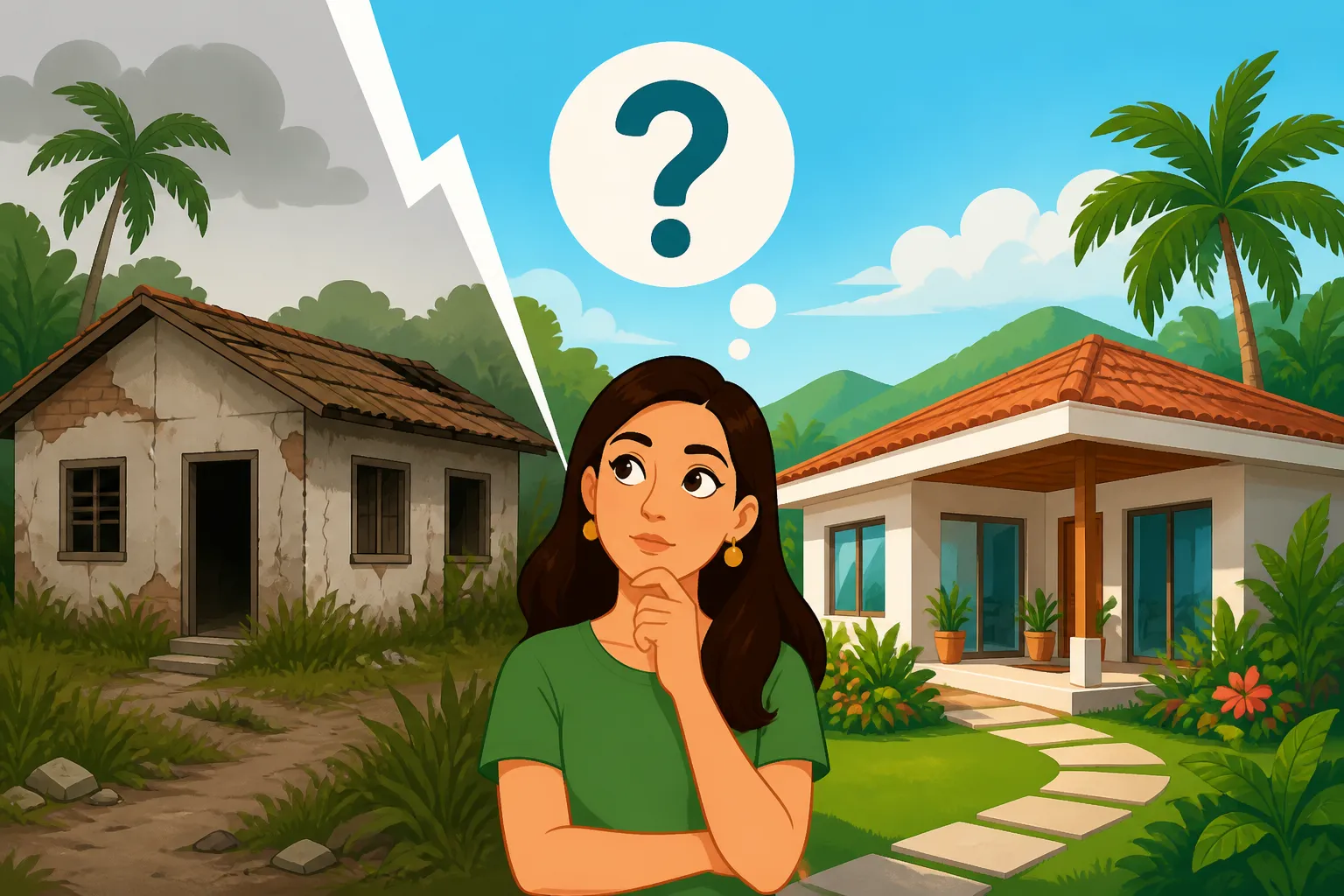
Oh, the romantic idea of buying a fixer-upper in Costa Rica! It's a dream many of us expats have, picturing ourselves transforming a rustic casita into a personalized tropical paradise. But let me tell you, that dream can quickly become a tangled jungle of unforeseen problems, paperwork, and "Tico time" if you're not prepared. This guide will walk you through the very real challenges and occasional triumphs of taking on a renovation project in our beloved Pura Vida land.
The Allure and Reality of a Fixer-Upper in Costa Rica
When you first arrive, Costa Rica's charm can be utterly intoxicating. You see these older homes, maybe a little rundown, but with incredible potential—a sprawling garden, ocean views, or just that authentic, rustic feel that a new build sometimes lacks. It's easy to get swept away by the vision, but let's talk about what that really means once the honeymoon phase is over.
Why the Dream is so Enticing
The primary draw, for many, is the initial price tag. Often, a property in need of significant repair will cost substantially less upfront than a move-in-ready home. This can be particularly appealing if you're looking to stretch your budget or invest in a more desirable location that might otherwise be out of reach. There's a tangible thrill in thinking you've snagged a bargain.
Beyond the financial aspect, a fixer-upper offers the ultimate canvas for customization. You envision tearing down walls, redesigning layouts, and injecting your personal style into every corner. This desire for a truly bespoke home, one that perfectly suits your expat lifestyle and aesthetic, is a powerful motivator. You want a home that feels uniquely yours, not just another cookie-cutter development house. Plus, there's the genuine pride and satisfaction that comes from bringing an old structure back to life, preserving a piece of Costa Rican history while making it functional for modern living. Some even dream of the potential profit, a beautiful renovation potentially yielding a significant return on investment in a hot market.
The "Pura Vida" Pitfalls You Might Not Expect
Now, let's inject a dose of reality, shall we? That charm often comes with a hefty side of headaches. Those "character" quirks? They might be structural deficiencies. That rustic aesthetic could mean ancient wiring, leaky roofs, or plumbing that's more a suggestion than a system. I've heard stories, and experienced some myself, of discovering massive termite infestations, hidden water damage, or electrical systems that look like something out of a Frankenstein movie. These aren't minor fixes; they're major, costly overhauls that can blow your budget faster than you can say "Pura Vida."
Then there's the challenge of local conditions. Humidity is a constant adversary here, especially in coastal and rainforest areas. It can warp wood, promote mold, and generally make everything feel damp and dilapidated. Pests aren't just an occasional nuisance; they're a way of life. Termites, ants, scorpions, snakes—they all love a cozy, undisturbed nook in an old house. And don't even get me started on material availability. You might have a grand design from your home country, but finding those specific tiles, hardwoods, or specialized fixtures in Costa Rica can be a quest worthy of Indiana Jones, often requiring costly imports or significant compromises. What might be a quick trip to a big box hardware store back home becomes a multi-day odyssey involving several towns and a lot of head-scratching.
Navigating the Legal and Bureaucratic Maze
Before you even think about swinging a hammer, you absolutely must understand the legal and bureaucratic landscape. This is where many expat dreams of a quick renovation go to die, or at least spend a very, very long time in purgatory. The Costa Rican system moves at its own pace, and it’s critical to have your ducks in a row.
Understanding Property Titles and Due Diligence
This is step zero, before you even consider the paint colors. Buying property in Costa Rica, especially an older one, demands meticulous due diligence. You need to verify that the person selling the property actually owns it, that there are no hidden liens, easements, or unresolved boundary disputes. I've seen too many expats get caught up in situations where they thought they were buying one thing, only to find out later the reality was quite different.
Your first port of call should be a reputable Costa Rican real estate lawyer. They will be your guide through the Registro Nacional de la Propiedad (National Property Registry), where all property titles, mortgages, and legal annotations are recorded. This process ensures the property has a clear title (escritura), which is absolutely non-negotiable. Don't rely solely on the seller's assurances or a friendly handshake. A good lawyer will uncover any red flags, such as squatters' rights issues on undeveloped land, or properties located in environmentally protected zones where building is heavily restricted. For a deeper dive into this, you'll want to read up on Understanding Property Ownership and Titles in Costa Rica. It’s a vital read, trust me.
Permitting and Construction Regulations
Once you own the property, the real fun begins: permits. Costa Rica isn't a free-for-all when it comes to construction. You'll need to deal with the local Municipalidad (municipality) for construction permits, which often require architectural plans approved by the Colegio Federado de Ingenieros y Arquitectos (CFIA) (Federated College of Engineers and Architects). The CFIA oversees all engineering and architectural projects, ensuring they meet national building codes and standards. This isn't just a formality; it's a multi-step process that involves submitting detailed plans, securing various stamps and approvals, and enduring what can feel like an endless waiting game.
Each municipality has its own nuances, too. What flies in one town might be a no-go in another. You'll need to obtain a uso de suelo (land use permit) to ensure your planned renovation aligns with the property's designated use. This can be particularly tricky for older properties where previous additions might not have been permitted. Retrospective permitting is a thing, but it's often more complicated and costly than getting it right the first time. The entire permitting process can easily add months, if not over a year, to your timeline, so factor that into your expectations and budget. Trying to cut corners here is a recipe for disaster, potentially leading to fines, demolition orders, and immense stress.
Finding the Right Property and the Right People
So, you've decided to brave the fixer-upper challenge. Now comes the task of finding the right property and, perhaps even more critically, the right team to help you execute your vision. This stage is less about legalities and more about local knowledge and trust.
Where to Look and What to Look For
Your choice of location will significantly impact your fixer-upper journey. The Central Valley, with its more developed infrastructure (think San José, Escazú, Santa Ana), might offer easier access to materials and skilled labor. However, coastal areas like Guanacaste, Puntarenas, or the Southern Caribbean often present unique challenges—humidity, salt air corrosion, and more remote access, but also stunning views and a laid-back vibe. For example, if you're looking at property near the beach, you absolutely need to understand Understanding Maritime Zone (Zona Maritimo Terrestre) Property Rules in Costa Rica, as these laws dictate what can and cannot be built or renovated.
When scouting properties, look beyond the "charm." Be a detective. What are the obvious red flags? Sagging roofs, cracks in foundations, visible water damage, or a pungent musty smell are immediate warning signs. Pay attention to the age of the electrical panel and plumbing lines. Are there visible signs of pest infestation? Is the property easily accessible, or will you need to build a new road just to get materials in? Consider the availability of utilities—electricity, water (AyA), internet. Setting up The Expat Guide to Setting Up Utilities (ICE/AyA) in Costa Rica can be a project in itself on a remote property. A property that doesn't have clear access to these vital services will add considerable cost and complexity to your renovation.
Assembling Your A-Team: Contractors, Architects, and Lawyers
This, my friends, is arguably the most critical step. A successful renovation hinges entirely on the quality and trustworthiness of your local team. A great lawyer, as mentioned, is non-negotiable. Beyond that, you'll need an architect (especially for structural changes or additions) and a contractor. Finding these individuals in Costa Rica can feel like a game of chance.
My advice: do not rush this. Get recommendations from other long-term expats, preferably those who have completed similar projects. Check references thoroughly. Ask to see previous work. Don't just go with the cheapest bid; often, you get what you pay for, and cutting costs here can lead to much larger expenses down the line. A reliable contractor will be transparent about costs, timelines, and potential challenges. They should be able to communicate effectively, even if that means bringing in a translator for technical terms.
Consider hiring an architect or a project manager who understands both Costa Rican building practices and expat expectations. This person can act as your advocate, ensuring the work meets your standards and adheres to local regulations. Having someone on the ground, who you trust implicitly, can save you endless headaches, especially if you're not physically present during much of the renovation.
Financials, Logistics, and the Expat Experience
Alright, you've found your diamond in the rough, navigated the legalities, and assembled a team. Now it’s time to talk brass tacks: money and the day-to-day grind of a renovation. This is where the true test of your patience and budget comes into play.
Budgeting for the Unexpected
When you budget for a renovation in Costa Rica, throw out your old playbook. Whatever you think it will cost, add at least another 25-50% for contingencies. Seriously. Things take longer, materials are unexpectedly expensive or unavailable, and unforeseen issues will arise. That "bargain" purchase can quickly become a money pit if you're not financially prepared.
Costa Rica has a territorial tax system, which means generally, you're taxed on income earned within Costa Rica. However, the costs associated with buying and renovating are significant. You’ll need to factor in not just the purchase price, but property transfer taxes, legal fees, the architect's fees, permits, materials, and labor. And don't forget the cost of living while the renovation is underway! For a broad overview of property-related expenses, check out How Do I Calculate the True Cost of Buying Property in Costa Rica?. If you’re hoping to finance some of the renovation, be aware that How to Get a Mortgage to Buy a Home in Costa Rica can be a complex process for foreigners, often requiring significant down payments or higher interest rates. It’s not like getting a home equity loan in your home country.
| Aspect | Dream Scenario (Fixer-Upper) | Reality Check (Fixer-Upper in CR) |
|---|---|---|
| Initial Cost | Low purchase price, great bargain | Low purchase price, but hidden structural, electrical, plumbing issues |
| Customization | Unlimited creative freedom, unique home | Limited by material availability, local building codes, budget |
| Timeline | Quick project, move in within months | Permits take months, labor can be slow, unexpected delays common |
| Labor | Skilled, reliable, efficient local workers | Vetting is crucial, communication challenges, "Tico time" |
| Materials | Easy access, wide selection | Limited local selection, import costs, delays, quality variation |
| Budget | Cost-effective, good ROI | Often exceeds initial estimates, high contingency needed |
| Bureaucracy | Smooth permitting process | Lengthy, multi-step process with Municipalidad and CFIA |
| Environment | Beautiful natural setting | High humidity, pests, seismic activity considerations |
Managing the Project from Afar (or Up Close)
Even if you’re living in Costa Rica during the renovation, managing a project can be all-consuming. If you're managing it remotely, it becomes exponentially more challenging. Communication is key, and reliable internet and phone service are not just luxuries, they're necessities. You might want to consider an eSIM from a provider like Airalo to ensure you always have data connectivity on your phone, whether you're at the property site, at the municipalidad, or trying to video call your contractor from abroad. It’s one less thing to worry about when you’re already juggling so much.
Frequent site visits, clear contracts with payment schedules tied to completed milestones (not just time spent), and constant communication with your project manager or contractor are paramount. Be prepared for things to happen on "Tico time," which is often a more relaxed pace than you might be accustomed to. Patience isn't just a virtue here; it's a survival skill. If you're bringing in specialized tools or certain personal belongings for the new home, a reliable international shipping service like Sirelo can help with the logistics, ensuring your items arrive safely and efficiently. Remember, shipping costs and import duties can be substantial, so plan accordingly.
Ultimately, buying a fixer-upper in Costa Rica isn't for the faint of heart or the impatient. It requires meticulous planning, a robust budget for the unexpected, and an almost saint-like level of patience. But for those who persevere, the reward can be a truly unique home that’s been lovingly restored, a testament to your determination and your embrace of the Pura Vida lifestyle. Just make sure you go into it with your eyes wide open, a trusted team by your side, and a deep breath for every unexpected curveball!
Disclaimer
The information provided in this guide is intended for general informational purposes only and does not constitute legal, financial, or real estate advice. Laws and regulations in Costa Rica are subject to change, and individual situations may vary. It is highly recommended that you consult with qualified local professionals, such as attorneys, real estate agents, architects, and financial advisors, before making any decisions related to purchasing or renovating property in Costa Rica.